

By Grace Mubashir
The most constructive Muslim response to the Uniform Civil Code is neither blanket acceptance nor a permanent stance of opposition. What makes sense is a thoughtful engagement: one that defends religious freedom, addresses the inequalities that exist within community life, and places constitutional justice at the centre of public affairs.
Major Points:
· The community should recognise that the UCC debate is also an opportunity to reconsider how personal law is understood, interpreted and administered. Instead of framing the issue as a choice between religious identity and constitutional citizenship, Muslims can show that Islamic legal and ethical traditions are capable of engaging constructively with contemporary ideas of justice, equality and individual dignity.
· The first change required is a shift from defensive politics to constructive participation. Opposing a proposed law may be necessary when it violates constitutional protections, creates discrimination or imposes unreasonable restrictions on religious freedom. But opposition alone cannot resolve the problems that exist within Muslim family life.
· If Muslim organisations focus only on defending the existing framework, they risk overlooking the experiences of women who struggle to obtain maintenance, recover unpaid mahr, secure inheritance or get a timely divorce.
· The credibility of Muslim opposition to discriminatory legislation depends partly on the community’s willingness to address injustice within its own institutions. Muslim women should not have to rely entirely on government intervention to obtain rights that Islamic jurisprudence itself recognises.
· The Qur’an establishes financial entitlements for women, recognises inheritance rights, regulates divorce and stresses fairness in marriage. Yet the implementation of these principles has often been weakened by social custom, low legal awareness and unequal power within families.
The ulama are central to any serious Muslim engagement with the Uniform Civil Code. For centuries, religious scholars have interpreted Islamic law and advised families and authorities on marriage, divorce, and inheritance.
· Too often, though, their public responses have focused on defending established positions without explaining how Islamic jurisprudence has long adapted to changing social realities. The current debate calls for a more ambitious intellectual response. Scholars need to show that Islamic law has the resources to address contemporary problems while remaining faithful to its foundational sources.
The debate over the Uniform Civil Code (UCC) has become one of the most consequential questions facing Indian Muslims. With states like Uttarakhand having enacted a common civil code and others pursuing similar laws, the conversation has moved well beyond constitutional theory and political rhetoric. It touches marriage, divorce, inheritance, maintenance, religious freedom and the future of Muslim personal law in very practical ways. For Muslims, the task is not simply to oppose or accept the UCC. It is to form a considered response that protects constitutional rights, deals honestly with real inequalities inside the community, and ensures Muslims have a genuine say in the laws that govern their lives.
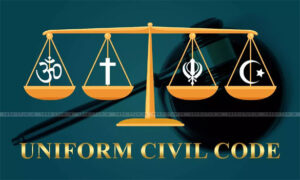
For several decades, Muslim responses to personal-law reform have tended to be defensive. Whenever governments have proposed changes to Muslim family law, public discussion has often centred on religious identity, minority rights and the protection of Sharia. These concerns are legitimate, especially in a country where religious minorities have at times faced political marginalisation. But defending religious freedom cannot mean avoiding hard questions about gender justice, unequal access to divorce, economic insecurity and the everyday problems Muslim women face. Equally, demands for reform should not become a pretext for unnecessary state interference or for legislation that treats one community as a problem to be corrected. The aim is to move past this confrontation toward an approach grounded in constitutional participation, internal reform, sound legal reasoning and democratic engagement.
The community should recognise that the UCC debate is also an opportunity to reconsider how personal law is understood, interpreted and administered. Instead of framing the issue as a choice between religious identity and constitutional citizenship, Muslims can show that Islamic legal and ethical traditions are capable of engaging constructively with contemporary ideas of justice, equality and individual dignity.
Moving beyond defensive politics
The first change required is a shift from defensive politics to constructive participation. Opposing a proposed law may be necessary when it violates constitutional protections, creates discrimination or imposes unreasonable restrictions on religious freedom. But opposition alone cannot resolve the problems that exist within Muslim family life. If Muslim organisations focus only on defending the existing framework, they risk overlooking the experiences of women who struggle to obtain maintenance, recover unpaid mahr, secure inheritance or get a timely divorce.
The community should distinguish between protecting religious freedom and defending every existing social practice. These are not the same thing. Islamic law contains religious principles, juristic interpretations and historical practices that developed under very different circumstances. Some practices within Muslim communities rest more on local custom and patriarchal social structures than on clear legal requirements in the tradition. Others reflect legitimate differences of interpretation among the schools of Islamic jurisprudence. Treating all of these as equally sacred makes meaningful reform difficult.
The response to the UCC should therefore begin with an honest assessment of Muslim family law practice. Muslim organisations should gather evidence on marriage registration, child marriage, domestic violence, abandonment, maintenance disputes, inheritance deprivation and access to legal remedies. Such research would help community representatives separate genuine religious concerns from social problems that need reform. It would also strengthen their position when challenging legislation that is badly designed or disproportionately affects minorities.
Internal reform: Justice must begin within the community
The credibility of Muslim opposition to discriminatory legislation depends partly on the community’s willingness to address injustice within its own institutions. Muslim women should not have to rely entirely on government intervention to obtain rights that Islamic jurisprudence itself recognises. The Qur’an establishes financial entitlements for women, recognises inheritance rights, regulates divorce and stresses fairness in marriage. Yet the implementation of these principles has often been weakened by social custom, low legal awareness and unequal power within families.
Consider inheritance. The Qur’an sets specific shares for different heirs, but many Muslim women in India are pressured to give up their property rights in favour of male relatives. Some daughters are told that claiming their share would damage family ties. In other cases, property is transferred informally without ensuring that women receive what is lawfully theirs. Muslim organisations must address this directly. Legal awareness programmes, accessible inheritance counselling, documented property transfers and community-level monitoring can help women exercise rights that already exist within Islamic law.
The same applies to mahr. Although it is a financial entitlement belonging to the wife, it is sometimes fixed at a nominal sum or left unpaid for years. Marriage contracts should clearly record the amount, the payment schedule and the wife’s legal right to recover it. Likewise, women seeking khula or judicial dissolution should have access to fair and timely procedures. Religious institutions should not allow social pressure or needless procedural obstacles to keep women in harmful marriages.
Internal reform should also tackle child marriage, domestic violence, economic abandonment, and the unequal treatment of women within community institutions. The aim here is not to copy outside demands or to give up religious identity. It is to show that Muslim communities can pursue justice using their own intellectual, ethical, and institutional resources.
Rethinking the role of the ulama: from defending inherited rulings to building contemporary jurisprudence
The ulama are central to any serious Muslim engagement with the Uniform Civil Code. For centuries, religious scholars have interpreted Islamic law and advised families and authorities on marriage, divorce, and inheritance. Too often, though, their public responses have focused on defending established positions without explaining how Islamic jurisprudence has long adapted to changing social realities. The current debate calls for a more ambitious intellectual response. Scholars need to show that Islamic law has the resources to address contemporary problems while remaining faithful to its foundational sources.
A distinction that deserves far more attention is the one between Shariah and fiqh. Shariah is the divine guidance and the ethical purposes of Islam; fiqh is the human understanding and interpretation of that guidance. Classical jurists reached their positions through the Qur’an, the Sunnah, consensus, analogy, and other methods of reasoning, and their conclusions were shaped by the social, economic, and institutional conditions of their own times. Recognising this does not mean every ruling can be altered to suit present preferences. It means scholars must separate definitive textual provisions from interpretive disagreements, historical applications, and local customs.
The traditions of Imam Abu Hanifa, Imam Malik, Imam al-Shafi’i, Imam Ahmad ibn Hanbal, and later jurists show both disagreement and methodological development. Islamic legal reasoning has never been entirely static. Concepts such as maslaha (public welfare), maqasid al-shariah (the objectives of Islamic law), urf (custom), istihsan (juristic preference), and darura (necessity) have been applied in different schools and contexts to meet changing circumstances. Contemporary scholars should return to these resources when discussing family law.
Polygamy, for instance, can be examined through the Qur’anic requirement of justice and the prevention of harm. Maintenance can be discussed through principles of responsibility and economic protection. The enforcement of mahr can be strengthened through contract law, and divorce procedures can be reconsidered in light of the Qur’anic emphasis on fairness and dignified separation. The goal should not be to manufacture convenient religious arguments for predetermined political positions but to develop rigorous legal reasoning that responds to real social problems.
Religious authority today also operates in a different intellectual environment. Muslim women, legal professionals, academics, and younger generations increasingly take part in discussions of Islamic law. Their experiences and questions should not be dismissed as challenges to religious authority. They should become part of the process through which contemporary jurisprudence develops. A religious leadership that listens, explains, and engages will be better placed to contribute to public debate than one that responds only with declarations and prohibitions.
Civic engagement: Muslims must help shape legislation
The UCC debate cannot be settled within religious institutions alone. It is fundamentally a matter of legislation, constitutional rights, and public policy. Muslim organisations should therefore extend their engagement beyond religious conferences and community meetings. They should take part in legislative consultations, public hearings, expert committees, legal debates, and civil society forums, so that the experiences and concerns of Muslims are considered before laws affecting their family lives are finalised.
The 21st Law Commission’s 2018 Consultation Paper on Family Law Reform offers a useful example of a different approach. It argued that gender equality could be advanced by reforming discriminatory provisions within existing personal laws, rather than assuming complete uniformity was necessary. The Commission stressed equality within communities and recognised that cultural and religious differences do not automatically amount to discrimination. The 22nd Law Commission reopened public consultation in 2023, though it did not finalise a report before its term ended in August 2024, after which the 23rd Law Commission was constituted.
This history shows that the UCC debate has already created institutional openings for public participation, and Muslim organisations should use them systematically. They should prepare detailed submissions on marriage, divorce, inheritance, maintenance, and religious freedom, rather than relying on general statements of opposition to uniformity. Where a proposed provision threatens an existing religious or contractual right, the objection should name the precise provision, explain its legal consequences, and propose a concrete alternative.
Participation must also extend beyond established religious organisations. Muslim women’s associations, academic institutions, legal aid groups, youth organisations, professional bodies, and representatives of marginalised Muslim communities should all have an independent voice. Women’s participation matters a great deal here, because family law reforms touch their economic and personal security most directly. They should not be represented only by male religious leaders or political organisations.
Civic engagement should also reach beyond the Muslim community. The UCC is not solely a Muslim question. Christians, Hindus, Sikhs, tribal communities and others have their own concerns about marriage, inheritance, customs and religious freedom. Muslims should take part in wider coalitions that defend constitutional principles, privacy, equality and the rights of vulnerable people. Such partnerships could shift the debate away from communal confrontation and toward a shared conversation about the future of civil rights in India.
Active democratic partnership: moving from minority representation to constitutional citizenship
Muslims also need to rethink their relationship with democratic institutions. Political participation should not be confined to opposing legislation once it has been introduced. Community representatives should take part in the processes through which laws are drafted, debated and implemented. Muslim MPs, MLAs, lawyers, academics and civil society organisations should work together to develop well-informed positions on family-law reform.
This means building relationships with political parties across ideological lines. Muslim organisations should be able to negotiate with governments, question opposition parties and work with civil society groups without giving up their independent views. Their engagement should rest on constitutional rights and the welfare of citizens, not on permanent political alliances.
The state-by-state development of the UCC makes this participation especially important. Uttarakhand’s code has been in operation since January 2025, while Gujarat and Assam have received presidential assent for their respective 2026 laws. Madhya Pradesh has also passed its bill. Rajasthan has introduced a bill, and other states have held consultations. These differing stages mean that the legal and practical situation varies from place to place.
Muslim organisations should set up state-level legal research groups to examine each code on its own terms. They should identify provisions that affect existing marriages, divorce procedures, inheritance, maintenance and live-in relationships. They should also study how these laws interact with central legislation and with the constitutional protections available to different communities. A single national response may not adequately address the differences between state laws.
Democratic partnership also requires engaging with issues beyond personal law. Education, employment, housing, public health, discrimination, economic opportunity and access to justice are equally central to minority citizenship. A community that is active in these areas can contribute more meaningfully to public policy and show that its engagement with the UCC is part of a broader commitment to constitutional democracy.
Legal engagement: from political statements to constitutional arguments
One of the most important tasks is to develop a serious legal response to the UCC. Muslim organisations need to invest in constitutional lawyers, family-law specialists and researchers who can scrutinise proposed legislation and challenge provisions that violate fundamental rights. Legal engagement should not begin only once a law has been enacted and is headed to court. It should start during drafting and consultation.
Articles 14, 15, 21 and 25 of the Constitution provide important foundations for this work. Article 14 guarantees equality before the law, Article 15 prohibits discrimination on specified grounds, Article 21 protects life and personal liberty, and Article 25 protects freedom of conscience and religious practice, subject to constitutional limits. Article 44 directs the State to endeavour to secure a Uniform Civil Code. These provisions have to be read together, rather than treating any one principle as automatically overriding the rest.
Muslim legal organisations should examine whether proposed laws genuinely advance equality and whether their provisions are proportionate, necessary and consistent with constitutional protections. Uniformity alone does not guarantee fairness. A common law must be assessed for its effect on privacy, individual liberty, existing family relationships and the rights of vulnerable people. The regulation of live-in relationships, for instance, raises real questions about how far the state should intervene in private life. Likewise, common inheritance rules should be judged not only by their stated aim of equality but by their actual legal and social consequences.
It is also important not to assume that every UCC provision necessarily abolishes every aspect of Muslim personal law. The real impact depends on the wording of each statute, its commencement provisions, its exemptions and its interaction with existing legislation. Legal experts should explain these distinctions clearly to the public and identify ways to protect religious contractual rights, including mahr, and to ensure that existing marriages and financial obligations receive proper legal recognition.
Where necessary, constitutional litigation should be pursued on clearly established legal grounds. But courts should not be the only arena for reform. Negotiation, legislative submissions, mediation and public consultation are just as important. A constructive legal strategy combines the defence of constitutional freedoms with concrete proposals for strengthening existing family-law protections.
Community awareness: Making Muslim personal law understandable
One of the biggest gaps in the Muslim response to the UCC debate is how little ordinary community members know about their own personal-law rights. Most Muslims are aware that Islamic law recognises mahr, inheritance and the right to divorce. Far fewer understand how to actually enforce these rights. Some women don’t know they are entitled to a share of property. Others have no marriage papers or not enough evidence to back up their financial claims. The UCC debate has made this gap between religious knowledge and practical legal awareness impossible to ignore.
Community organisations should start family-law awareness programmes in mosques, madrasas, colleges, universities and neighbourhood institutions. These sessions should explain marriage registration, mahr, inheritance, divorce, maintenance, custody and the legal remedies available to people. The information should be shared in accessible languages, especially Urdu, Hindi, Malayalam, Bengali and other regional languages where needed. This awareness shouldn’t be limited to women. Men need to understand their financial and legal responsibilities within a marriage too.
Women who face economic dependence, abandonment or family pressure deserve particular attention. Community legal aid centres could help them obtain marriage certificates, make sense of inheritance documents, recover unpaid mahr and approach family courts. These centres should work with qualified lawyers and women’s organisations, rather than relying only on informal religious mediation.
Madrasas and Islamic educational institutions should also introduce basic courses on constitutional rights, Indian family law and recent legal developments. Students of Islamic jurisprudence need to understand the difference between a religious ruling and a legally enforceable civil right. Likewise, law students and practising lawyers should have chances to study Islamic family-law principles and the diversity of Muslim legal traditions. This two-way exchange can reduce misunderstandings and raise the quality of public debate.
Building an inclusive reform movement
How Muslims engage with the UCC in the future will also depend on who takes part in the reform process. Discussions of Muslim personal law have long been dominated by established religious and community organisations. Their contribution still matters, but the debate needs much wider participation.
Muslim women scholars, lawyers, academics, social workers and grassroots activists should have a meaningful role in shaping reform proposals. Pasmanda communities and economically marginalised Muslims should be represented as well. Their experiences often reveal problems that aren’t adequately reflected in discussions led by established leadership.
Take the question of equal inheritance. The debate usually focuses on the difference between Qur’anic shares and statutory succession rules. But it must also ask why so many Muslim women cannot obtain even the inheritance rights Islamic law already grants them. Similarly, a debate about divorce should consider not only the legal validity of different forms of talaq but also the financial hardship faced by divorced women, the responsibilities of fathers, and how accessible judicial remedies really are.
An inclusive reform movement should therefore combine Islamic scholarship, constitutional law and social research. Universities and research institutions can contribute by conducting empirical studies of Muslim family practices. Such research would help distinguish the formal requirements of Islamic jurisprudence from customs that vary by region. It would also give policymakers evidence about the real consequences of legal changes.
Conclusion: From defending identity to advancing justice
The Uniform Civil Code debate presents Indian Muslims with an important intellectual and democratic challenge. Defending religious freedom remains essential, especially when legislation affects minority rights. But defending religious identity must go hand in hand with a willingness to address inequalities within the community. A credible response cannot simply reject every proposal for reform, nor can it accept every common legal provision in the name of modernisation.
The way forward requires five connected efforts: internal reform of Muslim family practices, contextual reinterpretation of Islamic jurisprudence, meaningful participation in civil society and legislative consultations, serious engagement with the Constitution, and widespread community awareness. These efforts should be supported by independent research institutions, women’s organisations, legal professionals and religious scholars working together.
The ulama must recognise that their responsibility goes beyond defending inherited rulings. They need to explain the ethical purposes of Islamic law and engage with the realities of contemporary Muslim families. Muslim political leaders must move beyond electoral statements and take part in developing practical legal and social policies. Community organisations must create opportunities for women and marginalised groups to shape the debate, rather than simply receiving decisions made by others.
India’s constitutional democracy leaves room for religious diversity, legal reform and democratic disagreement. Muslims should use that space with confidence. They can defend their constitutional rights while showing a genuine commitment to gender justice, equality and public welfare. They can challenge discriminatory legislation through legal and democratic means, while reforming unjust practices within their own institutions.
Ultimately, the future of Muslim personal law should not be decided exclusively by political governments or religious establishments. It should come about through informed participation from scholars, women, lawyers, academics, community organisations and ordinary citizens alike. The aim should be to build a legal and social environment where religious freedom and individual dignity strengthen one another rather than pulling apart.
The most constructive Muslim response to the Uniform Civil Code is neither blanket acceptance nor a permanent stance of opposition. What makes sense is a thoughtful engagement: one that defends religious freedom, addresses the inequalities that exist within community life, and places constitutional justice at the centre of public affairs.
(Concluded)
(CREDIT: NEW AGE ISLAM)