

By Mushtaq Ul Haq Ahmad
Faith Must Prioritise Core Values Over Peripheral Disputes
Main Points
· Religious debate and fatwas are valuable when guided by sincerity, scholarship, humility, and concern for the common good.
· Islam’s moral core—worship, justice, truthfulness, compassion, charity, moderation, and care for the vulnerable—should take priority over secondary differences.
· Extravagant weddings, wasteful feasts, status-driven celebrations, and consumerism conflict with the Qur’anic ideal of balanced spending and gratitude.
· Constructive debates seek truth, use fair evidence, respect opponents, distinguish essentials from details, and avoid mockery or personal attacks.
· Fatwas should be contextual, cautious, and merciful; reckless sectarian takfir and public condemnation divide communities and misuse religion.
· Communities must build a culture of respectful disagreement, verify information, reject inflammatory content, and focus on shared ethical action such as helping the poor and reducing waste.
· Reform requires aligning religious teaching with daily conduct: practising honesty, moderation, compassion, justice, and unity rather than merely debating them.
Debates Good, Fatwas Good Too
Religious debate is not the enemy of faith, and fatwas are not inherently divisive. Both become dangerous only when they abandon humility, proportion, and the higher purposes of religion. A community that argues endlessly over peripheral issues while neglecting honesty, compassion, moderation, and social responsibility has mistaken the branches of religion for its roots.
Islam calls its followers to hold firmly to the “rope of Allah” and warns against division, at the same time, it encourages reflection, discussion, and the pursuit of knowledge. The real question, therefore, is not whether Muslims should debate or issue religious rulings. It is whether such debate and rulings are guided by sincerity, scholarship, mercy, and a concern for the common good.
The purpose of religion
At the heart of every revealed religion lies a simple moral vision: worship God, speak truth, deal justly, care for the vulnerable, restrain greed, and live with dignity. These are not sectarian slogans. They are the shared moral core on which sincere believers across schools of thought can largely agree. The Qur’an repeatedly emphasizes faith, prayer, charity, justice, truthfulness, patience, family responsibility, and care for the poor. These essentials form the moral spine of religious life. When believers concentrate on them, differences over secondary matters can remain within the bounds of scholarly disagreement rather than becoming reasons for hostility.
Unfortunately, religious energy is often spent on issues that are visible, emotionally charged, and easy to turn into identity markers. Meanwhile, the harder and more consequential duties, truthfulness in business, fairness to employees, kindness to parents, protection of the weak, restraint in consumption, and dignity in public conduct, receive less attention. A faith community becomes spiritually healthy not when everyone repeats the same formula, but when its members embody the values that all serious religious traditions regard as indispensable.

Eating less, living moderately
The Qur’an’s teaching on food is remarkably balanced: “Eat and drink, but do not be excessive. Indeed, He does not like those who commit excess.” This verse does not condemn eating or enjoyment, it condemns crossing the limits of need, gratitude, and responsibility. Classical jurists and Qur’an commentators have generally understood moderation in food as a religious duty. Eating beyond hunger, wasting resources, and becoming obsessed with luxury are forms of israf, or extravagance. At the same time, deliberately eating so little that one becomes weak and unable to fulfil religious and social duties is also a form of imbalance.
This teaching is especially relevant in societies where lavish weddings, expensive feasts, competitive gift-giving, and status-driven celebrations have become normal. A wedding may begin as a celebration of a sacred bond but can easily become a public performance of wealth. Families may borrow heavily, exhaust savings, or place impossible expectations on young couples simply to satisfy social pressure.
The result is a strange moral contradiction. On one hand, people speak of simplicity, humility, and piety; on the other, weddings and social occasions can become arenas of conspicuous consumption. The poor are pressured to imitate the rich, while the rich compete to display their status. Religion does not ask people to be joyless. Celebration is permitted, indeed encouraged in its proper place. But celebration becomes morally problematic when it turns into waste, debt, envy, exclusion, or the humiliation of those who cannot afford the same standards.
The Islamic ideal is neither starvation nor indulgence. It is moderation, eating sufficiently, spending responsibly, celebrating joyfully, and remembering those who have less. The Qur’an describes the righteous as those who, when they spend, are “neither extravagant nor miserly,” but maintain a just balance between the two.
The extravagance of weddings
Lavish weddings are perhaps the most visible example of how social custom can overpower religious teaching. What should be a simple, dignified union of two families often becomes a costly spectacle involving enormous catering, designer clothing, elaborate venues, photography, gifts, and entertainment. There is nothing inherently wrong with celebrating marriage. Marriage is a serious social and spiritual commitment, and joy at such an occasion is natural. The problem arises when celebration becomes competition.
In many communities, the size of the wedding has become a measure of family honour. Parents fear criticism if the function appears modest. Guests judge the food, venue, clothing, and gifts. Young couples begin married life under financial strain because society has made simplicity feel like failure. This is not merely an economic issue. It is a moral and spiritual one. Money spent excessively on a single celebration could instead support education, healthcare, housing, debt relief, or assistance to needy relatives. Extravagance in one area of life often creates deficiency in another, resources spent to impress others may be unavailable for genuine obligations.
Religious leaders, community elders, and families can play an important role here. Instead of praising only the grandest weddings, they can honour simplicity, mutual consent, ethical spending, and the wellbeing of the couple. A dignified wedding need not be an expensive one. If jurists agree that excess in eating and spending is morally problematic, then this consensus should shape public behaviour, not merely remain a theoretical teaching. The challenge is to translate a widely accepted religious principle into social practice.
Where believers converge
Muslims, like members of other religious communities, often differ on jurisprudential details: forms of prayer, methods of purification, legal interpretations, religious practices, and institutional authority. These differences can be discussed seriously and respectfully. But the greater tragedy is that communities sometimes fight over these differences while ignoring the values on which they already agree.
Honesty is not the property of one sect. Compassion is not limited to one school of thought. Justice, modesty, generosity, humility, care for parents, protection of orphans, truthfulness in trade, and avoidance of corruption are universal religious imperatives. So too is restraint from consumerism and extravagance.
If religious communities made these shared duties their central public message, they would find far more common ground. A Muslim, a Christian, a Hindu, a Sikh, or a follower of any sincere ethical tradition can agree that lying is wrong, greed is destructive, arrogance is dangerous, and compassion is necessary.
The differences that remain should be handled with intellectual honesty, not treated as excuses for social separation. The Qur’an’s call to unity does not require the erasure of all differences. It requires that differences do not become greater than the shared commitment to God, justice, and human dignity.
Debates can be good
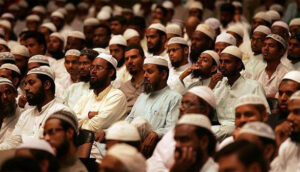
Debate has an honoured place in religious intellectual life. Scholars have always disagreed, questioned, reasoned, and sought evidence. Debate can sharpen understanding, expose weak arguments, correct errors, and prevent blind imitation.
A good debate is marked by several qualities:
It seeks truth rather than personal victory.
It uses accurate sources and fair interpretation.
It respects the opponent’s sincerity and intelligence.
It distinguishes between essential beliefs and secondary interpretations.
It avoids insults, mockery, and character assassination.
It accepts the possibility that one may be wrong.
It ends with greater clarity, humility, or cooperation—not deeper hatred.
In this sense, debates are good. They can educate the public, clarify misunderstandings, and encourage people to think rather than merely follow inherited opinions. The problem begins when debate becomes performance. In the age of social media, religious discussion is often reduced to short clips, sharp remarks, and viral confrontations. The goal is no longer understanding, it is applause. A speaker may win the moment but lose the audience’s trust, while viewers leave more polarised than before.
When debates are held to score points, they deepen divisions. Each side begins to see the other not as a fellow seeker of truth but as an enemy to defeat. The language becomes harsher, the assumptions more hostile, and the possibility of reconciliation smaller. A debate that increases knowledge but decreases mercy has failed at a deeper level.
Fatwas and their responsibility
A fatwa, in its proper sense, is a religious opinion or guidance offered by a qualified scholar in response to a question. It can be a valuable service, helping people understand worship, family matters, financial ethics, dietary rules, or moral dilemmas. Fatwas are good when they are careful, contextual, humble, and aimed at guiding people toward righteousness. They become harmful when they are issued casually, politically, or as weapons against rival groups.
The most damaging form is the sectarian takfiri fatwa, the declaration that another Muslim group, scholar, or community has left the fold of Islam. Such declarations can have serious social consequences. They can justify exclusion, suspicion, abuse, and even violence in extreme circumstances.
In the broader theological and legal tradition, takfir is not a matter to be treated lightly. Declaring another Muslim an unbeliever requires extremely strict conditions and is generally reserved for clear, deliberate rejection of fundamental beliefs, not mere disagreement over jurisprudence, practice, or interpretation.
Muslim scholars across traditions have warned that reckless takfir weakens communities and serves forces that benefit from Muslim disunity. Differences in legal schools or theological interpretation do not automatically make a person outside Islam.
A responsible fatwa should therefore distinguish between:
A clear violation of an established religious essential.
A legitimate difference of scholarly interpretation.
A cultural practice that may be discouraged but is not necessarily forbidden.
A political or social dispute that should not be dressed up as a theological verdict.
A personal sin, which requires correction and compassion rather than public condemnation.
When these categories are confused, religion becomes a tool of control rather than a path of guidance.
Fatwas should unite, not divide
The purpose of a fatwa is not to win an argument. It is to help a person act responsibly before God and society. A good fatwa considers evidence, context, capability, harm, benefit, and the condition of the person asking the question.
For example, a ruling on food should not only ask whether an item is technically permissible. It should also ask whether waste, excess, harm to health, exploitation of workers, or disregard for the poor is involved. A ruling on marriage should consider not only ritual validity but also financial responsibility, consent, kindness, and the avoidance of crushing debt.
Similarly, a ruling on social conduct should encourage dignity, not humiliation. It should protect the vulnerable, not empower the powerful to police others. Fatwas become constructive when they are rooted in the higher objectives of religion: preservation of faith, life, intellect, family, property, justice, and social welfare. They become destructive when they are reduced to slogans, exclusions, and sectarian boundaries.
The credibility of a religious authority lies not in harshness but in wisdom. A scholar who can distinguish between the essential and the peripheral, between principle and detail, between correction and condemnation, serves the community far better than one who issues dramatic verdicts for attention.
The danger of fringe issues
Every religious tradition contains core teachings and peripheral disputes. The core teaches people how to live with God and with one another. The periphery often concerns methods, customs, terminology, and institutional preferences. When the periphery becomes the centre, religion loses its moral force. People may become highly strict about a minor practice while remaining careless about honesty, cruelty, corruption, or waste.
This inversion is spiritually dangerous. It creates the appearance of piety without its substance. A person may defend a particular ritual with great passion but speak falsely in business. Another may condemn a minor innovation while neglecting parents, employees, or neighbours. The remedy is not to abandon detail altogether. Details matter in religious life. But details must be kept in proportion. They should not be allowed to overshadow the fundamentals.
A mature religious community knows how to say: “This is important, but that is more important.” It can disagree without dehumanising. It can correct without humiliating. It can uphold tradition without turning tradition into a weapon.
Building a culture of respectful disagreement
Communities need to cultivate a culture in which disagreement is normal but hostility is not. This requires deliberate effort from scholars, teachers, parents, media voices, and ordinary believers.
Learn the difference between critique and insult.
Quote opponents fairly rather than distorting their views.
Avoid generalising about entire groups because of the conduct of some individuals.
Refuse to share inflammatory content without verification.
Give religious scholars the space to explain complexity rather than demanding instant verdicts.
Encourage young people to study ethics, history, and law alongside ritual practice.
Prioritise shared moral action: feeding the hungry, educating children, supporting widows, reducing waste, and helping those in debt.
Such a culture does not eliminate differences. It makes differences survivable. It allows people to remain in conversation even when they do not fully agree.
From argument to reform
The greatest religious challenge today is not the existence of debate. It is the gap between what communities preach and how they live. If eating less is a religious virtue, then wasteful feasts and status-driven weddings should be challenged. If honesty is a central command, then corruption, cheating, false advertising, and exploitation should be treated as religious scandals. If compassion is essential, then cruelty toward the poor, workers, women, children, and minorities should be confronted.
If consumerism is spiritually harmful, then communities should promote simplicity, gratitude, and responsible spending. If unity is a divine command, then sectarian abuse, takfir, and public humiliation should be rejected. Debates are good when they lead to reform. Fatwas are good when they guide people toward justice and mercy. But when debates become contests of ego and fatwas become instruments of exclusion, both fail their purpose.
The way forward is not silence, blind conformity, or the abandonment of religious scholarship. It is a return to proportion: strong on essentials, humble about differences, cautious in judgment, and generous in conduct. A community that eats moderately, spends wisely, speaks truthfully, treats others justly, and refuses to turn minor differences into major conflicts will be closer to the spirit of its faith than one that argues loudly while neglecting the moral heart of religion.
Debates are good. Fatwas are good too. But both are good only when they serve truth, mercy, unity, and the transformation of life.
…
M.H.A. Sikander is a writer-activist based in Srinagar, Kashmir.
(CREDIT: NEW AGE ISLAM)