

By Grace Mubashir,
Kerala’s greatest strength is not that it has never experienced extremism, but that its society has built strong traditions of public debate, political participation, education and coexistence. These traditions should not be taken for granted. The 2010 attack on Professor T. J. Joseph, the targeted political murders, Maoist violence, the 2023 Kalamassery bombing and the 2026 synagogue arson investigation each represent different forms of violence, with different motives and organisational backgrounds. They should not be merged into a single narrative or blamed on an entire religious or political community.
Major points:
· Extremist violence is rarely sustained by weapons alone. It needs a story that makes violence seem justified.
· In religious extremism, that story often presents a community as permanently under threat, casts opponents as enemies of the faith, and insists that ordinary democratic or legal processes cannot be trusted. Individuals come to see themselves as defenders of a larger sacred cause.
· In political extremism, the story may describe the state as an illegitimate enemy and violence as a necessary tool of revolution. In communal mobilisation, it is often built on collective victimhood, old grievances, and the supposed need for self-defence.
· It would be misleading to suggest that Kerala is especially prone to extremism because of its literacy rate, religious makeup, or history of migration. Those features do not produce terrorism. Kerala’s social diversity, educational institutions, political engagement, and international connections have in fact strengthened its democratic and cultural life. The more useful question is how particular social and political conditions might be exploited by extremist actors.
· The lesson is that terrorism and extremism must be confronted without surrendering to the communal narratives they seek to create. When an attack on one community becomes an excuse to hate another, extremists win a broader political victory. When a government responds selectively, public trust declines.
· Kerala, therefore, needs a security approach grounded in reliable intelligence, professional investigation, social prevention, equal protection and constitutional accountability. The aim should not be merely to prevent the next attack but to protect the social conditions that make peaceful coexistence possible.
Kerala has long been described as a state with a strong tradition of religious coexistence, political participation, literacy and social development. Its history is marked by close interaction among Hindus, Muslims, Christians and Jewish communities. Even so, the state has not been immune to political violence, religious extremism or deliberate attempts to create communal divisions. Recent developments call for a careful look at how extremist networks operate, how their narratives spread and how Kerala’s institutions and society should respond.
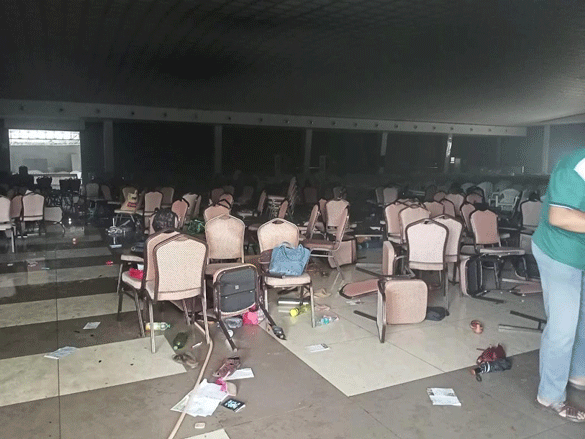
One distinction needs to be made at the outset. 2025-26 did not see a major mass-casualty terrorist attack in Kerala comparable to the 2023 Kalamassery bombing, except for arson near Kochi’s historic Kadavumbagam Synagogue. Much of the security-related news that year concerned investigations, arrests and court proceedings linked to earlier incidents. The arson near Kochi’s historic Kadavumbagam Synagogue took place in October 2026. The available evidence also does not justify treating every violent incident, arrest or investigation as proof of a terrorist conspiracy.
The record of violence
One of the most disturbing examples of extremist violence in Kerala was the 2010 attack on Professor T. J. Joseph in Muvattupuzha. Attackers associated with the Popular Front of India (PFI) assaulted him and severed his hand after objecting to a question in an examination paper that they considered insulting to Prophet Muhammad. The attack was meant to punish an individual through organised violence and to spread fear well beyond the immediate victim. It showed how religious sentiment can be manipulated by extremist organisations to justify intimidation and physical violence. In February 2025, the National Investigation Agency (NIA) filed a charge sheet against an alleged PFI operative accused of harbouring the main assailant, Savad, who had remained at large.
Another major case was the 2022 murder of RSS leader Sreenivasan in Palakkad. In April 2025, the NIA arrested Shamnad E. K., an alleged main assailant who had been absconding for three years. According to the NIA, the murder was part of a conspiracy involving PFI leaders and cadres aimed at deepening communal divisions. The agency also alleged that the organisation had built structures for recruitment, training and the planning of violence. These are claims made by the investigating agency and must be read in that light; the legal responsibility of each accused will be determined through the judicial process. Still, the case shows how targeted political killings can provoke retaliation and feed a cycle of communal hostility.
Kerala also faces a different kind of extremist challenge in its forest regions. In September 2023, a five-member armed group linked to the banned CPI (Maoist) entered the Kerala Forest Development Corporation office in Wayanad, restrained the manager and damaged office equipment. The group raised Maoist slogans and put up posters. In May 2025, the NIA filed a charge sheet against three accused, alleging that they were members of the People’s Liberation Guerrilla Army and part of a local guerrilla unit known as Kabani Dalam. In June, the agency questioned two other suspected members. This case belongs to a different ideological tradition from religious extremism, and according to the investigation, its aim was to challenge government institutions through armed intimidation. It is a reminder that Kerala’s security concerns cannot be reduced to one religious community or one ideological movement.
The synagogue arson: a warning about new methods
The October 2026 incident near the Kadavumbagam Synagogue in Ernakulam has added another dimension to this discussion. Police arrested a man identified as Ebin Paul after a fire was set at a horticulture nursery run by the synagogue’s management committee. The synagogue itself was not reported to have been damaged. Police later linked the accused to other alleged arson incidents in the Muvattupuzha area. The investigation took a more serious turn when officers reported finding suspicious digital communications, references to possible handlers outside Kerala and indications of cryptocurrency payments. Police invoked provisions of the Unlawful Activities (Prevention) Act (UAPA), including those relating to terrorist acts and conspiracy. The alleged handlers, the financial transactions and the wider network remain matters for investigation, not established facts.
The case matters because it raises questions about how extremist activity is now organised. Earlier terrorist groups often depended on identifiable local cells, physical meetings, recruitment networks and established leadership. Digital platforms can now allow individuals to receive instructions, communicate through encrypted channels, record acts of violence and possibly receive payments without a visible organisational presence. An act of arson may therefore have to be investigated not only as a local criminal offence but also as a possible part of a wider operation. At the same time, suspicious messages or unexplained transactions must be verified through forensic evidence before any conclusions are drawn. The attack on the synagogue deserves attention for another reason as well. A violent act aimed at a Jewish place of worship threatens a small religious community, and it also strikes at Kerala’s long-standing reputation for pluralism.
The narratives behind extremist violence
Extremist violence is rarely sustained by weapons alone. It needs a story that makes violence seem justified. In religious extremism, that story often presents a community as permanently under threat, casts opponents as enemies of the faith, and insists that ordinary democratic or legal processes cannot be trusted. Individuals come to see themselves as defenders of a larger sacred cause. In political extremism, the story may describe the state as an illegitimate enemy and violence as a necessary tool of revolution. In communal mobilisation, it is often built on collective victimhood, old grievances, and the supposed need for self-defence. These narratives differ in their ideologies, but they share a dangerous trait: they swap individual responsibility and democratic disagreement for collective hostility.
Kerala’s online spaces have become an important arena for such narratives. A September 2025 Newslaundry investigation documented discussions on X Spaces in which some speakers portrayed Muslims as a threat to Hindus and urged religious mobilisation. Such content does not automatically amount to terrorism, and speech should not be criminalised merely because it is controversial. Still, repeated calls for hostility, dehumanising language, and encouragement of violence can create an atmosphere in which extremist ideas start to seem acceptable. The danger is not confined to any one ideological camp. Anti-Muslim hatred, anti-Christian hostility, antisemitism, and religiously justified violence against any group deserve the same seriousness.
Why Kerala? Understanding the social context
It would be misleading to suggest that Kerala is especially prone to extremism because of its literacy rate, religious makeup, or history of migration. Those features do not produce terrorism. Kerala’s social diversity, educational institutions, political engagement, and international connections have in fact strengthened its democratic and cultural life. The more useful question is how particular social and political conditions might be exploited by extremist actors.
The state’s large migrant and Gulf-connected population creates wide links with societies, workplaces, and digital networks abroad. These links are mostly beneficial, but they also mean that ideas, political conflicts, and propaganda from outside India can spread quickly through local communities. International conflicts, especially those involving Palestine, Israel, and the wider Middle East, can provoke intense emotions. When such issues are framed through selective information and communal hostility, real concern for people suffering abroad can be turned into hatred of local communities. The same process can run the other way when international events are used to stoke anti-Muslim or anti-Jewish feelings.
Kerala’s competitive political environment is another factor. Parties and organisations sometimes use religious identity to rally support, and social media rewards provocative statements and exaggerated claims. A local dispute can swell into a statewide controversy when it is presented as proof of a wider conspiracy against a community. This can set off a cycle in which extremist groups exploit communal tension to recruit, while political and digital platforms amplify the very divisions those groups hope to use. The outcome is eroded public trust, even though most people continue to support coexistence.
There is also a need to understand the roles of social isolation, personal crises, criminal networks, and online manipulation. The synagogue investigation, for example, has examined the accused person’s personal circumstances, alleged drug-related offences, and digital contacts. None of these factors alone explains terrorism, and mental illness must never be treated as evidence of extremism. However, security agencies should examine whether vulnerable individuals are being manipulated, recruited, or financially exploited by organised networks. Prevention requires a more careful understanding of the individual paths that lead to violence.
What policy actions are necessary?
Kerala needs a security policy that pairs effective policing with democratic safeguards and social prevention. The first requirement is stronger coordination among state intelligence agencies, the Anti-Terrorism Squad, cybercrime units, and central agencies such as the NIA. Investigations involving encrypted communications, digital payments, and possible interstate or international networks demand technical expertise and timely cooperation. Police should build the capacity to trace suspicious financial transactions, preserve digital evidence, and identify organised recruitment, without treating ordinary religious practice or political disagreement as security threats.
Second, the state must protect places of worship and vulnerable communities. Synagogues, churches, mosques, temples, and other religious institutions should receive security assessments based on credible threats rather than political pressure. Local police stations should maintain regular contact with religious leaders and community organisations. A system through which communities can report threats, vandalism, and intimidation without fear of harassment would improve early warning. Security arrangements should be especially attentive to small religious communities, whose institutions may have limited resources to protect themselves.
Third, counter-extremism policies need to take on online propaganda. Social media platforms should act quickly when they encounter credible threats, incitement, or organised campaigns that encourage violence. Kerala’s police cyber units should monitor such threats under clear legal standards, and independent oversight should make sure surveillance never becomes a tool for targeting people based on their politics or religion. Public institutions, universities and civil society groups can also help by running digital literacy programmes that teach people how to spot fabricated videos, misleading claims, conspiracy theories and coordinated hate campaigns. The goal should be to build critical thinking, not to police legitimate political opinion.
Fourth, the state should invest in prevention at the community level. Religious scholars, teachers, youth organisations, women’s groups and local civic bodies can help create spaces where young people talk about religious identity, political conflict and social problems without being pulled into violent ideologies. Religious education should emphasise ethical responsibility, respect for human dignity and the rejection of violence against innocent people. These efforts should involve every community and should not be designed as programmes aimed at Muslims alone. The same democratic principles must apply to every form of extremism.
Finally, Kerala must protect the rule of law. Anti-terror laws such as the UAPA should be used only when the evidence meets the legal requirements. Investigations must be thorough, prosecutions must rest on credible evidence, and accused persons must receive due process. Arbitrary arrests, communal profiling and publicly branding suspects before trial can deepen alienation and erode public confidence in law enforcement. Effective counter-terrorism policy has to be firm against violence and equally firm in protecting constitutional rights.
Defending Kerala’s pluralism
Kerala’s greatest strength is not that it has never experienced extremism, but that its society has built strong traditions of public debate, political participation, education and coexistence. These traditions should not be taken for granted. The 2010 attack on Professor T. J. Joseph, the targeted political murders, Maoist violence, the 2023 Kalamassery bombing and the 2026 synagogue arson investigation each represent different forms of violence, with different motives and organisational backgrounds. They should not be merged into a single narrative or blamed on an entire religious or political community.
The lesson is that terrorism and extremism must be confronted without surrendering to the communal narratives they seek to create. When an attack on one community becomes an excuse to hate another, extremists win a broader political victory. When a government responds selectively, public trust declines. Kerala therefore needs a security approach grounded in reliable intelligence, professional investigation, social prevention, equal protection and constitutional accountability. The aim should not be merely to prevent the next attack but to protect the social conditions that make peaceful coexistence possible.
(CREDIT: NEW AGE ISLAM)