

(Dr. Shujaat Ali Quadri)
In the heart of Medina lies Jannatul Baqee, a site that embodies the earliest layers of Islamic memory. It is here that members of the Prophet Muhammad’s ﷺ family, his companions, and some of the most revered figures in Islamic history are buried. Yet, what stands today is not a preserved heritage site, but a stark, flattened graveyard its anonymity reflecting a deeper and unresolved historical rupture.
The demolition of Jannatul Baqee in the early 20th century by the House of Saud, under the influence of Wahhabism, remains one of the most contentious episodes in the modern history of the Muslim world. It raises uncomfortable but necessary questions about power, theology, and the politics of historical erasure.
For centuries, Jannatul Baqee was not merely a burial ground; it was a site of layered history. Modest domes and markers identified the graves of figures central to Islamic tradition, including members of the Ahl al-Bayt and Companions. Pilgrims visiting Medina would pay their respects, connecting spiritually with the formative generations of Islam.

This changed dramatically in 1925, when Saudi forces consolidated control over the Hijaz. Acting on a puritanical interpretation (Salafism/Wahhabism) that viewed tomb structures as religiously impermissible, authorities ordered the demolition of all mausoleums and grave markers. What followed was a complete transformation of the site its architectural and historical identity reduced to an austere uniformity.
The theological justification rested on the principles of Wahhabism, which sought to eliminate practices it deemed innovations (bid‘ah). However, to many across the Muslim world, the act went beyond reform it represented an erasure of collective memory.
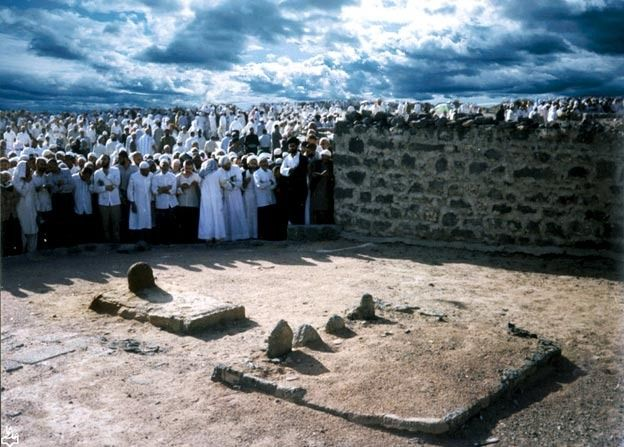
The destruction of Jannatul Baqee is often defended within Saudi discourse as an act of religious purification. Yet, from a broader civilizational perspective, it bears the hallmarks of what contemporary scholars would call cultural destruction.
Across the world, societies invest in preserving historical sites not because they endorse every associated practice, but because such sites are repositories of memory. Whether it is ancient temples in India, cathedrals in Europe, or Buddhist monasteries in East Asia, preservation is seen as a duty to history. In this context, the flattening of Baqee appears less as a theological correction and more as a unilateral rewriting of Islamic heritage one that privileges a single interpretation over centuries of diverse practice.
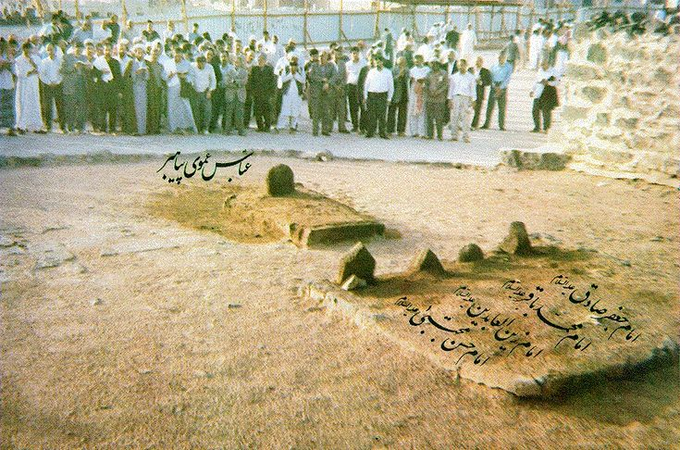
It is tempting to frame the issue of Baqee within sectarian lines, but such a reading is incomplete. Historical accounts indicate that the demolition drew criticism from across the Muslim spectrum, scholars who viewed the destruction of heritage with concern. The graves at Baqee belong not to one sect, but to the shared history of the Ummah. Their erasure, therefore, is a collective loss diminishing a space that once symbolised continuity between past and present. Even today, commemorations of the demolition continue globally, underscoring that the emotional and historical resonance of Baqee remains intact despite its physical transformation.
In an age where cultural heritage is increasingly under threat from conflict zones to rapid urbanisation the question of Baqee acquires renewed relevance. The Islamic world today faces a paradox. On one hand, there is a growing emphasis on identity and historical pride; on the other, some of its most important heritage sites have been altered, neglected, or erased. This tension reflects a deeper struggle over who defines Islamic history and how it is remembered. Revisiting Baqee is not about reopening old wounds, but about addressing an unresolved question: Can a civilisation move forward while remaining disconnected from its own historical landscape?
Calls for the reconstruction or restoration of Jannatul Baqee have periodically surfaced across the Muslim world. While political realities make such demands complex, the underlying principle is harder to dismiss the need to preserve and honour shared heritage. What is required today is not confrontation, but conversation. A broader, inclusive dialogue within the Muslim world cutting across sects and regions can help reframe the issue from one of dispute to one of collective responsibility. Preserving Baqee, in whatever form is feasible, would not merely restore structures; it would signal a willingness to embrace the plurality of Islamic history.
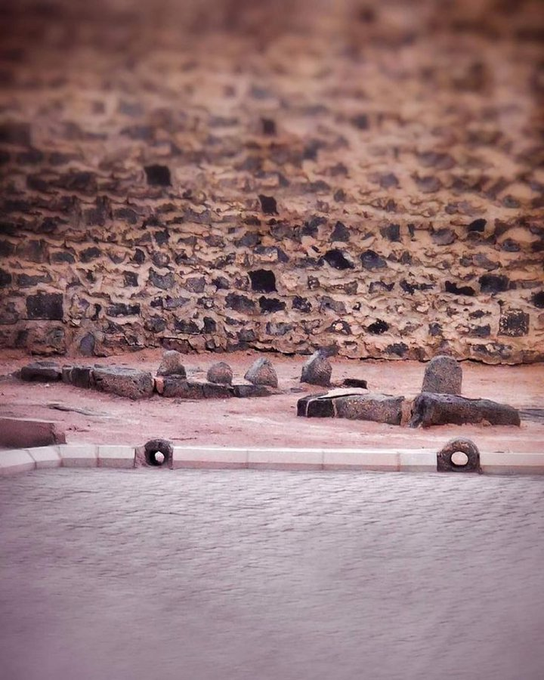
Jannatul Baqee stands today as a reminder of how power and ideology can shape not only the present, but also the past. Its flattened expanse speaks of absence of structures, of markers, and perhaps most importantly, of consensus. For a global Muslim community navigating questions of identity, unity, and heritage, Baqee offers a lesson that extends far beyond Medina: that safeguarding history is not a backward-looking exercise, but a necessary foundation for a more inclusive and self-aware future.