
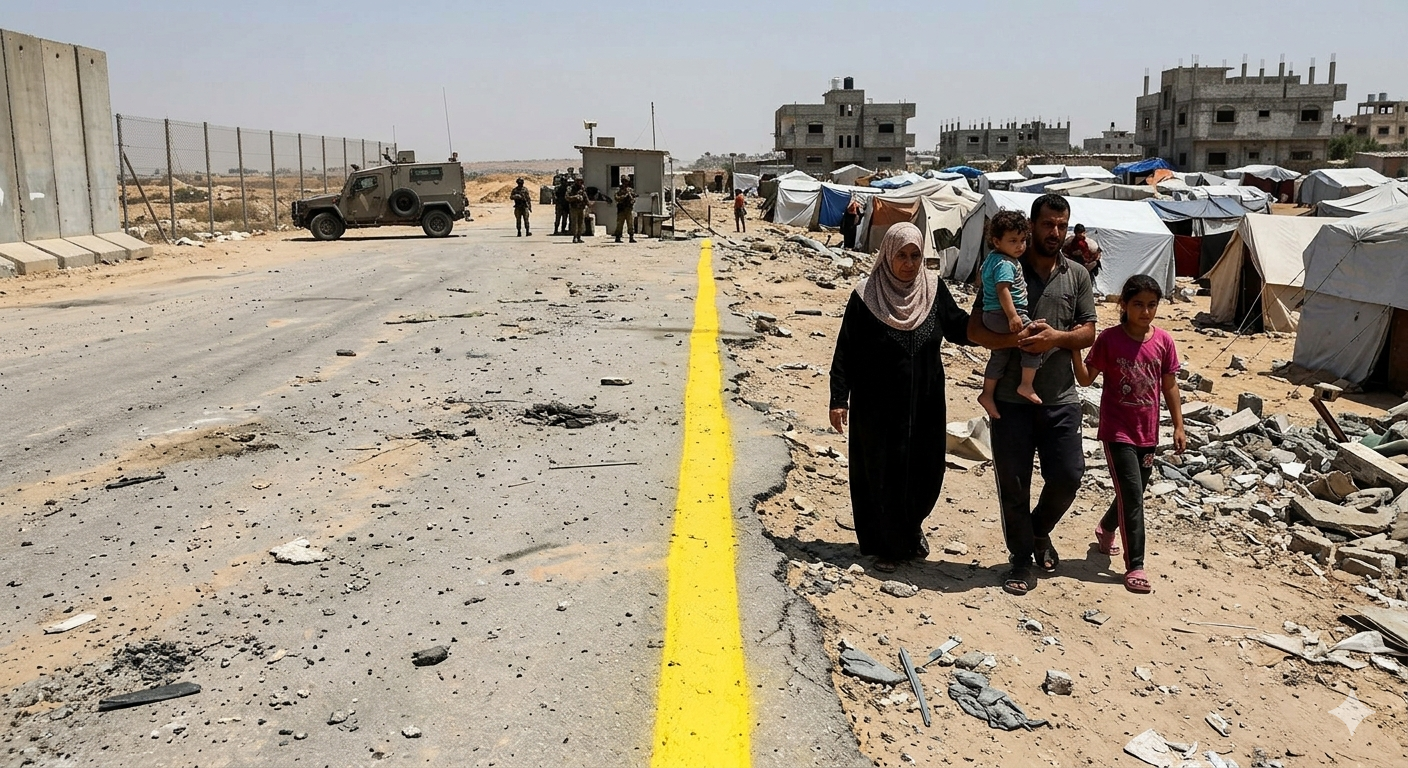
A line drawn on the ground in the Gaza Strip is no longer just a mark on the map—it is fast becoming a new reality that determines life there. Known as the “Yellow Line,” this boundary is gradually expanding, and with it, both the geography of Gaza and the lives of its people are steadily shrinking.
Recent analysis and satellite images indicate that nearly 54 percent of Gaza is now under Israeli control. This expansion is not limited to military presence—buildings are being demolished, people are being displaced from their homes, and long concrete barriers and earthen structures are being erected, further reinforcing this line on the ground.
Amid this changing landscape, Israel has established at least 32 military bases in Gaza. Of these, 7 have been built after the October 2025 ceasefire. These bases are equipped with facilities such as electricity, communication, and engineering infrastructure, clearly indicating that this presence may not be temporary, but rather intended for the long term.
But the heaviest price of this entire situation is being paid by ordinary people. Around 2.1 million Palestinians are now forced to live in less than half of the area they previously occupied. Millions are spending their days in tents or dilapidated buildings, and despite this, humanitarian aid continues to decline.
Data from the United Nations further highlights the severity of the situation. Since the end of February, 224 Palestinians—including women and children—have been killed near or east of the Yellow Line. These incidents point to a pattern in which civilians approaching these dangerous areas are repeatedly coming under fire.
According to medical organizations, a large number of those injured are people who had simply stepped out to meet their daily needs—some had gone to fetch water, while others were trying to return to their homes. However, the shifting boundary has brought even essential services into the zone of danger.
Meanwhile, a proposal for the deployment of a United States-backed international force has yet to materialize on the ground. At the same time, talks over the disarmament of Hamas are ongoing, while Israel continues to maintain its military presence across large parts of Gaza.
The Israeli Army says that its operations around the “Yellow Line” are in accordance with the terms of the ceasefire, and that the area is a high-risk operational zone where only immediate threats are targeted.
The “Yellow Line” drawn across Gaza is no longer just a military strategy—it has become a reality that is shrinking the land day by day and making people’s lives increasingly difficult.