
( Feroze Mithiborwala)
In December 2025, an American mercenary and six Ukrainian tactical operatives walked through Indian immigration using standard tourist visas. By March 2026, their real mission was laid bare: operating out of Victoria Camp in Myanmar’s Chin State, they were training anti-junta Ethnic Armed Groups (EAGs) in First-Person View (FPV) suicide drone assembly, battlefield deployment, and electronic warfare.
Yet, when the National Investigation Agency (NIA) filed its primary chargesheet before New Delhi’s Rouse Avenue Court, statutory terror charges under the Unlawful Activities (Prevention) Act (UAPA) were nowhere to be found. Instead, prosecutors opted for administrative counts under the Foreigners Act.
This is the internal mechanics of a high-stakes geopolitical bargain—where border integrity, national sovereignty and national counter-terrorism doctrine succumbed to Western diplomatic pressure.
The Infiltration: Tourist Visas and a Shadow Logistics Network
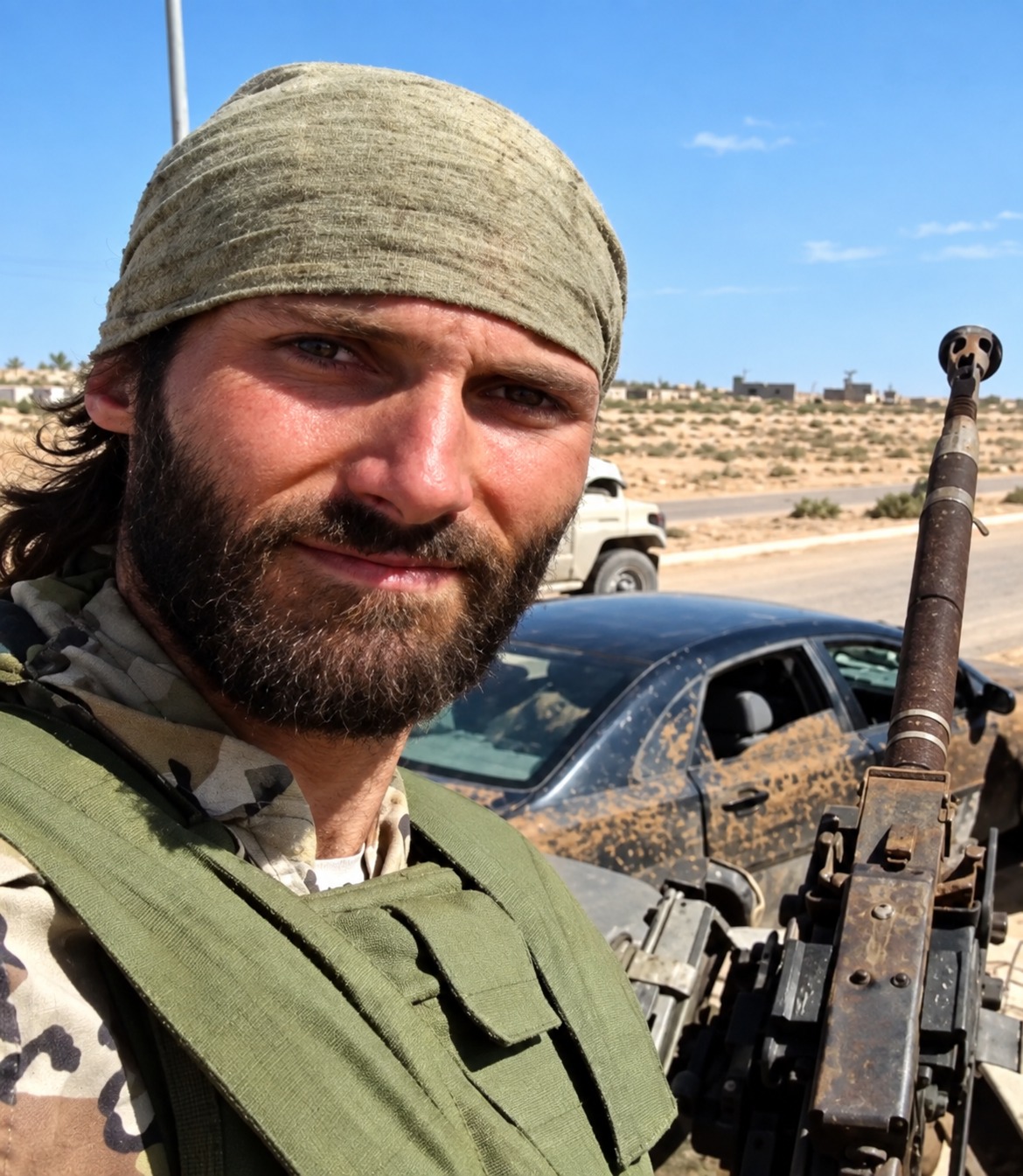
Matthew Aaron VanDyke, a high profile conflict contractor and founder of Sons of Liberty International (SOLI), is no stranger to complex war zones. Having built a career operating alongside rebel factions in Libya, Syria, and Iraq, VanDyke brought six Ukrainian drone specialists into India: Viktor Kaminskyi, Petro Hurba, Taras Slyviak, Ivan Sukmanovskyi, Marian Stefankiv, and Maksim Honcharuk.
The group entered India through supposedly standard consular channels on tourist visas, revealing a clear lapse in pre-visa background vetting by Indian missions abroad.
● So the first question that must be flagged is who cleared & approved VanDyke’s visa? From which Indian Embassy or Consulate was it issued? Surely any serious background check would have brought up his international mercenary activities in various terror prone countries.
Once inside India, the module moved to Guwahati, Assam, where they staged their operational hardware—including European-sourced FPV drone components, tactical electronics, and signal-jamming equipment brought in as personal baggage.
● How did Drone related hardware & jammers & other equipment clear the airport security checks? This is just astounding! The Airport authority must be held accountable! How come their passports were not flagged by the Immigration Department?
Then, after clearing the Airport security & immigration check, hiring six private taxis, the team drove directly into Mizoram—a notified border zone requiring a Protected Area Permit (PAP). Bypassing local border controls without permits, they crossed the Tiau River into Myanmar’s Chin State on December 29, 2025.
Asymmetric Warfare and the Drone Strike on State Infrastructure
Inside Myanmar, VanDyke’s team provided specialized training to local insurgent coalitions. The real-world consequence of this tactical export was demonstrated in late February 2026, when an FPV suicide drone struck a Myanmar National Airlines ATR 72-600 commercial passenger aircraft preparing for takeoff at Myitkyina Airport. Digital evidence recovered by Indian investigators directly linked the hardware, assembly, and tactical protocols used in the strike to VanDyke’s module.
The destabilizing impact of this operation extended beyond Myanmar. Border intelligence units noted that the EAGs receiving VanDyke’s high-tech instruction maintain overlapping logistical and operational ties with Indian insurgent groups active in the northeastern states.
The Russian Tip-Off and the Airport Interception
The module’s presence in India was not detected by domestic surveillance, but exposed via foreign intelligence. Russian intelligence agencies, tracking the movement of Ukrainian battlefield technicians exporting drone technology into South Asia, alerted Indian security services.
Following a three-month surveillance operation, the NIA executed a coordinated sweep on March 13, 2026. VanDyke was intercepted at Kolkata Airport while attempting to fly to Dubai, while his six Ukrainian accomplices were arrested simultaneously at Delhi and Lucknow airports. All seven were remanded into custody under Section 18 of the UAPA (conspiracy to commit a terrorist act).
The Legal Retreat: Foreigners Act over UAPA
Despite holding the suspects under UAPA provisions for nearly six months, the prosecution altered its approach when filing the formal chargesheet on September 8, 2026. Rather than submitting a formal terror indictment, the NIA charged the module solely under Sections 21 and 23 of the Immigration and Foreigners Act—offenses restricted to illegal entry and permit violations.
While prosecution counsel publicly maintained that the broader UAPA investigation remains “open”, omitting terror counts from the primary chargesheet fundamentally alters the legal framework. Under the Foreigners Act, the legal thresholds for bail and deportation are significantly lower, weakening the judicial hold over the detainees.
Diplomatic Pressure and Statecraft
This procedural reduction coincided with diplomatic engagements. In the days preceding the chargesheet deadline, US Ambassador Sergio Gor met with Indian Foreign Secretary Vikram Misri and US Secretary of State Marco Rubio to address VanDyke’s detention.
While Washington framed its actions as standard consular advocacy for an incarcerated American citizen, the timing of the NIA’s legal shift highlights the influence of broader bilateral interests. Faced with high-level diplomatic pressure, New Delhi opted for a narrower prosecution under immigration statutes.
By scaling back terror charges against foreign private military mercenaries operating within its own border zones, the Modi regime has set a dangerous precedent—demonstrating how strategic diplomacy can pressurise and influence domestic counter-terror judicial enforcement against Western mercenaries.
Notes & References
National Investigation Agency (NIA), Primary Chargesheet in RC-04/2026/NIA/DLI, Rouse Avenue Special Court, New Delhi, September 8, 2026.
Hindustan Times, “No UAPA in NIA chargesheet against US national VanDyke, his Ukrainian associates,” September 8, 2026.
Indo-Asian News Service (IANS), “NIA Busts Foreign Mercenary Ring In Northeast India As Local Facilitators Come Under Scrutiny,” March 23, 2026.
India Today, “US mercenary VanDyke, others brought drones, trained ethnic war groups: NIA,” September 8, 2026.
The Federal, “Russian tip-off led to NIA arrest of American VanDyke and Ukrainian nationals,” March 19, 2026