
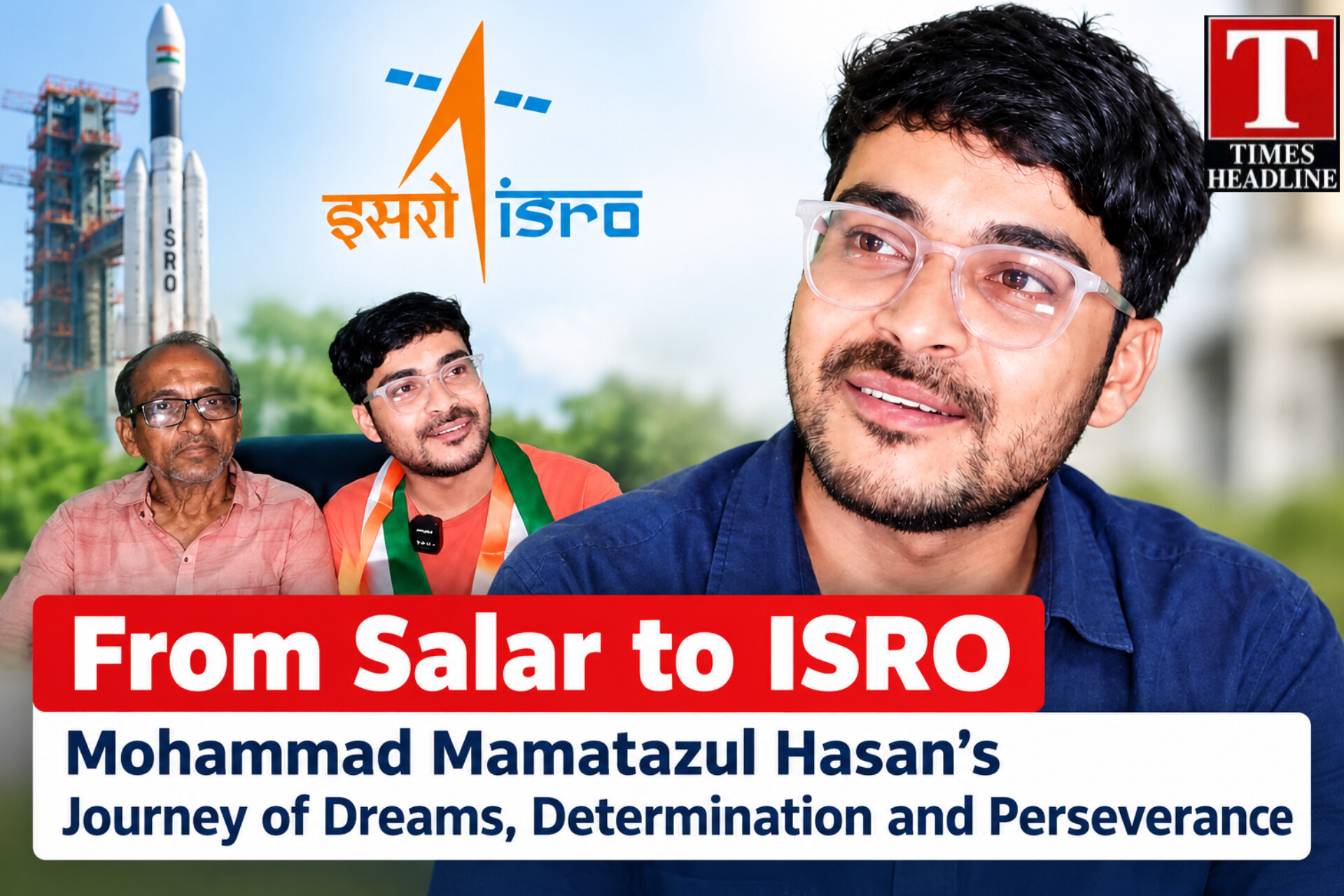
In Salar, a small town in West Bengal’s Murshidabad district, an extraordinary achievement has given thousands of young people a reason to dream bigger. Mohammad Mamatazul Hasan’s selection as a space engineer at the Indian Space Research Organisation (ISRO) is more than a professional milestone. It is a story of perseverance, family support and the determination to pursue one’s ambitions despite limited resources. For many young people growing up in small towns, careers in advanced science and technology can appear distant and difficult to achieve. Hasan’s journey demonstrates that geographical limitations need not define the boundaries of personal ambition.
Mamatazul Hasan comes from a family with modest financial means. His father, Mohammad Azgar Ali, works as a copyist at the registry office in Salar, while his mother is a para-teacher at a school. His family may not have had the financial advantages enjoyed by more privileged households, but it offered something equally important: encouragement and a belief in education. Behind Hasan’s achievement lies the quiet contribution of parents who continued to support their son’s aspirations within their means. Their efforts reflect the sacrifices made by countless ordinary Indian families who see education as a pathway towards a better future for the next generation. When the family received the news of Hasan’s selection, his father was overcome with emotion. The moment represented the culmination of years of hope, uncertainty and effort. For him, the appointment was not simply a job offer; it was a deeply personal achievement that made his family’s sacrifices worthwhile.
Hasan’s journey towards ISRO was not an overnight success. According to a report by The Indian Express, he received his appointment letter on May 5, 2025. His achievement was subsequently celebrated by his family and the people of Salar. Before securing the opportunity at ISRO, Hasan worked for a private company while continuing to prepare for government recruitment examinations. He appeared in several examinations, made repeated attempts and continued waiting for the right opportunity. Balancing professional responsibilities with preparation for competitive examinations requires discipline, patience and the ability to remain focused despite uncertainty. Hasan’s experience illustrates that setbacks and delays do not necessarily signal the end of a dream. His eventual selection reflects the importance of sustained effort and persistence. Rather than abandoning his ambitions, he continued working towards them while managing the practical demands of life.
Speaking about his achievement, Hasan acknowledged that he had never imagined reaching this point. Receiving the appointment letter was an emotional experience that he found difficult to express in words. His message is straightforward: hard work remains essential, and consistent effort towards a clearly defined goal can create opportunities that once seemed beyond reach.
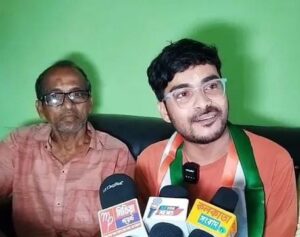
News of Hasan’s achievement brought pride to his hometown. In a community where people know one another and share in each other’s milestones, his success became a source of collective happiness. For students in Salar and neighbouring areas, his journey offers a powerful example of what sustained commitment can accomplish. A young student interested in science may now find fresh motivation to pursue engineering. A family uncertain about investing in higher education may find encouragement in Hasan’s experience. His story is particularly meaningful for students from smaller towns, where access to career guidance, professional networks and information about specialised opportunities can sometimes be limited. Hasan’s achievement does not mean that these challenges disappear. Instead, it highlights why educational awareness, family encouragement and access to competitive opportunities are so important. His journey also reminds young people that professional success often involves more than academic ability alone. Patience, resilience, preparation and the willingness to try again after disappointment can be equally significant.
ISRO occupies a central position in India’s scientific and technological progress. Its work in satellite technology, launch vehicles, space exploration and related research has helped strengthen the country’s capabilities and international standing. For Hasan, securing a position as a space engineer offers an opportunity to become part of this wider national endeavour. His achievement connects an ordinary household in Murshidabad with one of India’s most prominent scientific institutions. It demonstrates how individual aspirations can intersect with the country’s broader ambitions in science, engineering and innovation. As India continues to develop its space programme, encouraging talented young people from different regions and socioeconomic backgrounds to pursue scientific careers remains important. Stories such as Hasan’s underline the value of creating pathways through which aspiring engineers and researchers can contribute their abilities.
Mohammad Mamatazul Hasan’s journey from Salar to ISRO is ultimately a story about the power of possibility. It is a reminder that extraordinary achievements can emerge from ordinary circumstances. A modest family background need not determine a young person’s professional future, just as growing up in a small town need not restrict the scale of one’s ambitions. The path to success may involve repeated attempts, uncertainty and long periods of waiting. Yet, Hasan’s experience shows the importance of continuing to work towards a goal even when the outcome remains uncertain.