
By Adnan Faizi
Main Points:
· Hazrat Syed Muhammad Shareeful Madani arrived in Ullal from Madina.
· His simple life and prayers attracted people from different communities.
· Hazrat Vavar Swamy’s shrine preserves traditions connecting Muslim and Ayyappa devotees.
· Both shrines maintain distinctive customs, offerings and pilgrimage traditions.
· Their stories encourage reflection on devotion, humanity and mutual respect.
The Spiritual Heritage of Ullal and Sabarimala
Kerala has a rich spiritual heritage, with shrines that have drawn devotees for generations and preserve traditions of faith, prayer and community. Among them are the Dargah of Hazrat Syed Muhammad Shareeful Madani in Ullal and the shrine of Hazrat Babar Auliva, known as Hazrat Vavar Swamy, near the temple at Sabarimala. Though their histories and customs differ, both shrines hold a special place in the lives of their devotees. Hazrat Syed Muhammad Shareeful Madani is remembered for his simple life, devotion, prayers and concern for the poor. Hazrat Vavar Swamy is associated with Lord Ayyappa through stories that form an important part of the Sabarimala pilgrimage tradition.
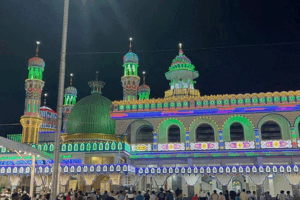
The accounts surrounding both figures include historical claims, local traditions and beliefs about miracles. These stories have shaped their religious legacy, making their shrines important places of pilgrimage. For devotees, visiting a shrine is more than reaching a sacred place; it is an opportunity to pray, seek comfort and renew their faith. The lives associated with these shrines also bring attention to humility, generosity, courage and trust in God. The stories of Ullal Dargah and Hazrat Vavar Swamy’s shrine remain an important part of Kerala’s religious and cultural heritage.
Hazrat Syed Muhammad Shareeful Madani: From Madina to Ullal
Hazrat Syed Muhammad Shareeful Madani is associated with Ullal Dargah in Dakshina Kannada. According to local tradition, he arrived in Ullal around 500 years ago from Madina, Saudi Arabia, reportedly crossing the sea on a piece of chader or musalla (cloth or prayer mat). After arriving, Hazrat Syed Muhammad Shareeful Madani stayed at a small mosque in Melangadi, identified in the supplied account as the site of the present Juma Masjid serving Ullal, Permannur, Someshwar Kotekar and Jeppinamogeru. He lived simply and devoted himself to prayer. His piety, affection for the poor and concern for people’s difficulties drew villagers to him. Many believed his prayers and spiritual powers helped resolve their problems. Stories of miraculous healing spread, attracting people from different castes and religious backgrounds who came to see him and seek his blessings. His appeal extended beyond his immediate religious community. People approached him with illnesses, personal difficulties and other concerns, finding hope in his prayers. These traditions remain central to how devotees remember his compassion and spiritual influence. His remembered life centres on simplicity, devotion, care for the poor and a willingness to help people through prayer. These qualities continue to shape his legacy at Ullal Dargah.
Ullal Dargah: Devotion, Healing and a Living Tradition
The shrine of Hazrat Syed Muhammad Shareeful Madani, known as Ullal Dargah or Syed Madani Dargah, is located on Ullal Darga Road, Ullal, Mangalore, Dakshina Kannada, India. People from different castes and communities reportedly visited him, seeking his prayers and blessings. Stories of miraculous healing contributed to his reputation, Stories of healing have played an important role in shaping his reputation, drawing people from different communities to seek his prayers, comfort and blessings. These traditions remain an important part of his spiritual legacy and the devotion he inspires among visitors. His remembered concern for the poor adds another dimension to the shrine’s significance. For devotees, his legacy represents a connection between religious devotion, compassion and the everyday struggles of ordinary people. The dargah hosts its Urus once every five years, it attracts pilgrims from across India who gather to honour Hazrat Syed Muhammad Shareeful Madani and seek blessings.
Ullal Dargah is also popularly known as the “Ajmer Dargah of the South,” reflecting its reputation as a significant pilgrimage destination. The five-year interval gives the Urus a special place in the shrine’s calendar, bringing together devotees who share reverence for the saint. Through its traditions, prayers and gatherings, the dargah continues to preserve the memory of Hazrat Syed Muhammad Shareeful Madani. His association with simplicity, healing and concern for the poor remains central to the way devotees understand his life and legacy.
Hazrat Vavar Swamy: His Place in Sabarimala’s Sacred Tradition
Hazrat Babar Auliva, popularly known as Hazrat Vavar Swamy or Vavaraswami, is associated with a shrine at Sannidhanam, Sabarimala, Kerala, beside the main temple dedicated to Lord Ayyappa. As per tradition, a carved stone slab associated with Hazrat Vavar Swamy is kept at the shrine. A green silk cloth hangs across one of the three walls, while the fourth side remains open. An old sword is kept near the wall, symbolising his traditional association with warfare. Different legends describe his origins. One presents him as a saint who travelled from Arabia to India to spread Islam; another portrays him as a warrior who arrived by ship on the Kerala coast, intending to loot and plunder, so both remain distinct traditions about his early life. The tradition connecting Hazrat Vavar Swamy with Lord Ayyappa has contributed to the shrine’s significance among Hindu devotees. Many Hindu pilgrims visit the dargah, and some revere Vavar Swamy in a manner comparable to a divine figure because of his association with Lord Ayyappa.
A stone at the shrine serves as the focus of devotion in place of a conventional statue. Despite its importance to Hindu pilgrims, the dargah is maintained by Muslim khadims, and its religious practices and rituals are conducted according to Muslim traditions. This distinctive arrangement reflects the shrine’s shared religious significance, where Hindu devotion to Vavar Swamy’s connection with Lord Ayyappa coexists with the dargah’s Muslim custodianship and ritual practices. This story remains central to his remembered identity, describing how an encounter between two figures developed into an enduring association. The old sword preserved at the shrine reflects his reputation as a warrior and serves as a visible reminder of this tradition.
Rituals, Pilgrimage and Distinctive Customs
According to tradition, Lord Ayyappa instructed the King of Pandala Desam to build a mosque for Hazrat Vavar Swamy at Erumely, in Kottayam district. The account also records that the shrine underwent renovation around 1905. Green pepper is offered in Hazrat Vavar Swamy’s name, while devotees recite Fateha, a prayer of blessing. A local belief holds that pilgrims who fail to visit the shrine or offer Fateha may encounter difficulties during their journey. This belief forms part of the devotional tradition rather than an established historical fact. Such practices reflect the importance attached to prayer and observance of customary rituals by those who visit the shrine. Another tradition involves goats brought by pilgrims. Some devotees believe that taking a goat along will help ensure a safe journey to the temple. According to the available account, the goats are subsequently auctioned by the temple authorities. This practice forms another distinctive element of the customs associated with the pilgrimage.
The shrine at Erumely is approximately 50 kilometres from Sabarimala, which lies deep within the forested region of Pathanamthitta. Its location makes it a notable part of the wider pilgrimage landscape, where religious observances accompany the physical journey. For many pilgrims, visiting the shrine involves prayer, preparation and respect for established customs. These traditions have helped preserve Hazrat Vavar Swamy’s place in the Sabarimala pilgrimage over generations. The shrine’s customs and its association with Lord Ayyappa continue to attract devotees who understand this relationship in different ways. Its enduring significance lies in its place within the pilgrimage tradition and the practices through which devotees remember Hazrat Vavar Swamy.
Humanity, Faith and the Meaning of Shared Spiritual Heritage
Hazrat Syed Muhammad Shareeful Madani and Hazrat Vavar Swamy are remembered through distinct religious traditions that reflect different aspects of spiritual devotion. Hazrat Syed Muhammad Shareeful Madani is associated with a simple life, prayer, healing traditions and compassion towards the poor, while Hazrat Vavar Swamy is known through legends of courage and his association with Lord Ayyappa. At Ullal, devotees remember Hazrat Syed Muhammad Shareeful Madani for welcoming those facing difficulties and showing concern for people experiencing hardship. The shrine of Hazrat Vavar Swamy, maintained by Muslim khadims and following Islamic rituals, also holds a place in the wider Sabarimala pilgrimage tradition, attracting Hindu devotees because of his traditional connection with Lord Ayyappa.
Although their histories and religious practices differ, both shrines preserve distinctive spiritual traditions. The accounts associated with these figures highlight qualities such as humility, courage, compassion and generosity. Their significance lies in their respective histories and the customs through which devotees continue to honour them, without overlooking the distinct religious identities of the two shrines. In a world where poverty, illness and social divisions remain pressing concerns, these traditions offer opportunities to reflect on faith, human dignity and mutual respect. They also show how religious figures and sacred places can remain meaningful across generations. Their stories continue to hold meaning for devotees and offer insight into the religious traditions, beliefs and customs that have preserved their memory across generations.
_____
- Adnan Faizi is a Peace and Harmony activist based in Delhi. He is an alumni of CCS University, Meerut.
(CREDIT: NEW AGE ISLAM)