
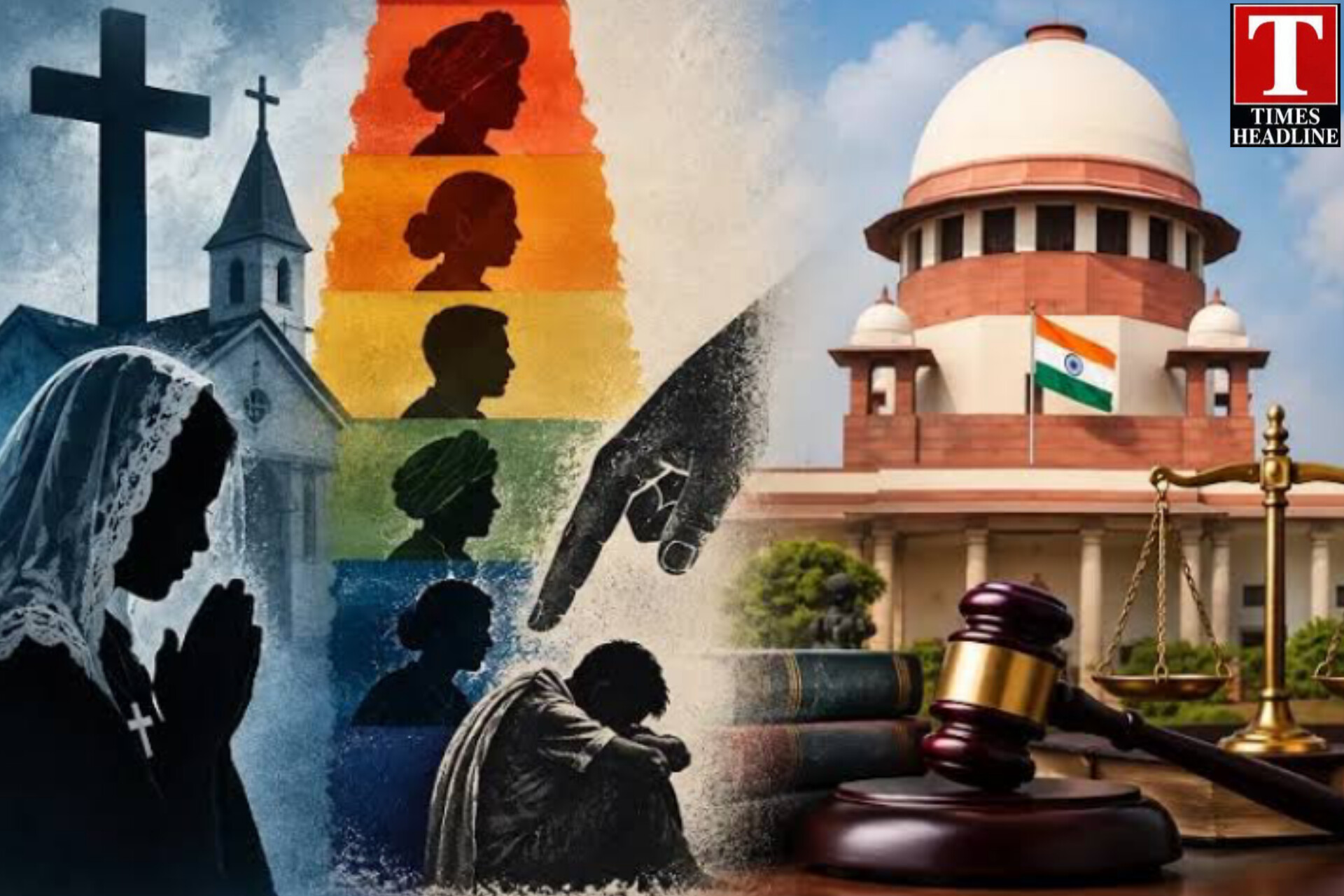
Politics, not justice, remains the main hurdle in Dalit Christians’ quest for constitutional rights.
The hopes of about 20 million Christians, whose ancestors converted from the then untouchable castes, for constitutional rights have been dashed again, not by a three-judge constitutional bench of the Supreme Court which has been hearing their petitions since 2004, but from smaller benches that have upheld the status quo.
Under current laws, Dalit Christians can seek neither legal protection against insults and discrimination nor the affirmative action available to relatives who remained Hindu or converted to Sikhism or Buddhism, faiths that historically challenged the Brahminical caste structure.
No census has enumerated the castes bunched into the four main divisions, or varnas, of the traditional Hindu social hierarchy in independent India, although the first caste-based survey is expected within two years.
The groups once considered untouchable, now calling themselves as Dalits, and the Indigenous tribal communities of central India and eastern North East states have historically existed outside the >
Christians make up about 2.3% of the population, and community representatives estimate Dalit converts account for 60% of that number. They were drawn to the faith after the 1498 Portuguese arrival on the western coast, and later the evangelical work of missionaries in the late nineteenth and early twentieth centuries, in areas such as present-day Tamil Nadu, Telangana, Andhra, Bengal, Odisha, Punjab and the Indo-Gangetic plains.
Kerala in May 2018. Kevin P. Joseph, a 23-year-old Dalit Christian from Kottayam, was abducted by a gang led by the brother of his fiancée, Neenu Chacko, 21, who came from a socially dominant Christian family. Kevin and Neenu had applied for a civil marriage. Kevin’s body was later found in a canal at Thenmala.
The constitutional validity of Clause 3 of the 1950 order has been pending before a three-judge Supreme Court bench in Ghazi Saaduddin v. State of Maharashtra since at least 2004. In April 2024, the hearing was deferred after the Union government appointed the Balakrishnan Commission.
The case, registered under Civil Appeal Nos. 329-330 of 2004, was assigned to a three-judge bench and grouped with writ petitions filed by Dalit Christians, including W.P. (C) No. 180 of 2004, and other related appeals and petitions.
Yet the two judgments delivered this year addressed questions the larger bench was constituted to resolve, without referring them to that bench, waiting for the commission’s findings, or hearing the full constitutional arguments.
Thus, a question of profound consequence has been answered piecemeal through a criminal appeal and a service matter, while the principal petitions remain unheard.
Such rulings risk conflicting decisions and undermine the larger bench’s authority. The federal government did not bring the pending constitutional challenge to the two benches’ attention. Consequently, the absolute bar declared in the Chinthada Anand case now binds every High Court and tribunal in the country, even though the three-judge bench may eventually reach a different conclusion.
Dalit Sikhs were included for the benefits in 1956 after Dalit Sikh leaders, whose community carried significant electoral weight in Punjab, made representations. Buddhists were included in 1990 after the rise of the neo-Buddhist movement inspired by Ambedkar, which had become an important political constituency in Maharashtra and elsewhere.
Christians and Muslims have remained excluded because successive governments have judged the political cost of extending these protections to them to outweigh the benefits.
The consequences are concrete: a Dalit Christian pastor can be abused with casteist slurs without recourse to the Atrocities Act.
As it did in 1950, the state is effectively telling citizens that protection against caste discrimination comes at the price of remaining within a religion the courts treat as caste’s natural home. This is difficult to reconcile with Article 25, which guarantees every citizen the freedom to profess and practice a faith of his choice, and with the wider promise that no citizen should lose equal protection for changing belief.
Parliament remains free to amend the 1950 order under Article 341 and make Scheduled Caste status religion-neutral, as the Ranganath Misra Commission recommended. But the ruling Bharatiya Janata Party and its ideological parent, the Rashtriya Swayamsevak Sangh, are on record saying they will never give statutory Scheduled Caste rights to Christian or Muslim converts from the former untouchable groups.