
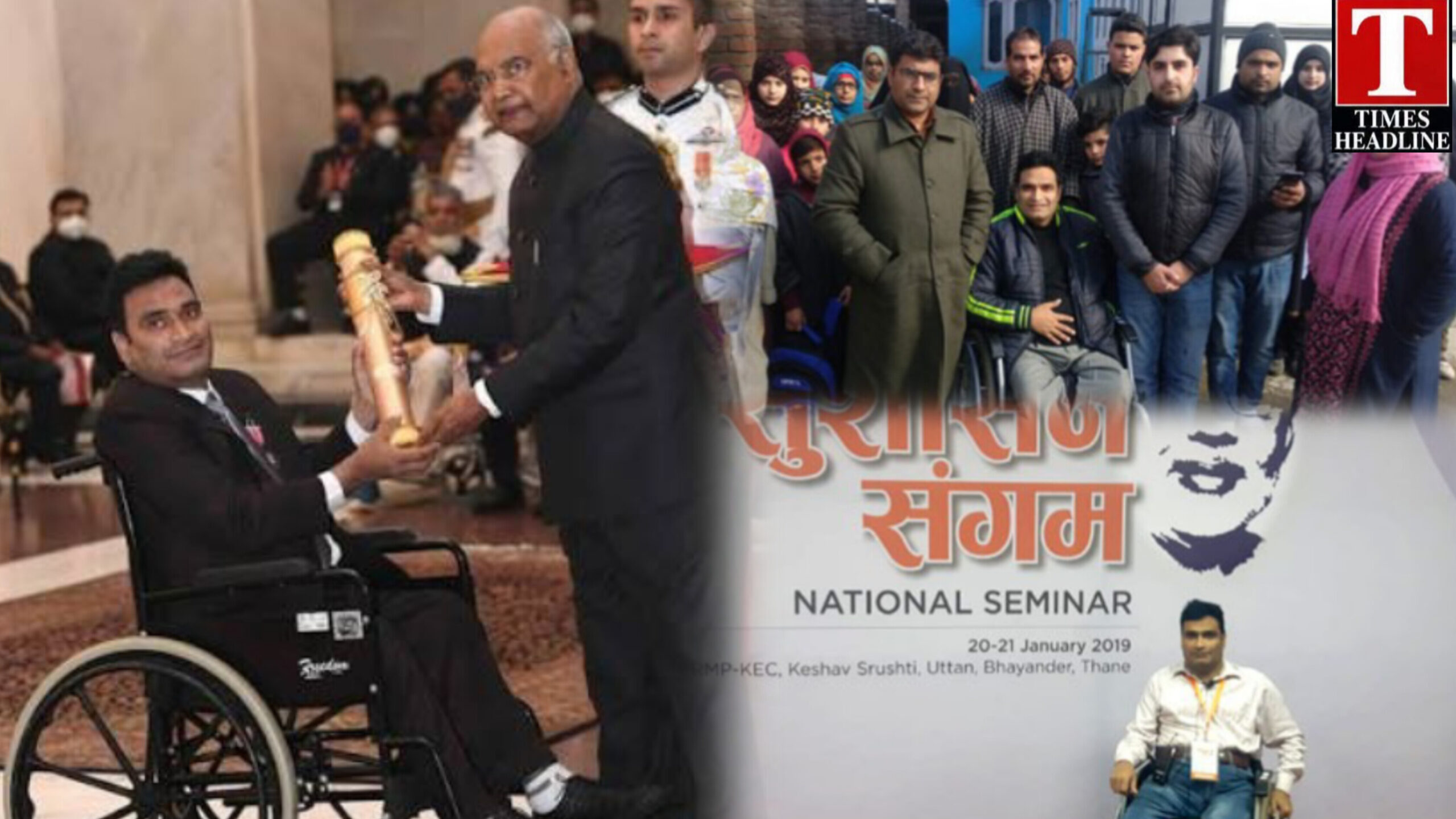
In the picturesque valley of Kashmir, where the beauty of the mountains stands alongside the painful memories of conflict, the story of Javed Ahmad Tak shines as a powerful example of courage, resilience, and patriotism. A resident of Bijbehara in Anantnag district, Jammu and Kashmir, Tak transformed a life-altering tragedy into a lifelong mission to empower persons with disabilities and provide education to children who are often overlooked by society. His journey demonstrates that patriotism is not limited to serving in uniform or raising slogans for the nation. It can also be expressed through selfless service, the fight for equal rights, and the determination to ensure that every citizen gets an opportunity to live with dignity.
In 1997, when Javed Ahmad Tak was a young student with dreams and ambitions, his life took a devastating turn. During an incident involving armed militants, he was caught in gunfire while attempting to protect his uncle. A bullet severely damaged his spinal cord, leaving him paralysed from the waist down and dependent on a wheelchair. The physical injury was only one part of his ordeal. His dreams of pursuing a conventional career were disrupted, and he faced the emotional challenge of adjusting to a life radically different from the one he had imagined. He spent an extended period in hospital and underwent multiple medical procedures. For a young man whose future had once seemed full of possibilities, the experience was profoundly difficult.
Yet, the tragedy did not destroy his determination. Instead, it gradually redirected his life towards a larger purpose. Tak refused to allow his physical condition to define his worth or limit his contribution to society. His experience of vulnerability helped him understand the struggles faced by persons with disabilities, particularly children who are denied education, independence, and social acceptance.
A turning point came when Tak encountered disability-rights activist Javed Abidi, whose work helped him recognise that disability should not be treated as a source of shame or social exclusion. This new perspective encouraged him to look beyond his personal suffering. Rather than asking what he had lost, he began considering what he could do for others facing similar challenges. He continued his education, developed his knowledge of social work and human rights, and strengthened his commitment to public service. His journey became an example of how adversity, when met with determination and the right support, can inspire meaningful social change. Tak’s decision to dedicate his life to people with disabilities was particularly significant in a region where prolonged conflict, limited resources, and inadequate accessibility have created additional challenges for vulnerable communities.
Tak’s commitment to social service took institutional shape with the establishment of the Humanity Welfare Organisation Helpline in 2003. The organisation was created to support persons with disabilities and other disadvantaged sections of society through education, rehabilitation, medical assistance, and advocacy for their rights. One of his most significant achievements was the establishment of the Zaiba Aapa Institute of Inclusive Education in 2008. The institute began in a small rented room with just two visually impaired girls. Over time, it developed into a centre providing educational and rehabilitation services to children with different disabilities in South Kashmir. Tak’s initiative also challenges a deeply rooted social misconception: that disability defines a person’s potential. His work demonstrates that when children receive appropriate opportunities and support, their abilities can flourish.
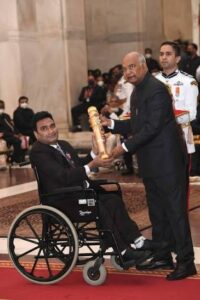
In 2020, the Government of India selected Javed Ahmad Tak for the Padma Shri in the field of Social Work, recognising his contribution to the welfare of persons with disabilities. The honour brought national recognition to a social worker whose efforts had grown from personal experience and a commitment to helping others. His recognition also highlights an important aspect of India’s national character: the country honours contributions to humanity, including work that often takes place far from the public spotlight. Tak’s story is a reminder that the people who strengthen a nation are not always those whose achievements make headlines every day. Many serve quietly, building institutions, supporting vulnerable communities, and creating opportunities for future generations.
For Javed Ahmad Tak, patriotism is expressed through action. He could have spent his life defined by the tragedy he experienced during Kashmir’s years of armed conflict. Instead, he chose to build something positive from that experience. He turned personal suffering into public service and transformed the challenges of disability into a mission for dignity and inclusion. His journey carries a powerful message for India’s youth: the circumstances into which we are born, the hardships we experience, and the obstacles we encounter do not have to determine the limits of our contribution. Tak’s work also offers an important perspective on Kashmir. Beyond the familiar narratives of conflict and political disagreement, the region is home to people whose dedication, compassion, and achievements contribute to the country’s social progress. His life deserves recognition as part of that larger story.
Javed Ahmad Tak’s journey from a hospital bed to the leadership of a social welfare organisation is a story of determination, but it is also a story about the power of human solidarity. His achievements demonstrate that physical limitations do not eliminate the ability to lead, inspire, or transform society. More importantly, they show that the greatest victories are often those that enable others to overcome their own barriers.
Javed Ahmad Tak embodies a patriotism rooted in compassion, courage, and service. His life reminds us that loving one’s country means working to make it more inclusive, more just, and more humane.