
By Farooq Ganderbali
Every year on 27 October, Pakistan observes what it calls “Black Day” in Jammu and Kashmir. However, before making political claims about Kashmir, Pakistan must answer an important question: why does it ignore the events of October 1947, when armed tribal raiders entered Jammu and Kashmir from the direction of Muzaffarabad (OPK) and advanced towards Srinagar?
History cannot be changed through propaganda or selective remembrance. The people of Jammu and Kashmir deserve to know the truth about the events that shaped their future.
The invasion of 1947
Following the Partition of British India in 1947, Maharaja Hari Singh initially sought to maintain Jammu and Kashmir’s independence. On 22 October 1947, tribal raiders entered the state and advanced towards Srinagar. The invasion brought widespread fear, looting, killings and destruction to several areas.
Baramulla witnessed some of the most tragic events of that period. St. Joseph’s Mission Hospital and its adjoining institutions were attacked, and civilians, including women and members of the mission community, suffered during the violence.
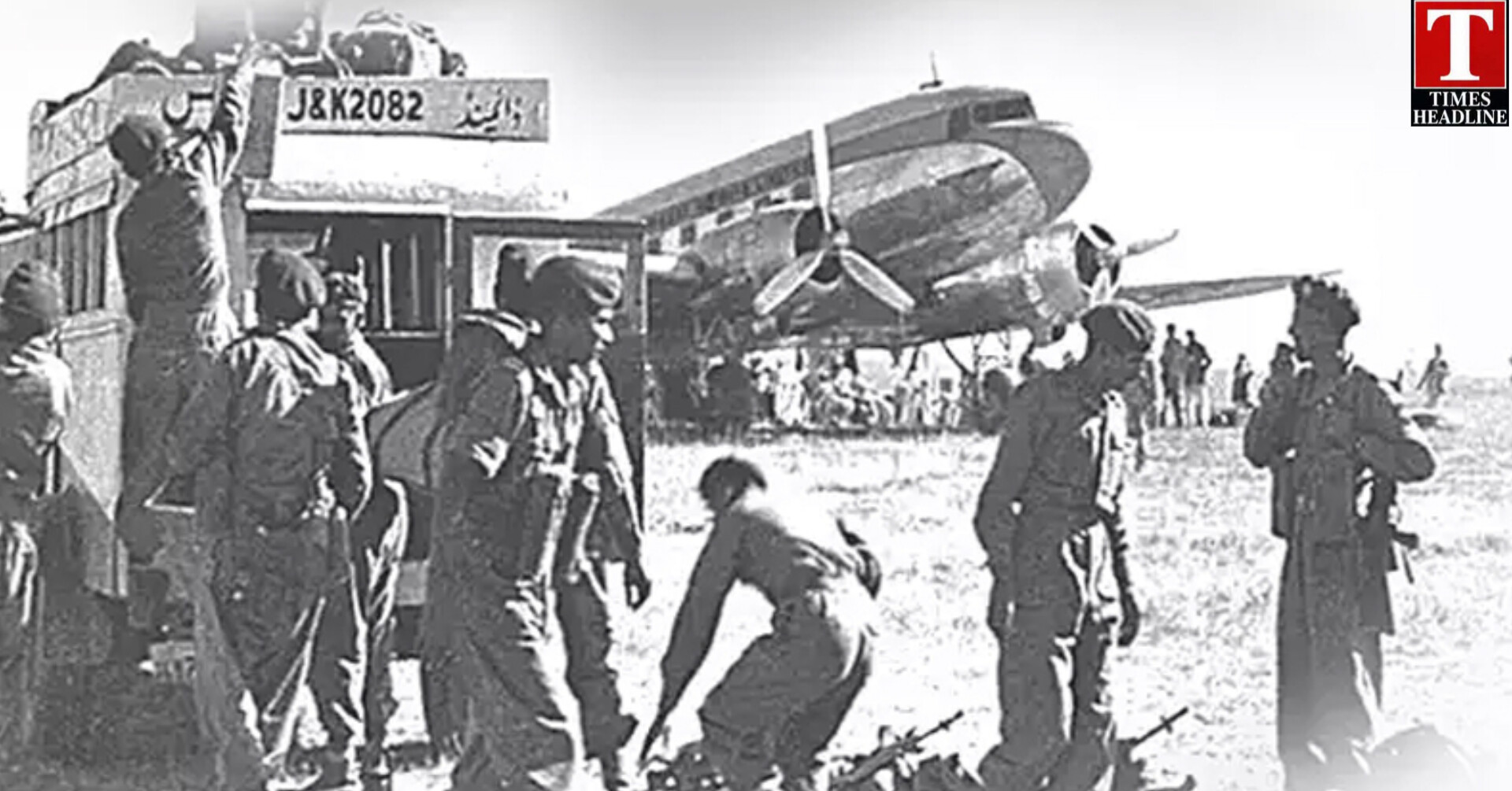
As the situation deteriorated, Maharaja Hari Singh sought military assistance from India. He signed the Instrument of Accession on 26 October 1947, and Indian troops arrived in Srinagar on 27 October to defend the region against the advancing raiders.
These historical events cannot be separated from any discussion of 27 October. Pakistan’s portrayal of the day as a symbol of suffering ignores the invasion that preceded the arrival of Indian troops and the circumstances that led to accession.
The people of Jammu and Kashmir had already experienced the fear and devastation of armed violence. The defence of Srinagar was crucial to preventing the advancing raiders from taking control of the city.
Pakistan’s Kashmir policy and the cost of conflict
For decades, Jammu and Kashmir has suffered from militancy, terrorism and cross-border tensions. Thousands of families have lost loved ones, and young people have grown up amid uncertainty and violence.
Pakistan has repeatedly made Kashmir a central issue in its political and diplomatic campaigns. India has accused Pakistan-based groups and networks of supporting terrorism in Jammu and Kashmir, allegations Pakistan has denied. Nevertheless, attacks on civilians and the consequences of militancy remain serious concerns that cannot be dismissed through political slogans.
The people of Kashmir need peace, education, employment, healthcare, tourism and opportunities for their children. They do not need more violence or attempts to turn young people towards extremism.
If Pakistan genuinely cares about Kashmiris, it should demonstrate that concern by supporting peace and rejecting terrorism. Religious identity cannot justify violence, interference or the destruction of innocent lives.
Jammu and Kashmir deserves peace and development
Today, people across Jammu and Kashmir aspire to a better future through education, tourism, sports, entrepreneurship and economic development. Improved infrastructure, educational institutions, healthcare facilities and opportunities for women and young people are essential to building a peaceful society.
The attack on tourists in Pahalgam in April 2025, in which 26 people were killed, demonstrated once again how terrorism threatens innocent lives, tourism and the livelihoods of ordinary families. Such violence deserves unequivocal condemnation.
Kashmir’s tourism industry supports thousands of families, from hotel owners and transport operators to guides, artisans and small traders. Every terrorist attack damages public confidence, threatens livelihoods and undermines the region’s prospects for lasting peace.
Our youth should be encouraged to participate in sports, pursue higher education, develop professional skills and contribute to society. They must not become victims of radicalisation or instruments of a prolonged political conflict.
What about people in Pakistan-occupied Jammu and Kashmir?
While Pakistan raises slogans about Kashmir internationally, people in Pakistan-administered Jammu and Kashmir have also protested over electricity prices, food costs, economic hardship and demands for better public services and political rights.
Their concerns deserve attention and a peaceful, democratic response. Reports of deaths and allegations of excessive force during protests must be investigated impartially, and those responsible for any unlawful violence should be held accountable.
The people living across the Line of Control share many basic aspirations: affordable food and electricity, good schools, accessible hospitals, employment and justice. Their needs should matter more than the political interests of governments.
Human rights cannot be defended selectively. The suffering of ordinary people deserves recognition, whether they live in Indian-administered Jammu and Kashmir or Pakistan-occupied Jammu and Kashmir.
The answer to propaganda is truth
Pakistan’s annual observance of 27 October cannot erase the historical record of the 1947 invasion, the suffering of civilians or the circumstances surrounding Maharaja Hari Singh’s accession to India.
Jammu and Kashmir’s history is complex, and its people have endured immense suffering over many decades. Remembering that history responsibly requires acknowledging documented events rather than using the past to fuel hatred or another generation of conflict.
Pakistan should reflect on the consequences of the 1947 invasion and the human cost of decades of hostility. Instead of using Kashmir primarily as a political slogan, it should support efforts to prevent terrorism, protect civilians and promote regional stability.
Jammu and Kashmir deserves a future defined by peace, unity, education, women’s empowerment, tourism and development—not terrorism, radicalisation and violence. Our young generation deserves opportunities to succeed, families deserve security, and communities deserve to live together with dignity.
The real strength of Jammu and Kashmir lies in its people, their resilience and their determination to build a better future. No propaganda campaign can replace the need for truth, accountability and lasting peace.