
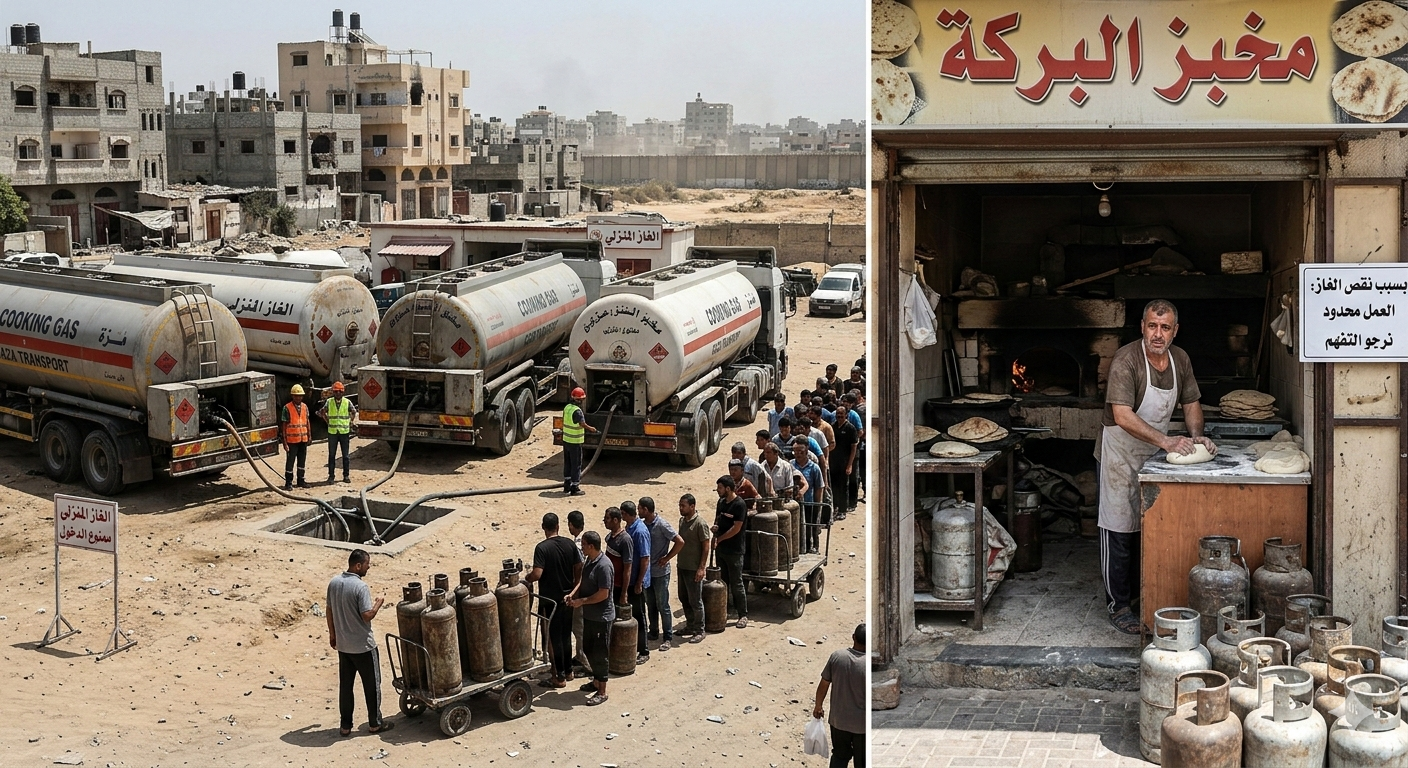
After a 10-day interruption, the supply of cooking gas to the Gaza Strip resumed on Monday. However, local authorities say that the amount allowed to enter the region is extremely small compared to the needs of the people there, and it is unlikely to provide any significant relief from the ongoing severe crisis for now.
Nahed Shehbar, the head of Gaza’s Private Transport Association, said that four trucks carrying cooking gas were allowed to enter Gaza on Monday. However, two other trucks that were part of the same convoy were not permitted to unload the gas and had to return empty.
In a conversation with Al-Araby Al-Jadeed, Shehbar said that the amount of gas that reached Gaza is extremely limited and insufficient to meet the needs of the population. He added that the 10-day suspension of supplies had already significantly increased the difficulties faced by people and businesses.
He also said that a day earlier, eight trucks carrying gas had reached the crossing, but even after waiting for hours they were not granted permission, and all the trucks had to return without unloading the gas.
According to estimates by local authorities, about 8,000 tons of cooking gas are needed every month to meet Gaza’s minimum requirements, which is roughly 260 tons per day. However, even before the recent shutdown, the amount of gas entering Gaza did not exceed 20 percent of the total need.
According to figures from Gaza’s Petroleum Authority, a total of 361 trucks carrying gas entered Gaza from the ceasefire in October until mid-February. Through these trucks, about 7,000 tons of gas were delivered, which is enough to meet Gaza’s needs for less than a month.
This severe shortage of gas is now clearly affecting local businesses as well. In particular, businesses such as restaurants, bakeries, and sweet shops, which rely heavily on cooking gas, are facing a serious crisis.
Business owners say that if the gas supply does not improve soon, they may have to limit their operations or could even be forced to shut down completely.