
by Farooq Ganderbali
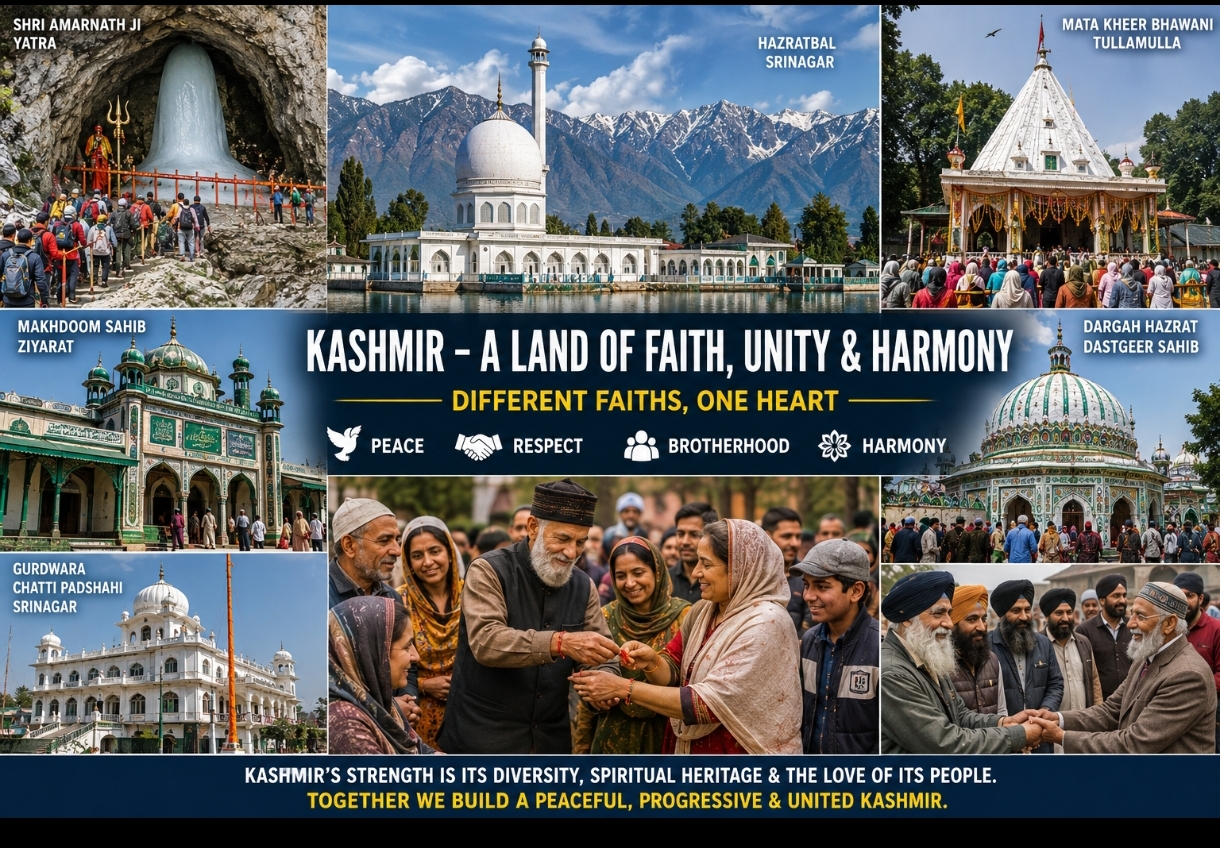
For centuries, Kashmir has been known not only for its breathtaking beauty but also for its unique culture of Kashmiriyat, Sufism, spirituality, hospitality and communal harmony. The Valley’s identity has been shaped by the shared traditions of people belonging to different faiths. The spirit of “Peer-Veer” represents a Kashmir where Sufi shrines, Hindu temples, Sikh gurdwaras and other sacred places existed as part of one shared cultural landscape.
The people of Kashmir have traditionally welcomed visitors with warmth and affection. “Atithi Devo Bhava” has been reflected in the way Kashmiri people treat tourists and pilgrims—as guests of the Valley. Whether a visitor comes for Shri Amarnath Ji Yatra, to visit a Sufi shrine, a temple or simply to experience Kashmir’s natural beauty, the traditional Kashmiri hospitality remains one of the Valley’s greatest strengths.
This beautiful social fabric suffered a devastating setback after militancy erupted in 1989. Pakistan-sponsored terrorism, radicalism and violence damaged Kashmir’s social and cultural traditions. Religious places and symbols of faith were affected, communities were displaced, and fear entered everyday life. The damage was not limited to one community. Kashmir’s Muslim, Hindu and Sikh heritage all suffered from the prolonged period of violence.
For decades, the Valley could not fully express the religious and cultural traditions that had defined it for generations. Yet the spirit of Kashmiriyat survived.
Today, there are visible signs of a renewed confidence in Kashmir’s religious, cultural and spiritual life. Following the changes of 2019, including the abrogation of Article 370, improvements in security, infrastructure, connectivity and administration have contributed to an environment in which people can increasingly visit religious places, participate in festivals and celebrate their traditions openly.
The Shri Amarnath Ji Yatra is one of the most visible examples. From around 4824 pilgrims in 1990, the Yatra has reached approximately 6.35 lakh pilgrims this year. The enormous growth over more than six decades reflects not only the enduring faith of devotees but also improved facilities, connectivity, security arrangements and the confidence of pilgrims to undertake the sacred journey.
But Kashmir’s spiritual revival is much broader than one pilgrimage.
At Hazratbal, Makhdoom Sahib, Dastgeer Sahib, Khanqah-e-Moula, Charar-e-Sharief and countless smaller ziyarat sites across the Valley, people continue to connect with Kashmir’s rich Sufi heritage. The annual Urs celebrations at these shrines are not merely religious occasions; they are also expressions of Kashmir’s cultural identity and collective spiritual life.
Similarly, Mata Kheer Bhawani at Tullamulla, the Shankaracharya Temple and other ancient Hindu sacred places represent the deep historical and spiritual heritage of Kashmiri Pandits. The continued devotion to these places and the return of devotees are important signs of cultural revival.
Kashmir’s Sikh heritage also forms an important part of this shared landscape. Historic gurdwaras, including Gurdwara Chatti Padshahi in Srinagar, represent the longstanding presence and contribution of the Sikh community to Kashmir’s social and cultural life.
The beauty of Kashmiriyat can also be seen in the way ordinary people respect each other’s faith. It is not unusual to see people from different communities visiting religious places, respecting each other’s festivals and participating in celebrations. During Urs of revered Sufi saints, people from different backgrounds come together in an atmosphere of devotion and brotherhood. Likewise, the importance of Mata Kheer Bhawani and other Hindu religious occasions is understood and respected by people across the Valley.
This is the Kashmir that many generations inherited—a Kashmir where faith was a bridge, not a barrier.
A Muslim visiting a Sufi shrine, a Kashmiri Pandit visiting Mata Kheer Bhawani, a Sikh visiting a historic gurdwara and a devotee travelling to Shri Amarnath Ji may follow different religious traditions, but all are part of Kashmir’s shared civilisational story.
The presence of people from different communities at one another’s religious and cultural occasions is perhaps the strongest expression of Kashmiriyat. Religious unity does not mean uniformity of faith; it means respect for every faith.
Kashmir’s relationship with tourists is another important part of this positive transformation. For decades, visitors from across India and the world have been drawn to Kashmir not only because of its mountains, lakes and gardens but because of the warmth of its people. Kashmiri hospitality has always treated guests with affection and dignity. The growing number of pilgrims and tourists is therefore also a sign of renewed confidence and a revival of the Valley’s welcoming spirit.
The return of large numbers of devotees to religious places is more than a matter of statistics. It represents confidence, freedom, cultural revival, religious harmony and peace.
The Kashmir of Sufism, Hindu-Muslim friendship, Sikh heritage, spiritual traditions and warm hospitality was badly damaged by decades of terrorism and radicalism. But the soul of Kashmiriyat could not be destroyed.
Today, Kashmir has an opportunity to strengthen that heritage once again.
The future of Kashmir should be a future where Hazratbal and Mata Kheer Bhawani, Makhdoom Sahib and Chatti Padshahi, Shri Amarnath Ji and countless other sacred places flourish side by side; where people visit one another’s religious and cultural celebrations with respect; where Urs and festivals become occasions for brotherhood; and where tourists are welcomed as honoured guests.
Kashmir’s greatest strength has never been one community alone. Its strength has always been its diversity, spirituality, hospitality and ability to live together.
After decades of violence and fear, the renewed presence of pilgrims, devotees, tourists and families at Kashmir’s sacred places sends a powerful message:
Kashmiriyat is alive. Sufism is alive. Religious harmony is alive. The spirit of hospitality is alive.
A peaceful Kashmir where every person can worship freely, preserve their traditions, respect another’s faith and welcome visitors with an open heart is the Kashmir that the world should see.
This is not merely the revival of religious places—it is the revival of Kashmir’s soul.