
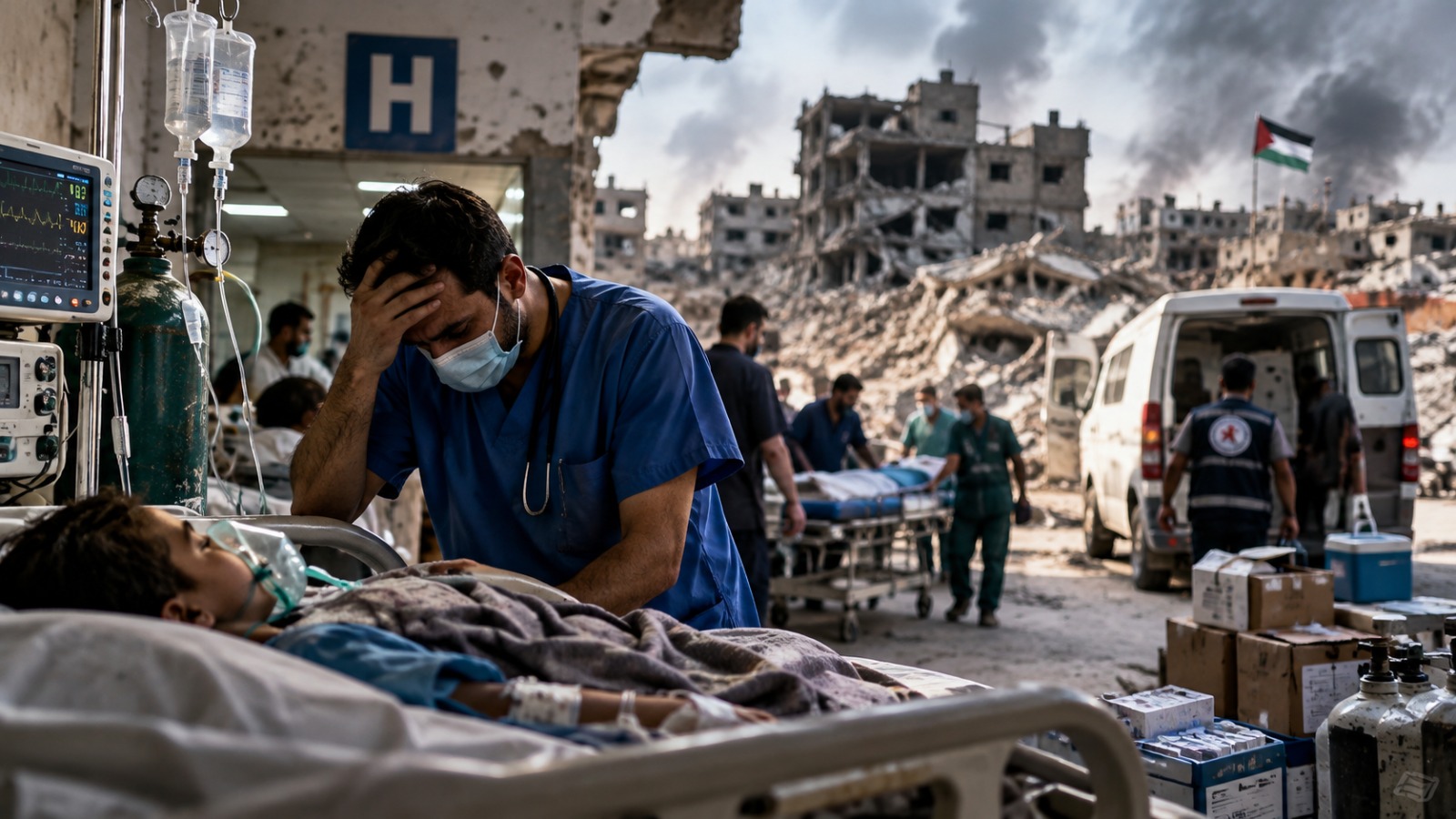
Gaza: The health system in the Gaza Strip is approaching a critical point of collapse, with NGOs warning that shortages of medicines, medical supplies, fuel and essential operational materials are severely undermining hospitals and health facilities. At a press conference on Sunday, the NGO Network said the continued restrictions on the entry of medical and operational supplies, combined with the ongoing humanitarian crisis, are steadily reducing the ability of healthcare facilities to treat patients and the wounded. The network called for urgent international action, including pressure to restore electricity supplies and facilitate the entry of essential health materials that it says are being restricted under Israel’s classification of certain items as “dual-use.”
According to figures cited by the NGO Network, 26 of Gaza’s 38 hospitals are no longer operational, following damage and attacks since the beginning of the war. The health sector is also facing severe shortages of medicines and medical consumables. The reported shortage of medicines stands at around 50 per cent, while the shortage of medical supplies is estimated at approximately 58 per cent. The oxygen supply system is also under severe pressure. Only 12 of 34 oxygen stations are reportedly operating, increasing risks for intensive-care patients and people who depend on continuous oxygen support.
The crisis extends beyond medicines and medical equipment. Restrictions affecting the movement of healthcare workers are also threatening the regular functioning of health facilities. According to figures attributed to Gaza’s Health Ministry, 99 buses used to transport medical personnel could face disruption because of difficulties in obtaining tyres, batteries and oil. At the same time, medical referrals for patients and wounded people are continuing to accumulate. Media estimates cited by the NGO Network put the number of pending medical referrals at around 20,000, amid continued restrictions on movement through crossings.
Gaza’s prolonged electricity crisis has further intensified pressure on hospitals. With the territory’s electricity supply severely disrupted since October 2023, health facilities have increasingly relied on generators. However, hospitals are also facing shortages of fuel, oil, spare parts and maintenance materials needed to keep generators running. The NGO Network said the price of a litre of oil, when available, has reportedly reached around $1,000, while some hospitals have resorted to reusing burned oil in an effort to keep generators operational.
Health facilities reportedly require around 2,500 litres of oil every month to operate their generators, making restrictions on the entry of such materials an additional threat to healthcare services.
The NGO Network also said the World Health Organization informed 20 non-governmental health facilities—including 13 hospitals and seven health centres—that diesel supplies would stop from September 19 because of a lack of funding. With many medical facilities relying on diesel-powered generators, NGOs warn that reduced fuel supplies could directly affect the operation of hospitals, medical equipment and essential services.
The NGO Network has called on the international community to take immediate steps to prevent further deterioration of Gaza’s health sector. It urged international actors to help restore electricity supplies and remove restrictions affecting the entry of medicines, medical equipment, fuel, spare parts and other essential humanitarian materials. The organisations warned that the simultaneous shortage of medicines and medical supplies, fuel and oil shortages, limited oxygen capacity, transportation difficulties and growing medical referrals are placing unprecedented pressure on Gaza’s remaining healthcare infrastructure.