
(Dr. Shujaat Ali Quadri)
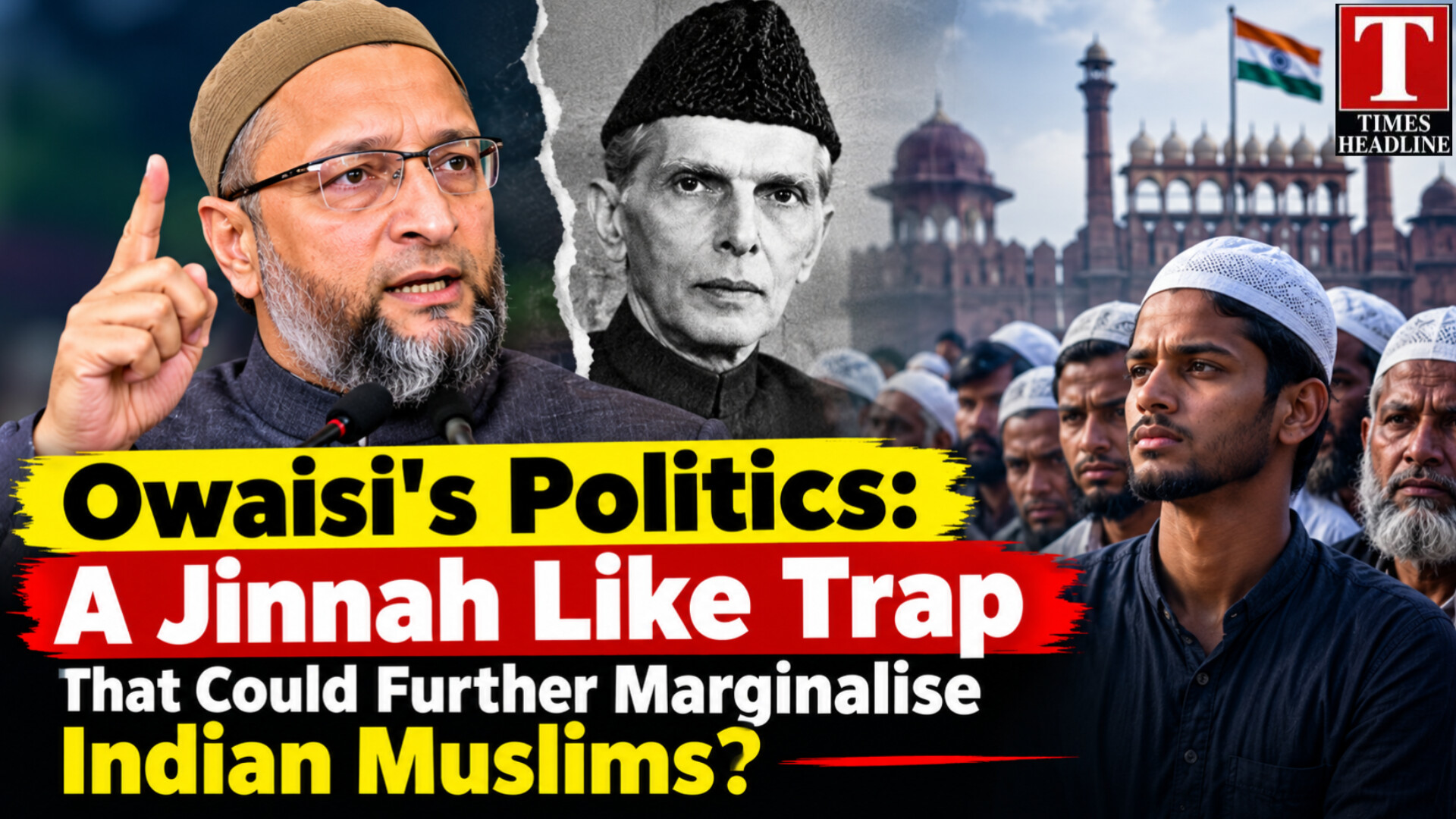
Why identity driven political mobilisation may offer short term emotional satisfaction while weakening long term representation, social integration and political influence Asaduddin Owaisi, the president of the All India Majlis-e-Ittehadul Muslimeen (AIMIM), has once again placed Muslim political identity at the centre of the national debate. Addressing a rally in Rampur, Uttar Pradesh, on October 19, 2026, Owaisi declared that Muslim youth would no longer look towards the Nehru-Gandhi or Yadav political families for leadership. Instead he argued, young Muslim men and women should emerge as leaders in their own right. His message has an undeniable appeal: why should a community with a substantial population continue to depend on political parties whose leadership often remains concentrated in established families?
Yet beneath this apparently empowering message lies a more difficult question. Does Owaisi’s model of identity centred politics genuinely empower Indian Muslims, or does it risk creating a political environment in which the community becomes increasingly isolated from broader democratic coalitions? The answer requires a distinction between the legitimate demand for independent Muslim leadership and a political strategy that treats religious identity as the principal organising force. The former can strengthen democracy. The latter, if pursued without restraint, can undermine the very interests it claims to defend.
Owaisi raises a legitimate concern when he questions why Muslims should repeatedly support established political parties without receiving meaningful opportunities for leadership. Muslim voters, like voters from every other community, have the right to demand accountable representatives, fair candidate selection and a proportionate voice in political decision-making. For decades, many Muslims in Uttar Pradesh have supported the Samajwadi Party and the Congress, often viewing them as alternatives to the BJP. It is reasonable to ask whether these parties have consistently translated Muslim electoral support into leadership opportunities, effective representation and tangible improvements in education, employment and security.
But identifying a genuine grievance does not automatically make every proposed solution effective. If Muslim voters are encouraged to abandon established political alliances primarily because their leaders do not belong to the community, they may exchange one form of political dependency for another. Instead of remaining dependent on a dominant party, they could become dependent on a leader whose political influence also relies on maintaining a sense of collective grievance.
The objective should not be to replace the political monopoly of one family with the political monopoly of one community based party. It should be to develop multiple capable leaders who can compete on merit, build alliances, negotiate policy and represent citizens across religious and social boundaries. Muslim empowerment means having the freedom and capacity to influence every major political platform, not merely creating a separate platform and hoping that others will negotiate with it.
The political test of any strategy is not the intensity of applause at a rally but its ability to translate public support into representation and policy outcomes. AIMIM has struggled to establish a significant electoral presence in Uttar Pradesh. According to reports on its electoral record, the party secured a little over 0.40 per cent of votes in the 2022 Assembly election. In 2017, 37 of its 38 candidates lost their deposits. These figures do not invalidate its right to contest elections, but they raise questions about whether its confrontational approach can deliver the scale of political influence it promises. Owaisi’s supporters can reasonably argue that electoral success takes time and that established parties should not be allowed to monopolise minority representation. That argument deserves consideration. However, an ambitious political project must demonstrate how it intends to move beyond speeches and secure meaningful legislative power.
The central question for Muslim voters should be simple: will a political decision improve their representation and material conditions, or will it merely demonstrate opposition to another party?
Identity-driven politics can generate enthusiasm by presenting a community as neglected, misunderstood or politically betrayed. Such narratives may mobilise voters, particularly young people who feel excluded from established structures. But when grievance becomes the principal source of political energy, it can also narrow the space for constructive engagement. India’s Muslims are not a politically uniform community. They differ in region, language, class, education, occupation and political priorities. A student seeking better universities, a small business owner concerned about credit, a worker seeking secure employment and a family worried about access to public services may require different policy solutions. Reducing these diverse aspirations to a single communal political identity risks overlooking the complexity of everyday life.
Moreover, a politics that consistently frames electoral competition as a contest between Muslim interests and established non-Muslim leadership can reinforce the perception that Muslims belong outside the mainstream of national political life. That perception can become self-defeating. It may discourage broader coalitions, weaken cross-community trust and make it harder for Muslim candidates to build support beyond their immediate constituencies.
There is a fundamental difference between entering mainstream politics to transform it and withdrawing from it because it has failed to meet one’s expectations. Indian Muslims should demand a stronger presence in political parties, legislatures, civil services, universities, business, journalism and public institutions. They should challenge tokenism and insist that their votes be matched by meaningful participation in decision-making. An effective Muslim political leader should be capable of speaking confidently about Muslim concerns while also persuading people from other communities to support common objectives. That is a more demanding task than delivering a polarising speech, but it is also a more sustainable route to influence.
The same standard must apply to established parties. They cannot expect Muslim support indefinitely without accountability, nor can they dismiss demands for Muslim leadership as inherently divisive. Democratic inclusion requires both independent political agency and a willingness to cooperate.
Young Muslims must learn to evaluate political leaders through evidence, performance and long term vision rather than emotional slogans. No leader deserves unquestioning loyalty simply because he claims to speak for the community. Equally, no established political party deserves automatic support merely because it describes itself as secular. Ask difficult questions. How many credible candidates has a party developed? What has it achieved in education and employment? How effectively has it protected constitutional rights? Can it build alliances? Does it offer a realistic programme for governance? And can its leadership accept criticism from the very people it claims to represent?
Muslim youth should study history carefully, understand electoral mathematics, participate in student organisations, enter public institutions and develop the skills necessary to lead. They should support leaders who expand opportunities, strengthen democratic institutions and create partnerships across society not those who depend on keeping political grievances alive. Politics is not simply about identity, anger or the satisfaction of seeing a leader challenge an opponent. It is about vision, thought, strategy, negotiation and patience. Sometimes, the most effective political decision is to contest independently; at other times, it is to build an alliance or work within a larger institution to secure concrete reforms.
The real measure of Muslim political empowerment is not how loudly a leader speaks in the community’s name, but how much freedom, dignity, representation and opportunity the community gains through his leadership. Indian Muslims do not have to choose between surrendering their political voice and isolating themselves from the mainstream. They can build independent leadership while remaining active participants in India’s pluralistic democracy.
The future belongs to those who can combine confidence in their identity with commitment to shared citizenship. Muslim youth must therefore be critical, not merely emotional; strategic, not reactive; and patient, not easily provoked. Their objective should be to shape India’s future as equal citizens and capable leaders not to become permanent spectators in a politics defined by division. The path to empowerment is not isolation. It is knowledge, constitutional confidence, political maturity and the courage to build a common future.
_(The Author is the National Convener of Muslim Youth Organisation of India MYO, he writes on a wide range of issues, including, Sufism, Public Policy, Geopolitics and Information Warfare.)_