

By Grace Mubashir
This article is an introductory article to a series on the Union Civil Code and Islamic law in contemporary India. This article gives a historical and evolutionary idea of the debate and the concept’s interaction with Muslims and Islamic law.
Major points:
· A Uniform Civil Code refers to a common set of civil laws covering matters such as marriage, divorce, maintenance, inheritance, adoption and succession, regardless of a person’s religion.
· The aim is to replace, or substantially harmonise, the various personal laws with a single legal framework. In India, though, the phrase does not describe a fully developed national code that has already been enacted.
· The debate over a common civil code did not begin with contemporary Indian politics. Its roots lie in colonial legal administration, the development of religious personal laws, and the difficult task of building a constitutional framework for a society marked by religious, linguistic and cultural diversity.
The UCC debate became especially prominent after the Supreme Court’s 1985 decision in Mohd. Ahmed Khan v. Shah Bano Begum.
· The future of the UCC will depend on how India balances competing constitutional values and on whether lawmakers can build a framework that earns public confidence. A single national code is one possible approach, but its legitimacy cannot rest on uniformity alone.
· Its provisions must be consistent with fundamental rights, and its consequences must be examined across different social and economic groups. Because exemptions and differences exist among state-level codes, it matters a great deal to be clear about what uniformity is meant to achieve.
The Uniform Civil Code (UCC) has become one of the most important and hotly contested questions in India’s constitutional, political and religious life. It touches on the relationship between religion and the state, the rights of women, the protection of minority communities, and what equality really means in a diverse society. For Indian Muslims, the debate matters a great deal, because marriage, divorce, inheritance and family relationships have traditionally been governed, to varying degrees, by rules drawn from Islamic law. Any move to introduce a common civil code inevitably raises questions about religious freedom, citizenship, gender justice and the future of Muslim personal law in a democracy.
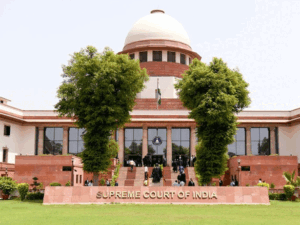
The core question is not just whether India should have one set of civil laws for all its citizens. It is also about what those laws should contain, how they should be developed, whose experiences should shape them, and whether legal uniformity automatically brings social equality. Supporters of the UCC argue that a common framework can strengthen gender justice, simplify legal procedures and promote equality before the law. Critics, especially among religious minorities, worry that uniformity could become a way of imposing the customs or political preferences of the majority on communities with different religious and cultural traditions. Both sets of concerns deserve serious attention.
For Muslims, the challenge is to take part in this debate without treating every proposal for reform as an attack on Islam and without accepting every state-led reform as an unquestionable sign of progress. Islamic law has a long history of interpretation, disagreement and adaptation. Muslim engagement with the UCC therefore has to combine constitutional reasoning, ethical reflection, historical understanding and a firm commitment to the dignity of every individual. The debate should not be reduced to a showdown between religion and modernity. It can instead be an opportunity to examine how religious traditions, democratic institutions and principles of justice can live together in contemporary India.
What Is the Uniform Civil Code?
A Uniform Civil Code refers to a common set of civil laws covering matters such as marriage, divorce, maintenance, inheritance, adoption and succession, regardless of a person’s religion. The aim is to replace, or substantially harmonise, the various personal laws with a single legal framework. In India, though, the phrase does not describe a fully developed national code that has already been enacted. It stands for a constitutional goal and a long-running political and legal debate about how family law should be regulated.
India’s current arrangement is mixed. Some civil matters are governed by laws that apply broadly across religious communities, while others are shaped by religion-specific personal laws and customary practices. Hindu personal law, for instance, has been codified through several statutes covering marriage, succession, guardianship and adoption. Muslim personal law operates through a combination of legislation, judicial decisions, recognised religious principles and established community practice. Christian and Parsi communities also have specific laws on aspects of family life. Tribal customs and other community-specific practices add further complexity.

It is important to separate uniformity from equality. A common law can establish equal rights, but it can also reproduce inequalities if it is poorly designed. Likewise, different legal traditions do not always mean citizens are treated unequally in practice. The real question is whether the law protects individuals against discrimination, ensures fair procedures and provides effective remedies when rights are violated. A UCC could advance these aims, but its success would depend on its content, the process by which it is introduced, and how far ordinary citizens can actually access justice under it.
A serious discussion must also distinguish between Islamic religious teaching, the jurisprudential traditions developed by Muslim scholars, personal law as recognised by the Indian legal system, and the everyday practices of Muslim families. These are related but not identical. Social customs are sometimes presented as religious requirements even when their standing within Islamic jurisprudence is disputed. Conversely, a practice may have a recognised basis in a particular legal school while remaining open to debate about how it should apply today. Keeping these distinctions in view is essential for any meaningful discussion of the UCC and Muslim personal law.
The Historical Roots of the UCC Debate
The debate over a common civil code did not begin with contemporary Indian politics. Its roots lie in colonial legal administration, the development of religious personal laws, and the difficult task of building a constitutional framework for a society marked by religious, linguistic and cultural diversity. Under British rule, the colonial administration adopted different approaches to governing family relationships among India’s religious communities. The Warren Hastings judicial plan of 1772 directed colonial courts to apply Hindu law to Hindus and Muslim law to Muslims in matters such as inheritance, marriage and caste-related customs. Over time, colonial officials, courts and legal scholars helped turn diverse and often locally varying traditions into more formal legal categories. This process did not simply preserve existing religious laws; it also reshaped how those laws were understood and applied.
The colonial period saw the growth of statutes governing different communities, along with the development of Muslim legal institutions and scholarly responses to shifting political conditions. The Muslim Personal Law (Shariat) Application Act of 1937 was an important step. It aimed to apply Muslim personal law to specified matters in place of certain customary practices. The Dissolution of Muslim Marriages Act of 1939 widened the legal grounds on which Muslim women could seek divorce. Taken together, these developments show that the history of Muslim personal law is neither one of complete legal uniformity nor one without reform. It includes real efforts to separate religious jurisprudence from local custom, to address social problems, and to provide legal remedies as political circumstances changed.
After independence, the Constituent Assembly debated whether a Uniform Civil Code should be a constitutional goal. Supporters, including K. M. Munshi and B. R. Ambedkar, argued that a common civil framework could strengthen citizenship and advance equality. Some Muslim representatives, including Mohamed Ismail Sahib, worried about religious freedom, cultural autonomy, and the consequences of changing personal laws without adequate consent. In the end, the Assembly placed the UCC in Article 44 of the Constitution, within the Directive Principles of State Policy, rather than making it an immediately enforceable Fundamental Right. Article 44 says the state shall endeavour to secure a Uniform Civil Code for citizens throughout India. Article 37 makes clear that the Directive Principles cannot be enforced by courts, though they are fundamental to governing the country. The arrangement sets out an aim without prescribing one fixed model for reaching it.
This distinction matters because the Constitution contains several commitments that have to be read together. Article 14 guarantees equality before the law and equal protection of the laws. Article 15 prohibits discrimination on specified grounds, including religion and sex. Article 21 protects life and personal liberty, and Article 25 protects freedom of conscience and the right to profess, practise, and propagate religion, subject to constitutional limits. Article 44 has to be understood within this wider structure. The task is to build laws that promote equality without needlessly restricting religious freedom and to protect religious diversity without letting discriminatory practices escape legitimate scrutiny.
From Shah Bano to the Present: Courts, Politics and Personal Law
The UCC debate became especially prominent after the Supreme Court’s 1985 decision in Mohd. Ahmed Khan v. Shah Bano Begum. Shah Bano, a divorced Muslim woman, sought maintenance from her former husband under Section 125 of the Code of Criminal Procedure, a secular provision meant to prevent destitution. The Supreme Court held that she could claim maintenance under that provision. The judgement set off a nationwide debate about women’s rights, the interpretation of Muslim personal law, and the relationship between religious authority and secular legislation. Parliament then enacted the Muslim Women (Protection of Rights on Divorce) Act, 1986, a politically contentious response. In Danial Latifi v. Union of India (2001), the Supreme Court read the 1986 Act as requiring a reasonable and fair provision for the divorced woman’s future to be made within the iddat period.
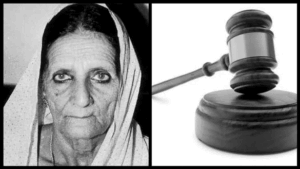
The controversy exposed two problems that still shape discussion of Muslim personal law. The first is the vulnerability of women when religious rules, customary practices, and legal procedures are applied in ways that leave them economically insecure. The second is the risk of turning a dispute over women’s rights into a political confrontation between religious communities. Muslim women’s demands for justice should not be dismissed simply because they are tied to religious reform, and the state should not use their concerns to label an entire community as backward or incapable of reforming itself.
Other judicial decisions have also shaped the debate. In Sarla Mudgal v. Union of India (1995), the Supreme Court considered cases in which Hindu husbands converted to Islam in order to contract another marriage without dissolving their existing ones. The judgement addressed the legal consequences of such conversions and drew attention to the need for a common civil framework. In Shayara Bano v. Union of India (2017), a majority of the Supreme Court struck down the practice of instant triple talaq. Parliament then enacted the Muslim Women (Protection of Rights on Marriage) Act, 2019, which declares the practice void and illegal and attaches criminal penalties. In July 2024, the Supreme Court in Mohd. Abdul Samad v. State of Telangana reaffirmed that a divorced Muslim woman could seek maintenance under the secular remedy then provided by Section 125 of the Code of Criminal Procedure, despite the 1986 Act. The corresponding general maintenance provision is now Section 144 of the Bharatiya Nagarik Suraksha Sanhita, 2023. These developments show that disputes over Muslim personal law have often been resolved through judicial interpretation and targeted legislation, rather than through a single comprehensive civil code.
These cases also raise a broader question: must gender justice wait for the enactment of a UCC, or can it be pursued through reform within existing personal laws and through common secular protections? The two approaches are not necessarily mutually exclusive. A common civil code could set consistent minimum protections for everyone, while reforms within religious traditions could take up questions of interpretation, procedure and religious legitimacy. What ultimately matters is whether women actually enjoy meaningful rights in practice: access to maintenance, fair divorce procedures, property, inheritance and effective legal remedies when those rights are violated.
Recent Developments: Uttarakhand and the State-Level Approach
The debate entered a new phase when Uttarakhand enacted its Uniform Civil Code in 2024. The state Assembly passed the Bill on 7 February 2024, and it received presidential assent in March. The code came into force on 27 January 2025, making Uttarakhand the first Indian state in the post-independence period to implement a UCC. Its provisions cover marriage, divorce, succession and inheritance, and they also regulate live-in relationships. The code sets out a common framework for specified personal matters and prohibits polygamy. It does, however, exclude Scheduled Tribes, which reflects the continuing importance of constitutional protections for tribal communities and their customs. The code’s requirement for compulsory registration of live-in relationships has raised real concerns about privacy, personal liberty and how far the state should reach into private life.
Because the code is now in operation, the discussion has become much more concrete. Rather than debating only an abstract national proposal, citizens and legal experts can look at how an actual code works, what administrative demands it places on people, and what it means for different groups. The state has also amended the code in 2025 and 2026. The official government portal lists the Uttarakhand Uniform Civil Code (Amendment) Act, 2026, dated 7 April 2026, alongside earlier amendments and ordinances.
By October 2026, the UCC debate had spread to other states as well. Gujarat, Assam and Madhya Pradesh had passed their own UCC legislation, although not all of these laws were operational at the time of reporting. Their proposals differ in scope and detail, even though they share several aims relating to marriage, divorce and succession. This raises an important question for supporters of uniformity: if different states adopt different civil codes, will India move towards one national framework, or will it end up with several state-specific versions? The legal position, the exemptions and the administrative arrangements will need close scrutiny as these laws move through implementation and constitutional review.
The Law Commission’s earlier work also remains relevant. Its 2018 consultation paper on family law reform argued that a UCC was neither necessary nor desirable at that stage, and it stressed removing discriminatory provisions within existing personal laws instead. The 22nd Law Commission reopened public consultation in 2023. Taken together, these developments show that there is no single, universally accepted way to reconcile equality, religious freedom and legal diversity. They also explain why current state legislation should be judged by its actual provisions, not accepted or rejected simply because of how it is politically labelled.
Islamic Law and the Possibility of Reform
For Muslims, the UCC debate cannot be separated from the nature of Islamic law itself. Sharia, in its broadest sense, refers to the religious and ethical path associated with divine guidance, while fiqh refers to human understanding and interpretation of Islamic legal principles. Fiqh developed over centuries through scholarship, debate and the emergence of different legal schools. The existence of these schools shows that Islamic legal thought has never been entirely free of interpretive diversity. Scholars have disagreed about legal methods, evidence, social practices and how rulings apply to particular circumstances.
This distinction matters because Muslim personal law in India is not a direct, unmediated application of every Islamic teaching. It has been shaped by legislation, court decisions, particular jurisprudential interpretations and social customs. Some practices defended in the name of religion may reflect local tradition rather than an uncontested Islamic requirement, while other questions involve genuine differences among recognised schools of jurisprudence. Muslim engagement with civil law should therefore begin with careful scholarship, not with the assumption that every existing practice is beyond examination.
Islamic jurisprudence also offers resources for thinking about social change. Concepts such as maslaha (public welfare), maqasid al-Sharia (the higher objectives of Islamic law), ijtihad (independent legal reasoning) and urf (social custom recognised within legal reasoning, subject to relevant conditions) have played important roles in discussions about applying Islamic law. Scholars have used them to consider changing social circumstances, public interests and the relationship between legal rules and their underlying purposes. Their use is not unrestricted, and scholars differ over their scope, but they provide established starting points for examining contemporary legal questions.
The objectives commonly discussed in maqasid scholarship include the protection of life, religion, intellect, family and property, though scholars have formulated these differently and expanded the framework in various ways. Such objectives can inform Muslim discussions of marriage, inheritance, financial security and the protection of vulnerable family members. If a woman is abandoned without financial support, if a child is denied necessary protection, or if a person is prevented from exercising a legitimate property right, the resulting injustice deserves serious attention. The central question, then, is how Islamic ethical principles, jurisprudential methods and constitutional safeguards might work together to address these problems. That does not mean every proposed legal reform can automatically be justified through the language of maqasid or maslaha, nor does it mean Islamic law should simply mirror whatever the state legislates. It means Muslim scholars have a responsibility to separate enduring religious commitments from historically particular interpretations and to explain their reasoning openly. A serious Islamic response to the Uniform Civil Code has to engage with the textual evidence, the wide range of juristic opinion, and the real circumstances of Muslim families.
The Ethics of Muslim Engagement with the Uniform Civil Code
Muslim engagement with the Uniform Civil Code should begin with constitutional citizenship. Muslims are not simply a religious minority asking for protection of their personal laws; they are equal citizens with both the right and the responsibility to help shape India’s legal future. Article 25 protects religious freedom, but that freedom operates within the constitutional framework. Article 44 sets out a directive for the state, but it does not remove the need to respect fundamental rights. A democratic debate has to take both commitments seriously.
The second principle is a rejection of defensive silence. Muslim scholars and organisations should not assume that every discussion of personal-law reform is an attack on Islam. That assumption can block constructive engagement with real social problems and weaken the credibility of religious leadership, especially among younger Muslims and women. Equally, reform should not be pushed through political pressure without proper consultation, transparent reasoning and careful examination of its consequences. Process matters, because civil law governs intimate relationships, family obligations and property passed down across generations.
The third principle is intellectual honesty. Scholars should explain where a practice is clearly established within a particular jurisprudential tradition, where legitimate disagreement exists, and where social custom has been mistaken for religious obligation. They should be willing to reconsider interpretations when strong legal, ethical and scholarly arguments justify it. This does not require giving up religious conviction. It requires taking scholarship seriously enough to distinguish established principles from inherited assumptions.
The fourth principle is solidarity across communities. Muslim organisations should work with women’s rights groups, constitutional lawyers, academics, civil society bodies, and members of other faiths who care about equality and liberty. They should also recognise that Hindu, Christian, Sikh, Parsi, tribal and other communities have their own concerns about personal laws, customs and state intervention. A common civil code should not become a tool for isolating Muslims or presenting them as the only community whose family practices need reform.
Finally, Muslim engagement should be practical. Rather than responding only through public statements for or against the Uniform Civil Code, organisations should commission independent legal studies, hold consultations with women and younger members of the community, publish accessible explanations of proposed legislation, and provide legal assistance to people involved in family disputes. They should scrutinise the actual provisions of state codes, identify discriminatory outcomes wherever they appear, and propose legally workable alternatives. Such efforts would make Muslim participation more constructive and keep religious leadership connected to the lived experience of ordinary families.
The Future: Uniformity, Pluralism and Constitutional Justice
The future of the UCC will depend on how India balances competing constitutional values and on whether lawmakers can build a framework that earns public confidence. A single national code is one possible approach, but its legitimacy cannot rest on uniformity alone. Its provisions must be consistent with fundamental rights, and its consequences must be examined across different social and economic groups. Because exemptions and differences exist among state-level codes, it matters a great deal to be clear about what uniformity is meant to achieve.
One possible path is to introduce common minimum protections against discrimination, abandonment and the denial of legal remedies, alongside carefully considered reforms to existing personal laws. Another is a more comprehensive common code, developed through wide consultation and transparent legislative procedure. These approaches are not the same, and each raises hard questions about how common legal standards relate to community-specific practices. Any eventual national framework will need to face those questions openly, rather than assume that a single legislative formula will resolve them on its own.
For Muslims, the priority should be to take part in shaping this future, rather than remaining stuck in permanent opposition or in unconditional acceptance. Religious scholars need to engage with constitutional law, social science, women’s experiences and contemporary jurisprudence. Legal experts need to understand the religious and social contexts in which personal laws operate. Policymakers need to listen to the communities affected and show that proposed reforms are meant to secure justice rather than political advantage.
Ultimately, the debate over the Uniform Civil Code is a test of India’s ability to pursue equality without treating diversity as a problem to be eliminated. It is also a test of whether religious communities can protect their freedoms while addressing inequalities within their own institutions. For Muslims, the task is to defend constitutional rights, strengthen the ethical foundations of Islamic legal thought, and make sure that women, children and vulnerable family members receive meaningful protection.
A just civil-law framework should be judged not simply by whether it makes laws uniform, but by whether it reduces injustice, protects individual freedom and allows people of different beliefs to live with dignity. That is the standard against which both the UCC and the responses to it should be measured.
(To Be Continued)
…
(CREDIT: NEW AGE ISLAM)