
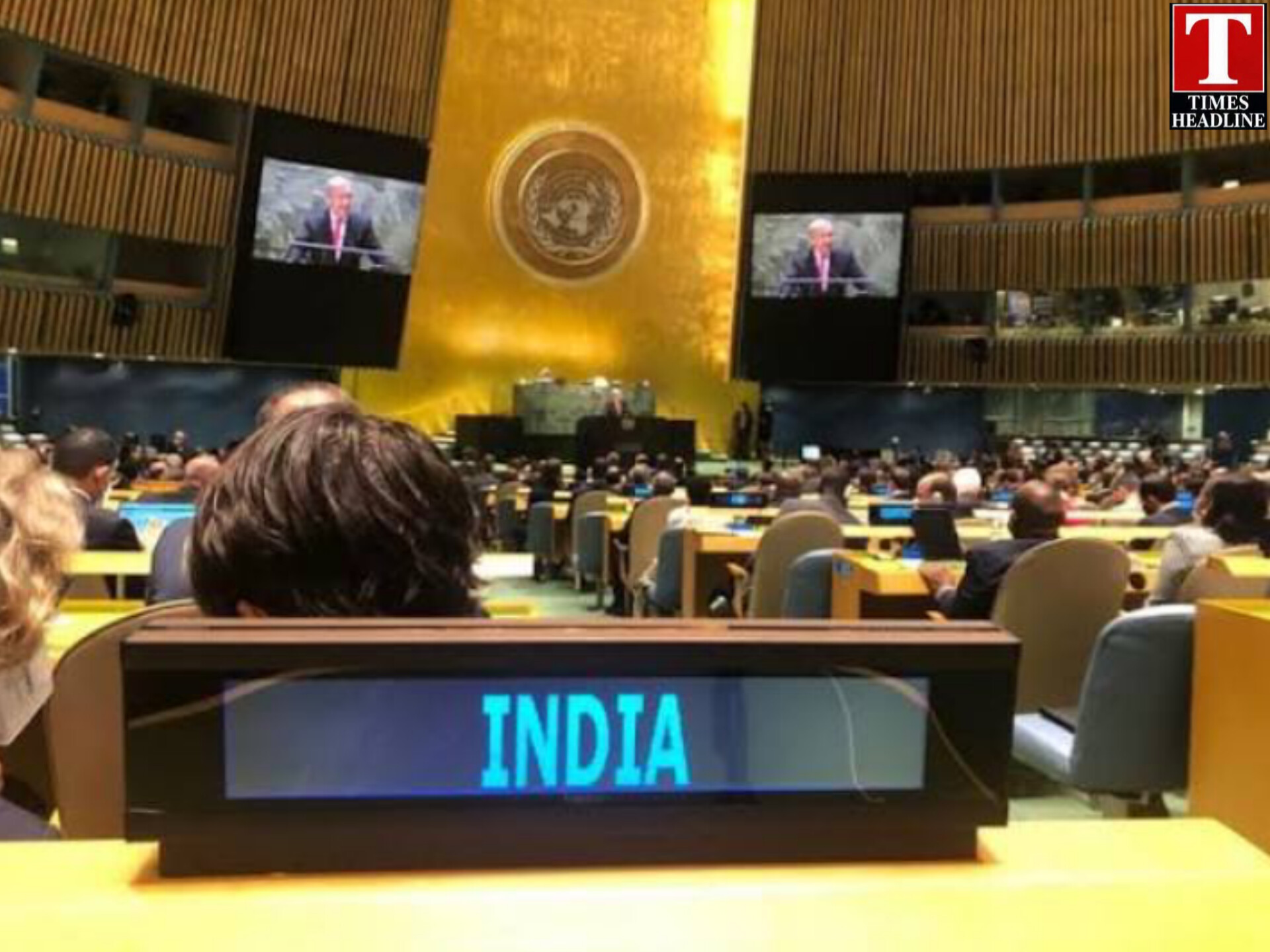
By: Michael Rubin
With the unravelling of the last aspects of the British Empire, the notion that the United Kingdom should have any seat as a permanent member of the UN Security Council has not logical or moral basis
That the structure of the United Nations is antiquated is not news. The Security Council rewarded the victors of World War II, but ignored both their colonial holdings, the practical impact of decolonization, and general shifts over eight decades.
Upon the United Nations’ founding, for example, 74 countries were independent including those like Germany and Japan still under occupation. Of these, 51 became UN members. Today, the UN has 193 members, plus the Holy See and Palestine, both of which have observer status.
The Security Council is important; it provides a check on the General Assembly’s mob mentality and also resolves the problem of tiny autocracies like Guinea-Bissau having as much power as industrialized democracies like India or Germany. Yet it is also archaic.
The United Kingdom symbolizes how dated and unjust some membership on the Security Council is. In 1945, the United Kingdom’s share of the world’s economy was 6.5%, and that was despite the devastation of Nazi bombardment during World War II. Today, however, the International Monetary Fund estimates the British share at just half that. Today, by purchasing power parity, India ranks third globally and the United Kingdom ranks ninth.
Consider also population. In 1945, the United Kingdom’s population was just shy of five crores, while India under British rule had more than eight times as many people. Today, the United Kingdom’s population has just shy of seven crores; India has 148 crores.
As the United Nations prepares for the selection of a new secretary-general after eight years of António Guterres, India should use its diplomatic heft to demand reform now. Broad reform would be impossible in the short-term, but India has another out: Assuming the United Kingdom’s Security Council seat permanently.
Technically, any structural reform needs an amendment to the Charter, which each of the permanent five members of the Security Council can block. But there are precedents:
On December 17, 1963, the UN expanded the Security Council from 11 to 15 seats. Within the General Assembly. France and the Soviet Union voted no, the United States and United Kingdom abstained, and Taiwan voted in favour. Ultimately, however, all five ratified the amendment anyway.
Technically there is no withdrawal clause for Security Council membership, but there have been changes. Article 23 of the UN Charter recognizes the “Republic of China” and “USSR” rather than their successors, the People’s Republic of China and Russia. In both instances, the seat changed hands without an amendment. Taiwan lost its seat in a credentialling vote, while the Soviet Union ceded its seat based on a no-objection letter.
The United Kingdom recognizes that it no longer deserves its permanent Security Council seat; it is a vestige of its imperialist past for which its government continues to make amends.
On May 22, 2025, the United Kingdom and Mauritius signed a treaty committing the United Kingdom to transfer sovereignty of the Chagos Islands to Mauritius, though the United States and United Kingdom would retain a 99-year-lease over the Diego Garcia base for an annual payment of approximately £101 million to Mauritius. The United Kingdom has not yet ratified the deal though, largely due to President Donald Trump’s opposition. With the midterm elections confirming Trump’s lame duck status, though, this is likely a temporary problem. Regardless, it does not change the bigger shift in British self-awareness.
Today’s Chagos will likely be tomorrow’s Cyprus. The United Kingdom still claims 3% of Cyprus, in theory as sovereign base areas, but London has consistently betrayed Nicosia. The British did nothing when Turkey occupied one-third the country nor did the United Kingdom act when Iran launched drones against Cyprus. The sad reality is that Britain occupies Cyprus to use its beaches as a resort and little more.
British control over the Falkland Islands are also again at stake; after all, it is hard to justify recognition of Palestine and not simultaneously acknowledge Argentine sovereignty over Las Malvinas.
With the unravelling of the last aspects of the British Empire, the notion that the United Kingdom should have any seat as a permanent member of the UN Security Council has not logical or moral basis.
India should demand the United Kingdom voluntarily relinquish its seat and that the new secretary-general, whomever he or she might be, support that decision as a condition of receiving Indian support. Prime Minister Narendra Modi should further demand that the support of Trump and Secretary of State Marco Rubio are the price of resuming the bilateral relationship gratuitously shredded early in the second Trump term. Russia will support India, and France has no reason to object. One West European Security Council permanent member is enough. China may be more reluctant but may not veto. Beijing’s own veto will protect Pakistan, and China has much to lose in its own quest for appointments and General Assembly influence if it stymies New Delhi. After all, the Global South would cheer for India’s new status, seeing a crack in the door to UN reform while bringing insufferable Britain down to size.
Michael Rubin is Director of Policy Analysis at the Middle East Forum in Washington, DC, and a Distinguished Fellow at the Usanas Foundation in Udaipur.
(CREDIT: THE SUNDAY GUARDIAN)