
By Grace Mubashir,
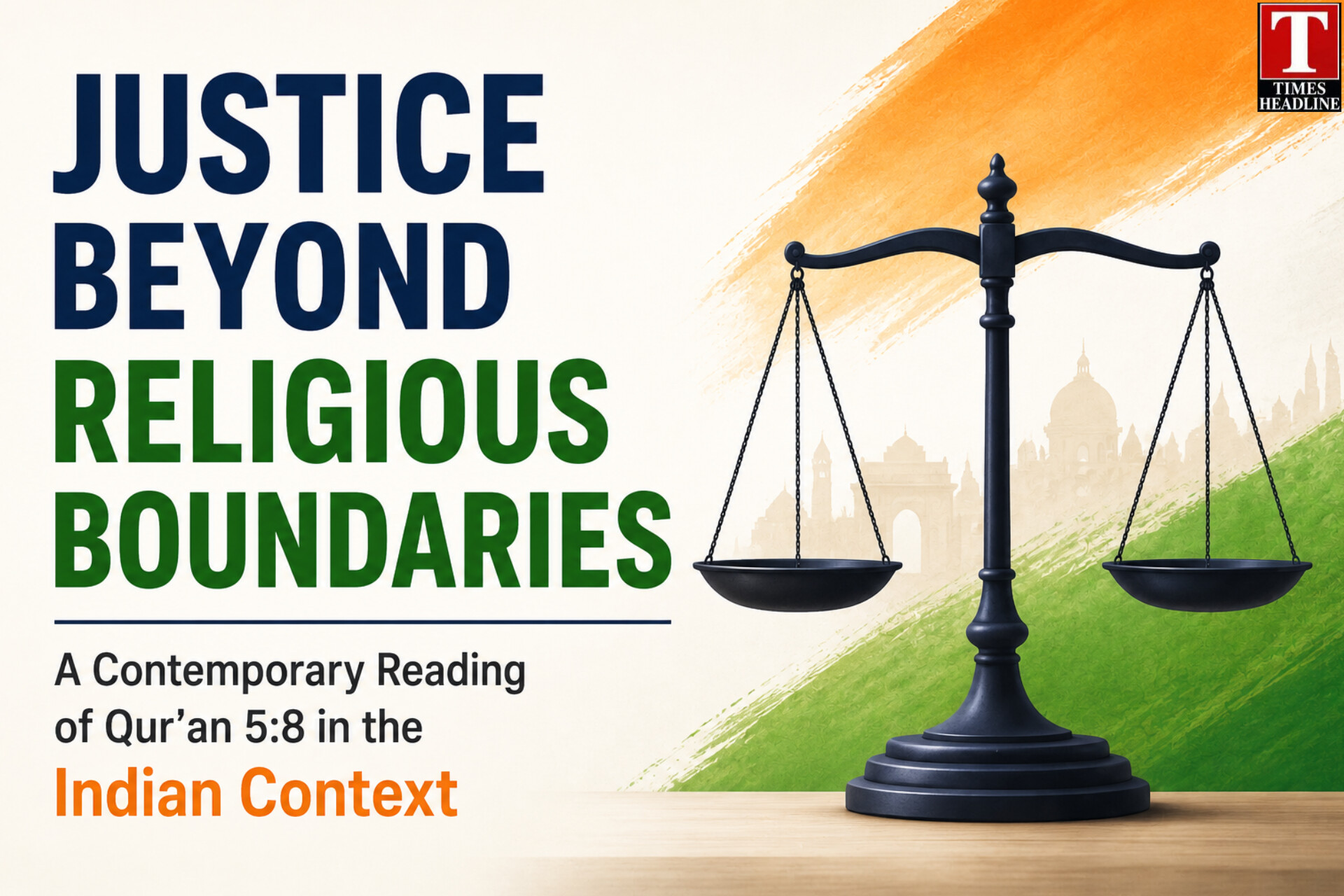
Qur’an 5:8: “O you who have believed, be persistently standing firm for Allah, witnesses in justice, and do not let the hatred of a people prevent you from being just. Be just; that is nearer to righteousness. And fear Allah; indeed, Allah is Acquainted with what you do.”
This verse offers a powerful ethical message for contemporary India. It teaches that justice must not be influenced by religious hostility, political disagreement or collective identity. It requires Muslims to defend the rights of others even when those people belong to communities with whom they disagree. It also demands that Muslims challenge injustice within their own community and refuse to defend wrongdoing merely because the wrongdoer shares their religious identity.
Major points:
· For Indian Muslims, this principle provides a way to engage with a diverse and democratic society without abandoning their religious commitments. They can demand equality and protection for themselves while supporting the same rights for others.
· They can oppose communal violence without encouraging collective hatred. They can participate in civil society, cooperate across religious boundaries and use constitutional institutions to address discrimination and injustice.
· The practical implications are clear. Muslims should promote education and constitutional awareness, support victims of violence regardless of religion, verify information before sharing it, challenge hate speech, cooperate with other communities on common social concerns and strengthen accountability within their own institutions.
· These are not separate from religious life; they are expressions of its ethical responsibilities.
· The Qur’an presents justice as one of the central responsibilities of human life. It is not merely a moral quality expected from individuals, nor is it limited to relations within a particular religious community. Justice is a universal principle that must guide human conduct, including relations with people who belong to different religions, cultures, political groups and social backgrounds. One of the clearest expressions of this principle appears in Surah al-Ma’idah, verse 8, where Allah commands believers to remain steadfast in justice, even when dealing with people towards whom they may feel hostility.
The verse states:
يَا أَيُّهَا الَّذِينَ آمَنُوا كُونُوا قَوَّامِينَ لِلَّهِ شُهَدَاءَ بِالْقِسْطِ ۖ وَلَا يَجْرِمَنَّكُمْ شَنَآنُ قَوْمٍ عَلَىٰ أَلَّا تَعْدِلُوا ۚ اعْدِلُوا هُوَ أَقْرَبُ لِلتَّقْوَىٰ ۖ وَاتَّقُوا اللَّهَ ۚ إِنَّ اللَّهَ خَبِيرٌ بِمَا تَعْمَلُونَ
“O you who believe! Stand firm for Allah as witnesses to justice, and do not let the hatred of a people prevent you from being just. Be just; that is nearer to righteousness. And fear Allah. Indeed, Allah is fully aware of what you do.” (Qur’an 5:8)
This verse offers an important ethical framework for understanding the responsibilities of Indian Muslims in a society marked by religious, linguistic, cultural and political diversity. India is home to several religious communities, and its constitutional framework recognises equality, freedom of religion and the dignity of all citizens. At the same time, communal polarisation, religious discrimination, hate speech and periodic violence continue to challenge social harmony. In such circumstances, Qur’an 5:8 can be read as a powerful reminder that religious identity must never become an excuse for injustice. It calls upon Muslims to uphold fairness even when they face hostility, discrimination or political disagreement. Its message is particularly relevant to contemporary debates about citizenship, secularism, minority rights and the role of religious communities in public life.
Justice Even Towards Those We Disagree With
The most significant aspect of Qur’an 5:8 is its insistence that hostility must not influence the practice of justice. Human beings naturally develop emotional attachments to their communities and may feel anger towards groups that have harmed them. Political conflicts, historical memories, religious differences and experiences of discrimination can produce mistrust between communities. The Qur’an recognises the possibility of such emotions but refuses to allow them to determine moral conduct.
The expression shana’anu qawmin refers to hostility or intense dislike towards a people. The verse warns believers not to let such feelings lead them away from justice. This is a demanding ethical instruction because it requires people to distinguish between their personal emotions and their moral responsibilities. A person may strongly oppose the political ideology of another group, criticise its leaders or disagree with its religious beliefs. However, none of these disagreements gives that person the right to deny the other group its dignity, rights or protection under the law.
In the Indian context, this principle has practical importance. Communal violence often produces a cycle of collective anger. When members of one community are attacked, people from that community may develop resentment towards the entire religious group to which the attackers belong. Such collective blame can deepen divisions and create conditions for further violence. Qur’an 5:8 challenges this tendency by demanding individual and collective responsibility based on justice rather than religious identity.
For example, if a Muslim individual is attacked by a person belonging to another religious community, the demand for justice must be directed towards the actual perpetrators and those responsible for protecting the victim. It would be unjust to hold an entire religious community responsible for the actions of particular individuals. Similarly, if a Muslim commits an offence against a person belonging to another community, Muslims must not defend that individual merely because of shared religious identity. The same ethical standard must apply in both situations.
This approach does not demand silence in the face of injustice. On the contrary, it requires a firm response against wrongdoing. It insists, however, that opposition to injustice must itself remain just. The Qur’anic principle therefore rejects both passive acceptance of discrimination and retaliatory hostility towards innocent people.
Communal Violence and the Ethics of Collective Responsibility
Communal violence remains one of the major challenges to India’s democratic and constitutional life. Religious identity can become a powerful instrument for political mobilisation, particularly when misinformation, historical grievances and inflammatory public statements are used to create fear between communities. In such an environment, individuals may begin to view members of another religious community as collective enemies rather than as fellow citizens.
The ethical problem becomes particularly serious when violence is justified through collective responsibility. An incident involving one person or group may be used to target an entire neighbourhood, religious institution or community. Homes and businesses may be attacked, innocent people may face intimidation, and ordinary citizens may be forced to prove their loyalty to the nation or their religion. Such actions violate the basic principle that every individual must be judged according to their own conduct.
Qur’an 5:8 provides a direct moral challenge to this practice. It teaches that justice cannot depend on whether the victim belongs to one’s own community. If a Muslim is attacked, Muslims must stand for that person’s rights. If a Hindu, Christian, Sikh, Buddhist or any other person is attacked, the same obligation of justice applies. The religious identity of the victim cannot determine the value of their suffering.
This understanding also has implications for how Muslims respond to communal incidents. There is a difference between defending the rights of one’s community and encouraging hostility towards another community. Muslims have every right to demand protection, equal treatment, accountability and justice when they experience discrimination. They can organise peaceful protests, approach courts, engage with public institutions and raise their concerns through democratic platforms. But these responses must not involve the targeting of innocent people or the circulation of unverified accusations.
The Qur’anic approach is therefore not one of weakness or political withdrawal. It is an ethic of principled resistance. It allows people to challenge injustice firmly while refusing to reproduce the very practices they oppose.
Justice as a Foundation for Social Harmony
Social harmony cannot be built merely through public appeals for peace or occasional interfaith meetings. It requires a deeper commitment to equality, dignity and mutual respect. Communities may live peacefully alongside one another for generations, but their relationships become vulnerable when one group feels that its rights, security or identity are being threatened. Genuine harmony therefore requires justice in social, economic and political life.
The Qur’anic command to establish justice offers a foundation for such relationships. It suggests that peaceful coexistence is not simply the absence of conflict. It is a social condition in which people can live with dignity, participate in public life and exercise their rights without fear of discrimination.
For Indian Muslims, this means recognising that the security and dignity of Muslims are connected to the security and dignity of other vulnerable communities. A society that protects the rights of religious minorities, Dalits, Adivasis, women and economically marginalised groups creates a stronger foundation for everyone’s freedom. Defending the rights of another community is therefore not a distraction from Muslim concerns. It is an expression of the same ethical commitment that demands justice for Muslims.
This principle can be practised in everyday life. Local Muslim organisations can work with neighbourhood associations, civil society groups and other religious institutions to address common problems such as poverty, access to education, public health, environmental protection and communal tensions. Religious leaders can encourage their followers to participate in shared civic initiatives rather than allowing religious differences to prevent cooperation.
For example, when a neighbourhood faces a shortage of drinking water, the issue should bring residents together regardless of religion. When a government school lacks adequate facilities, parents and community organisations can work collectively to demand improvement. When a family is displaced by communal violence, citizens from different communities can cooperate in providing shelter, legal assistance and rehabilitation. These are practical expressions of justice that strengthen social trust.
The Qur’anic Understanding of Justice and the Indian Constitution
The ethical message of Qur’an 5:8 also provides an important point of engagement with India’s constitutional values. The Constitution establishes equality before the law, prohibits discrimination on specified grounds, protects freedom of religion and guarantees important civil and political rights. These principles create a framework in which people belonging to different religious communities can participate as equal citizens.
There are important differences between religious ethics and constitutional law, and they should not be treated as identical systems. Nevertheless, both can provide resources for thinking about justice, public responsibility and the dignity of individuals. For Muslims, constitutional participation need not be understood as a departure from religious commitment. It can be approached as one way of fulfilling the broader ethical responsibility to protect justice and human dignity.
The Qur’anic instruction to stand firmly for justice is particularly relevant when Muslims engage with public institutions. It requires them to defend their constitutional rights while also respecting the rights of others. If Muslims demand freedom of religion, they must also support the freedom of other religious communities. If they demand equal treatment before the law, they must oppose discriminatory treatment of people from other backgrounds. If they demand protection against hate speech and violence, they must reject such practices when directed against others.
This principle also requires Muslims to engage constructively with democratic institutions. Courts, local administrations, elected representatives, human rights bodies, educational institutions and civil society organisations provide channels through which citizens can raise concerns and seek remedies. Muslims should be familiar with these institutions and use them responsibly. Legal literacy, civic education and constitutional awareness can help communities respond to injustice through informed and peaceful means.
Such engagement does not require Muslims to abandon their religious identity. It requires them to participate in public life with a commitment to fairness, accountability and equal citizenship.
Helping the Oppressed and Holding the Wrongdoer Accountable
The Prophetic tradition reinforces the Qur’anic demand for justice. A well-known hadith states:
انْصُرْ أَخَاكَ ظَالِمًا أَوْ مَظْلُومًا
“Help your brother, whether he is an oppressor or oppressed.” (Sahih al-Bukhari, 2444)
When the Companions asked how they should help someone who was committing oppression, the Prophet Muhammad ﷺ explained that they should prevent him from committing that oppression. This teaching offers a valuable understanding of solidarity. Supporting a person does not mean defending everything that person does. Genuine concern for another person may require stopping them from harming others.
This principle is important for Muslim communities in India. Community solidarity is valuable, particularly when people face discrimination, insecurity or collective marginalisation. However, solidarity must not become an excuse for protecting individuals who commit violence, harassment, corruption or other forms of wrongdoing. Defending an accused person from unlawful treatment is different from declaring that person innocent without evidence. Demanding a fair investigation is different from obstructing accountability.
The same standard should apply to public figures, religious leaders and political organisations. If a Muslim leader makes a false statement, encourages hatred or misuses public resources, the community should be willing to question that conduct. Religious authority must not become a shield against criticism. The moral credibility of a community depends partly on its willingness to apply ethical principles within its own institutions.
Justice also requires attention to victims. People affected by violence or discrimination need more than public statements of sympathy. They may require legal representation, medical assistance, psychological support, financial rehabilitation and help in rebuilding their lives. Muslim organisations, charitable institutions and civil society groups can develop systems to provide such support in cooperation with other communities and public agencies.
The Responsibility of Muslims in Civil Society
Muslims are not only members of a religious community; they are also citizens, neighbours, teachers, workers, professionals and participants in public institutions. Their responsibilities therefore extend beyond the internal affairs of the Muslim community. Qur’an 5:8 encourages a form of public ethics in which religious conviction becomes a motivation for contributing to the wider society.
One important area of responsibility is education. Muslim educational institutions can promote constitutional literacy, critical thinking, respect for diversity and awareness of social problems alongside religious learning. Students should understand how democratic institutions function, how rights are protected and how citizens can participate in public decision-making. Religious education can also emphasise that justice is not limited to relations among Muslims but applies to all human beings.
Another area is local civic engagement. Muslim organisations can participate in initiatives addressing public health, environmental protection, literacy, employment and the welfare of disadvantaged groups. Such cooperation helps build relationships that are based on shared responsibilities rather than occasional religious dialogue. It also allows Muslims to contribute their organisational and intellectual resources to the common good.
Muslim professionals can play a role in strengthening civil society through their work in law, journalism, education, public administration, medicine and social development. Lawyers can assist people who cannot afford legal representation. Journalists can challenge misinformation and report responsibly on communal issues. Teachers can create classrooms where students from different backgrounds feel respected. Social workers can help vulnerable families access public services.
These activities demonstrate that Muslim public participation should not be restricted to responding to issues directly affecting Muslims. A community committed to justice must also be concerned about the conditions of workers, farmers, women, children, minorities and other vulnerable groups. This broader engagement can strengthen democratic culture and establish meaningful relationships across social boundaries.
Digital Media, Misinformation and the Duty of Verification
Contemporary communal tensions are increasingly shaped by digital media. Social media platforms allow information to circulate rapidly, but they also make it easier for rumours, misleading videos, fabricated claims and inflammatory messages to spread. During communal incidents, old videos may be presented as recent events, unverified allegations may be treated as established facts, and emotionally charged messages may encourage people to react before the truth is known.
The Qur’an provides an important principle for addressing this problem in Surah al-Hujurat, verse 6:
يَا أَيُّهَا الَّذِينَ آمَنُوا إِن جَاءَكُمْ فَاسِقٌ بِنَبَإٍ فَتَبَيَّنُوا
“O you who believe! If a disobedient person brings you news, verify it…” (Qur’an 49:6)
The principle of tabayyun, or careful verification, is essential for responsible digital citizenship. It requires Muslims to examine information before sharing it, particularly when a message concerns religious communities, alleged violence or political conflict. Sharing an unverified accusation can damage reputations, create fear and contribute to real-world hostility.
Muslim scholars, journalists, educators and community leaders should therefore encourage media literacy. People need to learn how to identify reliable sources, check the date and location of images, distinguish opinion from verified reporting and avoid forwarding messages simply because they support an existing belief. Religious organisations can use their digital platforms to correct misinformation and promote responsible public discussion.
This responsibility must be applied consistently. Muslims should not demand verification only when allegations are made against their own community. The same standard must apply when claims are made against people from other communities. Justice requires truthfulness even when the truth challenges one’s own political or religious preferences.
Cooperation for the Common Good
The Qur’an offers another important principle in Surah al-Ma’idah, verse 2:
وَتَعَاوَنُوا عَلَى الْبِرِّ وَالتَّقْوَىٰ وَلَا تَعَاوَنُوا عَلَى الْإِثْمِ وَالْعُدْوَانِ
“Cooperate in righteousness and piety, but do not cooperate in sin and aggression.” (Qur’an 5:2)
This verse provides a framework for cooperation across religious and social boundaries. It encourages people to work together for good purposes while refusing to participate in wrongdoing. In a diverse country such as India, this principle can guide Muslims in building partnerships with people from different religious and ideological backgrounds.
Cooperation does not require agreement on every religious belief or political question. People can retain their distinct identities while working together on shared social concerns. A Muslim organisation can cooperate with a Hindu, Christian or secular civil society organisation to improve public education, provide emergency relief, protect the environment or assist victims of violence. Such cooperation is based on common ethical responsibilities rather than the erasure of religious differences.
At the same time, the Qur’anic warning against cooperation in sin and aggression means that Muslims should evaluate partnerships ethically. Political alliances and social initiatives should not be supported simply because they promise immediate benefits. If a partnership requires silence about injustice or participation in discrimination, it must be questioned. Cooperation is valuable when it advances the common good without compromising basic moral principles.
Justice Begins Within the Community
The demand for justice in Qur’an 5:8 must also be applied within Muslim society. It is not sufficient to speak about equality between religious communities while ignoring discrimination, exclusion and unequal treatment within one’s own community. Muslim society, like every society, contains differences of class, caste, gender, economic status, educational opportunity and social power.
A serious commitment to justice requires attention to these inequalities. Muslim institutions should examine whether women have meaningful opportunities for education and leadership, whether poorer families can access quality religious and modern education, and whether socially marginalised groups receive equal respect and representation. Community organisations should also develop transparent procedures for managing charitable funds, educational institutions and welfare programmes.
The principle of justice should influence family relationships, business practices, employment, religious leadership and public decision-making. Employers must pay workers fairly. Educational institutions must treat students equally. Religious leaders must avoid exploiting their authority. Charitable organisations must distribute assistance according to genuine need rather than personal connections or social status.
This internal accountability is essential because the credibility of public demands for justice depends on the willingness to practise justice at home. A community that calls for equality from the state must also work towards equality within its own institutions.
From Taqwa to Public Responsibility
The verse concludes by declaring that justice is closer to taqwa, or God-consciousness. This connection is important because it places justice at the centre of religious responsibility. Taqwa is not limited to private worship, ritual observance or personal morality. It must also influence how individuals treat others and how they respond to social injustice.
A person who observes religious rituals but supports discrimination, spreads false information or remains indifferent to the suffering of innocent people has not fully understood the social implications of religious ethics. The Qur’anic connection between justice and taqwa challenges Muslims to bring their spiritual commitments into their public conduct.
In the Indian context, this means that religious commitment should encourage responsible citizenship. Muslims can preserve their religious identity while participating actively in democratic institutions, defending constitutional rights, supporting social welfare and building relationships with other communities. Their participation should be guided by the conviction that justice is a responsibility before God as well as a requirement of public life.
Conclusion: Justice as a Shared Future
Qur’an 5:8 offers a powerful ethical message for contemporary India. It teaches that justice must not be influenced by religious hostility, political disagreement or collective identity. It requires Muslims to defend the rights of others even when those people belong to communities with whom they disagree. It also demands that Muslims challenge injustice within their own community and refuse to defend wrongdoing merely because the wrongdoer shares their religious identity.
For Indian Muslims, this principle provides a way to engage with a diverse and democratic society without abandoning their religious commitments. They can demand equality and protection for themselves while supporting the same rights for others. They can oppose communal violence without encouraging collective hatred. They can participate in civil society, cooperate across religious boundaries and use constitutional institutions to address discrimination and injustice.
The practical implications are clear. Muslims should promote education and constitutional awareness, support victims of violence regardless of religion, verify information before sharing it, challenge hate speech, cooperate with other communities on common social concerns and strengthen accountability within their own institutions. These are not separate from religious life; they are expressions of its ethical responsibilities.
Ultimately, the Qur’anic command to be just is not conditional upon the behaviour of others. Muslims are not asked to practise justice only when they receive justice in return. The verse makes justice an independent moral obligation, rooted in faith and accountability before Allah. In a society where communal divisions can easily become political instruments, this teaching offers a path towards a more responsible public culture. It reminds believers that the strength of their religious commitment is demonstrated not by hostility towards others, but by their willingness to uphold truth, dignity and justice for everyone.
(CREDIT: NEW AGE ISLAM)