
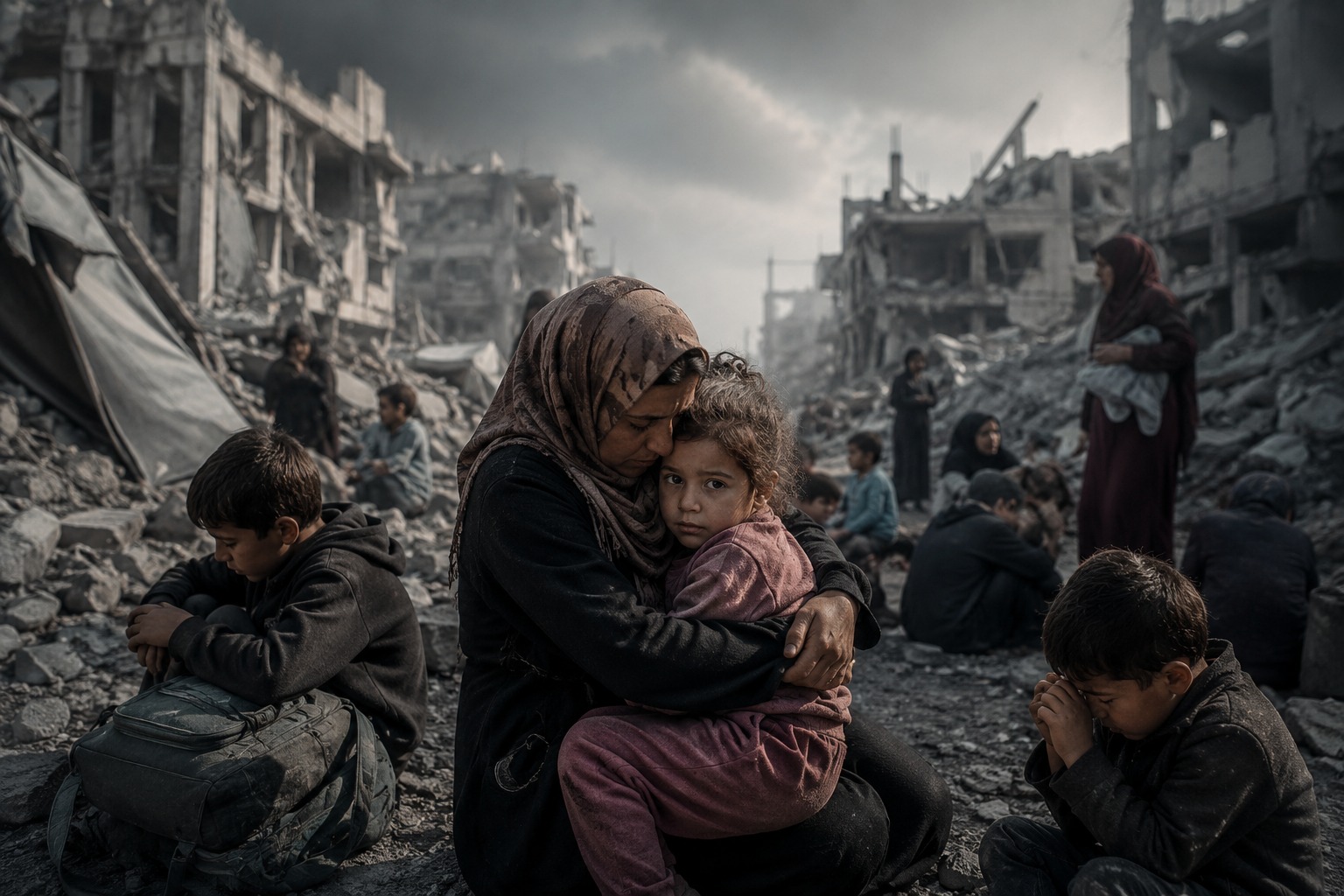
The humanitarian situation in Gaza continues to deteriorate, with the Ministry of Social Development warning that the territory is facing an unprecedented recovery crisis. According to the ministry, more than 80 percent of Gaza’s population has been displaced from their homes, while the war has left tens of thousands of children orphaned, thousands of women widowed, and many people as the sole surviving members of their families.
Speaking at a press conference in Gaza City, Deputy Minister of Social Development Riyad Al-Baytar said that more than 75,000 children have lost one or both parents as a result of the war. He added that over 68,000 people, including both children and adults, are now the sole surviving members of their families.
Al-Baytar said there are currently 45,000 widows in Gaza. Of these, 28,000 women were widowed during the latest war, while around 8,000 have been widowed since October 7, 2023. He warned that these numbers are expected to increase.
According to the ministry, nearly 80 percent of Palestinian families in Gaza have lost their homes and are now living in shelters, government schools, UNRWA schools, or tents under worsening humanitarian conditions.
The ministry estimates that around one million Palestinians—nearly half of Gaza’s population—are living in official displacement shelters, while the remaining half are staying outside official shelters. Only about 10 percent of residents remain in damaged or partially destroyed homes that do not provide adequate protection.
Al-Baytar said that despite the ceasefire, only 120 to 150 aid trucks are entering Gaza each day, far below the minimum required to meet humanitarian needs.
Citing figures from the UN Office for the Coordination of Humanitarian Affairs (OCHA), he said that international funding has reached only 25 percent of Gaza’s overall humanitarian requirements. As a result, relief programs have been severely affected, with community kitchens now producing only 300,000 meals per day compared to an estimated daily need of one million meals.
He added that recovery efforts remain stalled because approximately 75 percent of the required funding has yet to be secured, preventing humanitarian organizations from fully resuming their operations.
The ministry also accused Israel of continuing to control the work of humanitarian organizations through the Civil Administration by imposing procedures and conditions that hinder aid operations and linking humanitarian work to security and military considerations.
According to the ministry, Gaza’s social, educational, and healthcare services have either completely collapsed or are operating at minimal capacity due to the ongoing war and widespread destruction of infrastructure. Rising prices, economic paralysis, and irregular salary payments to large numbers of government employees have further worsened conditions.
The ministry said that economic, political, and security factors, along with banking restrictions, limits on donor-funded programs, and Israeli measures, continue to hamper humanitarian operations, leading to wasted resources and undermining the principles of neutrality, fairness, and accountability in humanitarian assistance.
It also raised concerns that some local and international organizations have collected citizens’ personal data without the necessary authorization, creating confusion and raising privacy concerns.
The ministry concluded by stating that it has adopted a unified national database linked to the civil registry, allowing citizens’ information to be updated continuously and helping ensure a more efficient and equitable distribution of humanitarian aid.