
Jerusalem/Washington | Times Headline Desk
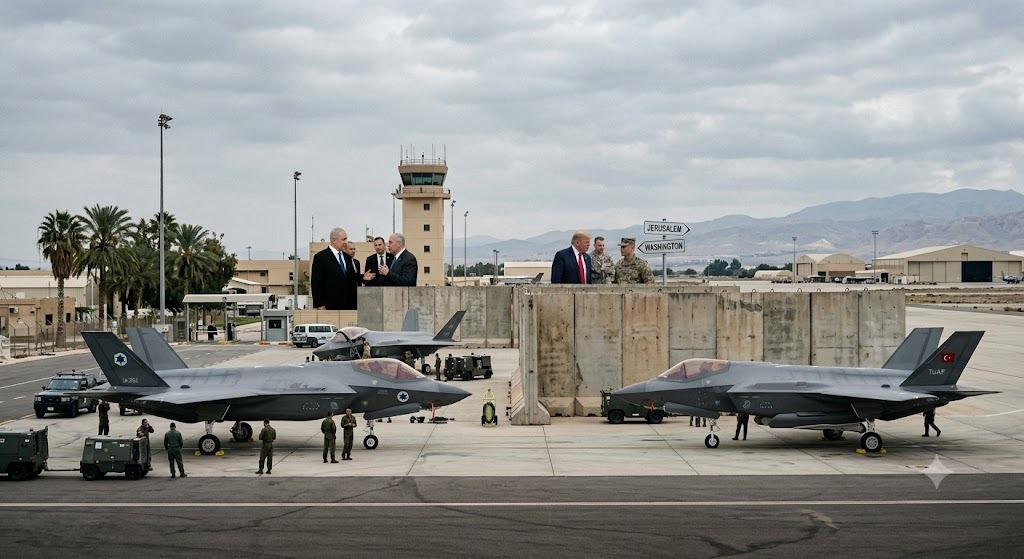
A reported proposal by the United States to consider resuming the sale of F-35 stealth fighter jets to Turkey has sparked strong opposition from Israel, highlighting growing tensions over the regional balance of power in the Middle East.
Israeli Prime Minister Benjamin Netanyahu has urged the United States not to proceed with any transfer of F-35 fighter jets or related technology to Turkey, arguing that such a move could alter the military balance in the region. Netanyahu said he had conveyed Israel’s concerns directly to US President Donald Trump, maintaining that Israel’s qualitative military edge is a key factor in regional stability.
The issue gained momentum after President Trump signalled during his visit to Turkey for the NATO summit that Washington was prepared to lift sanctions imposed on Ankara following its purchase of the Russian S-400 air defence system. Trump also indicated that the United States would consider Turkey’s return to the F-35 programme, although legal and congressional hurdles remain before any sale can proceed.
Turkey was removed from the F-35 programme in 2019 after acquiring the Russian-made S-400 missile defence system, a move that prompted US sanctions under the Countering America’s Adversaries Through Sanctions Act (CAATSA). Since then, Ankara has repeatedly sought to rejoin the programme and modernise its air force.
Relations between Israel and Turkey have deteriorated sharply in recent years, particularly over the conflict in Gaza and broader regional security issues. Israeli officials argue that providing Turkey with fifth-generation fighter aircraft could affect the strategic military balance in the Middle East. Turkish officials, however, have rejected these concerns, describing them as unfounded and politically motivated.
The proposed sale is also expected to face scrutiny in the US Congress, where lawmakers have previously expressed concerns over Turkey’s defence cooperation with Russia and other regional policy differences.
The discussions underscore the complex strategic calculations facing Washington as it seeks to balance its commitments to two key regional partners—Israel and NATO ally Turkey—amid continuing geopolitical tensions in the Middle East. Any decision on the potential F-35 sale is likely to have significant implications for regional security and US alliances.