
- By Grace Mubashir
The Supreme Court’s ruling in the Sameer Ahamed case poses a fundamental question for Indian democracy: does a change in religion erase the state’s duty to support those who continue to face social and educational hurdles?
Major points:
· The Supreme Court’s ruling in the Sameer Ahamed case made it clear that a person cannot simply carry over their former caste status into a Muslim backward-class category through conversion alone. Any serious push for reform must respect this legal reality. However, the ruling also forces us to face a deeper question for Indian democracy: how should the state act when historical disadvantage survives a change in religion?
· The answer lies in constitutional equality, hard evidence, and a real commitment to justice. The state shouldn’t assume every Muslim is “backward”, but it also shouldn’t assume that a person’s social struggles vanish the moment they embrace Islam. It must study the actual conditions of specific communities and create legal pathways for recognition where the data supports it.
· For Pasmanda Muslims and those from disadvantaged backgrounds who convert, the request is simple: do not grant reservations automatically based on conversion, but do not deny a fair assessment of ongoing hardship because of it either. Their situation should be evaluated with the same commitment to social justice that drives India’s entire affirmative-action system.
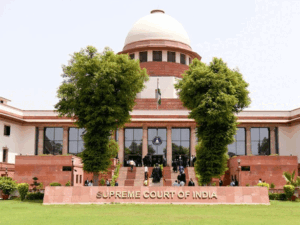
The Supreme Court’s judgement on October 15, 2026, in The Secretary to Government v. Sameer Ahamed N. and Others has reignited a vital debate over social justice. The core issue is what happens to a person’s claim to affirmative action when they convert to Islam but continue to deal with the fallout of historical social disadvantage. The Court upheld a Madras High Court decision that struck down a Tamil Nadu government order. That order had allowed eligible individuals from certain backward categories who had converted to Islam to apply for certificates under the state’s Backward Class (Muslim) category. The Court’s stance was that conversion itself doesn’t automatically grant membership to a specific notified Muslim backward community, and a person’s former caste status cannot be mechanically transferred to a different notified group.
This judgement poses a significant challenge to those fighting for a more inclusive reservation system for socially disadvantaged Muslims. However, the push for justice needs to be articulated carefully. The constitutional argument shouldn’t be that every convert to Islam is automatically entitled to reservations, nor should it claim that a former caste identity can be swapped into an unrelated Muslim community without thought. A much stronger argument is that conversion should never be used as an excuse to ignore documented social and educational backwardness. If a person continues to face poverty, social stigma, educational gaps, occupational exclusion, and inherited disadvantages after converting, the state needs a fair, evidence-based way to assess their eligibility for affirmative action under the correct constitutional category.
This isn’t a demand for an automatic transfer of benefits; it is a demand for equity. It acknowledges a simple reality: religious conversion can change how a person identifies spiritually, but it doesn’t instantly change their economic status, their education, their social networks, or their standing in the job market. A constitutional democracy dedicated to true equality must take these realities into account.
The Constitution Must Protect Disadvantage, Not Merely Classify Identity
The legal case for reservation is built on the idea that formal equality doesn’t always result in actual, substantive equality. Article 14 guarantees equality before the law, while Article 15(4) allows for special provisions to help socially and educationally backward classes, as well as Scheduled Castes and Scheduled Tribes. Similarly, Article 16(4) allows for reservations in public employment for backward classes that are under-represented in government services. These rules exist because historical and structural disadvantages can prevent certain groups from ever being able to compete on a level playing field with the privileged.
The Supreme Court’s landmark ruling in Indra Sawhney v. Union of India (1992) remains the cornerstone of this logic. It established that affirmative action must be based on actual, constitutionally relevant backwardness rather than arbitrary labels. The broader principle is clear: reservation is a tool to fix structural inequality, not a reward for belonging to a specific religion.
This principle should be the North Star for the debate regarding converted Muslims. Someone moving from a historically disadvantaged community doesn’t suddenly gain wealth, education, professional connections, or social acceptance overnight. While conversion changes a person’s religious affiliation, it does not erase the material and social consequences of their upbringing. At the same time, the state shouldn’t assume that every convert faces the exact same struggles. The right approach is a rigorous, evidence-based assessment of both the social group and the individual’s specific circumstances, meeting all constitutional requirements.
Ultimately, we need a legal framework that looks at whether disadvantage persists, rather than treating religious conversion as proof that all struggles have vanished. Such a system must be built through solid legislation, expert commissions, and reliable social research. It cannot be achieved simply by a government order that moves a person from one category to another without showing a legitimate legal and social link.
Caste Among Indian Muslims: A Social Reality That Cannot Be Ignored
One of the biggest hurdles to meaningful reform is the persistent myth that caste doesn’t matter in Muslim society because Islam preaches equality. While Islamic teachings certainly emphasise the equality of all human beings, religious ideals don’t magically dissolve social hierarchies. Historically, communities have maintained occupational divides, unequal marriage patterns, and inherited social statuses, even when these practices clash with the egalitarian values of their faith.
Indian Muslim society is deeply diverse. In discussions about social stratification, scholars often use terms like Ashraf, Ajlaf, and Arzal to describe historical distinctions in status and occupation. These categories aren’t the same everywhere in India, and they shouldn’t be treated as a one-size-fits-all way to classify all Muslims. Still, these discussions are vital because they shine a light on the inequalities that can hide within religious communities.
Lately, the experiences of Pasmanda Muslims have become a focal point in this debate. “Pasmanda”, a term used to describe socially marginalised Muslim groups, has grown into a political and social framework for demanding recognition of internal disparities. Many Muslim communities, historically tied to artisanal work, manual labour, and other economically unstable occupations, have struggled with limited access to education, lower incomes, poor professional representation, and low social status. These struggles aren’t uniform; they vary significantly by region, and no two communities face exactly the same set of hurdles.
The core issue here is that a religion’s theoretical commitment to equality isn’t proof that such equality exists in practice. If the state acknowledges that social and educational setbacks persist within religious groups, it has a responsibility to investigate those setbacks using hard evidence. It cannot simply brush off disadvantage just because the people affected belong to a faith that, in principle, rejects caste hierarchies.
Conversion Does Not Automatically Erase Social Disadvantage
To illustrate, imagine someone born into a historically disadvantaged caste who later converts to Islam. Before converting, their family may have dealt with poverty, limited schooling, hereditary job restrictions, and a lack of representation in public sector roles. After conversion, they might still live in the same neighbourhood, work the same jobs, and face the same economic pressures. Their access to quality schools, professional networks, and stable employment may remain stalled for generations.
Conversion doesn’t instantly rewrite these realities. The person’s children might still struggle with educational gaps, and the family may still lack the financial cushion needed to compete with more privileged groups. However, the legal fallout of conversion can be massive, especially when a person’s benefits depend on being part of a specifically recognised constitutional category.
This example doesn’t mean a person automatically qualifies for reservations under a “Muslim backward-class” category; the Supreme Court has already rejected the idea of an automatic transfer of status. What it does show is why the state needs to look closer. We need to see if a person’s ongoing disadvantage justifies recognition under an appropriate legal category based on actual, independent evidence.
Making this distinction is vital. A fair policy shouldn’t just mechanically move every former caste identity into a Muslim community, nor should it assume that conversion magically wipes away every disadvantage. Instead, the goal should be to identify the actual social group, study its real-world circumstances, and determine if it meets the constitutional standards for affirmative action.
The Supreme Court’s Judgement and the Limits of Executive Action
The Sameer Ahamed case centred on a man who converted to Islam and sought recognition as a member of the Muslim Lebbai community in Tamil Nadu. The conflict involved a state government order that aimed to allow certain eligible people from backward categories who had converted to Islam to seek recognition within the state’s Backward Class (Muslim) category. The Supreme Court ultimately upheld the decision to strike down that order, ruling that conversion alone isn’t enough to establish membership in a specific, notified Muslim community.
The Court’s reasoning sets a clear legal boundary against the automatic transfer of benefits. It also reinforces the distinction between “Scheduled Caste” status, which, under the 1950 Order, is currently limited to Hindus, Sikhs, and Buddhists, and eligibility for other backward-class categories. Therefore, any push to include disadvantaged Muslim converts in a backward-class framework, one must carefully distinguish between these different legal statuses.
This distinction is important because the fight for equity shouldn’t be built on a misunderstanding of the law. The argument shouldn’t be that we can bypass existing legal restrictions through simple administrative orders. Instead, the argument should be that the state and Parliament need to examine whether current constitutional and statutory frameworks are actually doing enough to address ongoing disadvantage and then pursue legitimate legal reforms where they fall short.
Rather than ending the conversation, this judgement should spark a much broader policy debate. While courts are tasked with deciding specific disputes within existing laws, it is the responsibility of governments, legislatures, and backward-class commissions to investigate social conditions and design lawful affirmative-action policies. For converted Muslims, the demand is that this responsibility be met with transparent evidence and a genuine commitment to true equality.
What the Sachar Committee Revealed
The 2006 Sachar Committee report remains a cornerstone for understanding the social, economic, and educational landscape of Muslims in India. The committee found that, as a whole, Muslims lagged behind many other social and religious groups in key areas like education, employment, and access to credit. Crucially, it also noted that these conditions varied wildly across different regions and sections of the community.
These findings shouldn’t be taken to mean that every Muslim is “backward” or that every Muslim deserves reservations. The real takeaway is that a broad religious identity often masks deep, significant differences in social and economic reality. While some Muslims enjoy significant educational and economic advantages, others face deep-seated deprivation. Any fair policy must acknowledge this internal diversity rather than treating the community as a monolith.
For Muslims who have converted from historically disadvantaged backgrounds, the state needs to look closer. It must investigate whether issues like inherited occupational struggles, lack of education, social exclusion, and poor representation persist after conversion. We also need to check if existing backward-class lists actually reflect these communities and whether the benefits are truly reaching those who need them most.
This can only happen through updated surveys, reliable data, and independent reviews by competent commissions. The Sachar Committee was right to emphasise the need for better information: we cannot fix social disparities if the government refuses to measure them.
Practical Solutions: Achieving Justice Without the Paperwork Trap
How can India realistically evaluate the claims of disadvantaged Muslim converts when our courts and government offices are already drowning in millions of pending cases? The solution isn’t to force every single person into a gruelling legal battle; instead, we need to build a much simpler system. Rather than looking at cases one by one, state backward-class commissions should take a broader approach by studying entire communities through surveys, school records, employment data, and local research. For instance, if a community has struggled for generations with low literacy, inherited occupational hurdles, and a lack of representation in government roles, the commission should determine if that group meets the legal standard for “backward class” status. Once a community is officially recognised through this process, individual applicants shouldn’t be forced to re-prove their entire history from scratch. Their applications could then be handled through a streamlined procedure that simply verifies their community membership and basic eligibility. For those who lack traditional caste certificates, things like school records, family documents, and occupational histories could serve as reliable proof. This approach would cut down on useless bureaucracy while ensuring that conversion itself isn’t a “get out of jail free” card for reservation benefits.
A Fair Process That Actually Reaches People
The government should set up a “single-window” system at the district level. This would give applicants a one-stop shop to submit documents, get help, and appeal if they face an unfair rejection. To keep things moving, applications must be processed within strict timelines, and any rejection must come with a clear, written explanation. Imagine a family that converted to Islam but still struggles with poverty, lack of education, and the same old occupational disadvantages; they should be able to present their case without spending a decade in court. At the same time, we have to be clear: being poor shouldn’t automatically guarantee reservation. The specific constitutional and legal requirements still have to be met. Even for those who don’t qualify for reservation, there should be easy access to other support like scholarships, vocational training, and welfare schemes. To keep everything transparent, independent commissions should regularly review the data and publish their findings. India cannot rely on individual lawsuits to be the primary engine for social justice. We need a system that blends community-wide research with straightforward individual verification. The goal isn’t to hand out reservations to every convert or to ignore genuine needs because of a change in faith; the goal is to make sure that people facing real, ongoing social disadvantages have a fair, accessible, and legally sound way to be recognised.
Reservation Must Be Rooted in Evidence and Equity
The call for reservations for converted Muslims should be part of a broader movement to make affirmative action more responsive to real-world social conditions. This means identifying specific communities, looking at their educational and career histories, measuring their presence in public sector jobs, and assessing their access to public institutions. We also have to account for regional nuances; a community’s social standing in Kerala might look very different from a group with a similar background in Tamil Nadu, Uttar Pradesh, or Bihar.
A credible policy would rely on independent backward-class commissions, public dialogue, and transparent rules. It would distinguish between recognising a disadvantaged group and determining if a specific individual meets the eligibility criteria. Crucially, it must monitor how benefits are distributed within existing categories to ensure that more privileged subgroups don’t hog a disproportionate share.
Reservation isn’t a silver bullet. Scholarships, quality schooling, vocational training, access to credit, anti-discrimination laws, and support for marginalised areas are all vital. However, these programmes should complement, not replace, reservation when a group clearly meets the constitutional criteria for support.
The goal isn’t to ask for special treatment without proof. It is to ask the state to recognise disadvantage wherever it exists and to stop using religious conversion as a blanket excuse to avoid investigating it.
Conclusion: Equality Must Reflect Social Reality
The Supreme Court’s ruling in the Sameer Ahamed case made it clear that a person cannot simply carry over their former caste status into a Muslim backward-class category through conversion alone. Any serious push for reform must respect this legal reality. However, the ruling also forces us to face a deeper question for Indian democracy: how should the state act when historical disadvantage survives a change in religion?
The answer lies in constitutional equality, hard evidence, and a real commitment to justice. The state shouldn’t assume every Muslim is “backward”, but it also shouldn’t assume that a person’s social struggles vanish the moment they embrace Islam. It must study the actual conditions of specific communities and create legal pathways for recognition where the data supports it.
For Pasmanda Muslims and those from disadvantaged backgrounds who convert, the request is simple: do not grant reservations automatically based on conversion, but do not deny a fair assessment of ongoing hardship because of it either. Their situation should be evaluated with the same commitment to social justice that drives India’s entire affirmative-action system.
A constitutional democracy can’t solve every inequality with one single policy. But it can ensure that its institutions don’t make inherited disadvantages invisible. The point of reservation isn’t to protect caste identities or reward religious ties; it is to break down the barriers that stop people from participating equally in education, work, and public life. If those barriers remain after conversion, they deserve a serious investigation and a constitutionally sound response. That is the core of the argument for equity for converted Muslims: it isn’t a demand for an automatic handout but a demand that the promise of equal citizenship stays tuned to the reality of social hardship.
(CREDIT: NEW AGE ISLAM)