
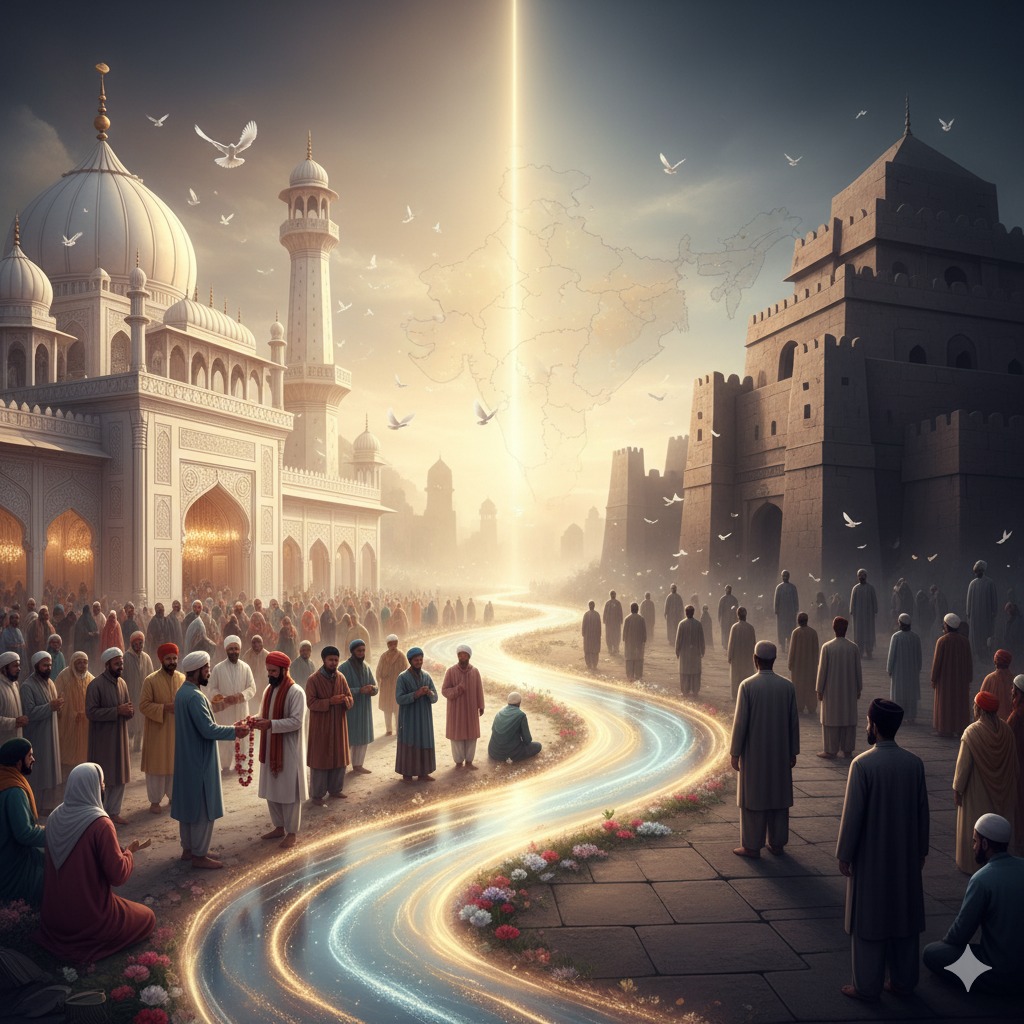
South Asia has long been the cradle of a deeply spiritual, inclusive, and pluralistic form of Islam rooted in Sufism. From the shrines of Khwaja Moinuddin Chishti in Ajmer to Shah Jalal in Sylhet and Baba Farid in Lahore, Sufi saints built bridges of harmony between faiths, languages, and communities. They emphasized love over fear, service over supremacy, and spirituality over sectarianism. Yet, in recent decades, this inclusive ethos has come under a sustained assault from imported ideologies most notably Wahhabism and its political offshoot, Salafism reshaping the religious and social landscape of the region.
For centuries, Islam in the Indian subcontinent evolved in close conversation with local cultures. The Sufi orders the Chishtiya, Qadiriya, and Warsiya were not merely religious movements but moral communities that preached tolerance and unity. They played a crucial role in resisting colonial exploitation and communal hatred, offering a message of divine love and equality that resonated with Hindus, Sikhs, and Muslims alike.
This Sufi framework of coexistence helped create a composite cultural identity often referred to as Ganga-Jamuni tehzeeb. It allowed Indian Muslims to remain rooted in their spiritual traditions while being integrated with the broader Indian civilizational ethos. It is precisely this synthesis that Wahhabism seeks to dismantle.
The Wahhabi Infiltration
The rise of Wahhabism in South Asia can be traced back to the late 19th and early 20th centuries but intensified in the 1970s when petro dollar funded organizations began exporting their rigid interpretations of Islam across the Muslim world. In the wake of the Afghan jihad and the Iranian Revolution, the region became a battleground for ideological supremacy. Madrassas funded by Gulf states promoted an austere, literalist version of Islam that rejected centuries of local traditions, spiritual practices, and even basic inter sectarian tolerance.
In India, Pakistan, and Bangladesh, this ideological import began to undermine the authority of Sufi institutions and scholars. Shrines once revered as centers of peace were attacked as sites of “innovation” (bid‘ah). Celebrations like urs, milad, and qawwali symbols of devotion and art were condemned as “un-Islamic.” This puritanical campaign slowly chipped away at the inclusive religious consciousness of South Asian Muslims.
The consequences of this ideological shift are profound. Wahhabism’s rigid worldview creates an environment intolerant of diversity, fueling sectarian violence and militancy. The Taliban’s rise in Afghanistan and the radicalization in Pakistan’s heartland were not mere geopolitical accidents they were the result of decades of Wahhabi indoctrination.
In India, radical preachers influenced by global Salafi trends have tried to polarize Muslim youth by detaching them from their Sufi heritage and portraying local traditions as deviations. The marginalization of Sufi institutions has also weakened the natural resistance within the Muslim community against extremism. Where the Sufi Khanqahs once taught humility and compassion, social media platforms now amplify dogma and division.
The Need for Reclaiming the Narrative
The battle for the soul of South Asian Islam is, at its core, a battle for identity. Progressive Muslim voices, scholars, and Sufi leaders must reclaim their space from the Extremist. This is not a nostalgic call to return to the past but an urgent appeal to revive the values that once defined the region’s Islam love (muhabbat), knowledge (ilm), and service (khidmat).
Educational reform is crucial. Madrassas and Islamic universities must reintroduce classical Sufi scholarship alongside contemporary studies. Governments and civil society should support cultural and academic initiatives that celebrate Sufi contributions to peace and pluralism. The media, too, must highlight narratives that counter hate filled interpretations of faith.
Sufism offers not merely a theological alternative but a social philosophy capable of healing divided societies. In an age of polarization, it reminds us that faith is not about dominance but devotion, not exclusion but empathy. The survival of pluralism in South Asia depends on the revival of this moral compass.
The Wahhabi project thrives on anger, alienation, and ignorance. The Sufi path, by contrast, draws its strength from love, knowledge, and connection. The question, therefore, is not just which theology will prevail but what kind of society South Asian Muslims wish to build: one that isolates itself in rigid purity, or one that continues the timeless quest for divine love and human unity.
(The Author is the National Chairman of Muslim Students Organisation of India MSO, he writes on a wide range of issues, including, Sufism, Public Policy, Geopolitics and Information Warfare.)
(By Dr Shujaat Ali Quadri)