
By Grace Mubashir
In a recent speech, the Kerala-based scholar Sheikh Abubakr Ahmad argued that women should remain within the domestic sphere rather than entering public spaces. Rather than adopting regressive stances, Islam should be understood as an ethical framework centred on dignity, responsibility, modesty, justice, and mutual respect. Scholars can help by interpreting these principles, highlighting the diversity of Islamic thought, and helping communities navigate modern complexities.
Major Points:
· Rather than focusing on where women should be placed, a more constructive question is what religion can actually offer them.
· Islam provides women with an independent relationship with God. A Muslim woman prays, fasts, and gives charity on her own terms, and she stands individually accountable before her Creator. Her religious identity is not contingent upon her relationship with a father, a husband, or a male authority figure.
· The distinction between being modest and being confined is the heart of this debate. In Qur’an 24:30, believing men are first instructed to lower their gaze and guard their chastity. The very next verse provides the same instructions for believing women. Ultimately, the moral responsibility for conduct begins with both sexes.
· Ultimately, the question shouldn’t be reduced to a simple choice between the home and the street. A better question is: what kind of public life is truly compatible with Islamic ethics?
· A Muslim woman can pursue careers in education, medicine, teaching, business, charity, scholarship, journalism, or public administration while remaining true to the religious principles she follows. Participating in public life doesn’t mean one has to abandon their religious identity.
…
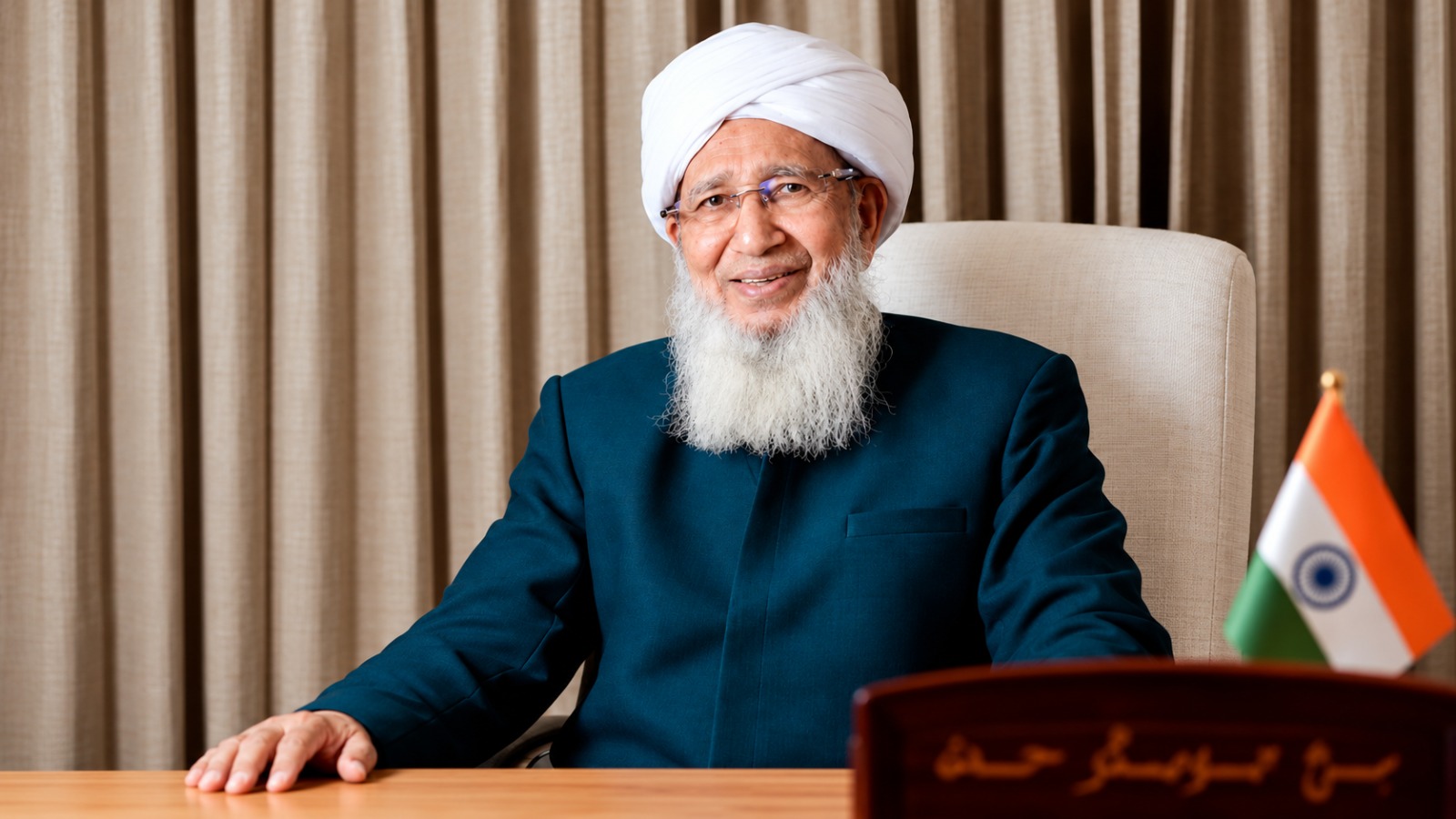
Recent comments by Sheikh Abubakr Ahmad, also known as Kanthapuram A. P. Aboobacker Musliyar, have reignited a vital conversation within Indian Muslim society: what role should women play in public life, and who actually gets to decide? In a recent speech, the Kerala-based scholar argued that women should remain within the domestic sphere rather than entering public spaces. Citing Purdah and Qur’an 33:33, he compared women to precious gold ornaments that must be kept safely tucked away in a box. He framed this restriction not as a way to diminish women, but as a means of protecting their dignity.
This stance warrants a deeper discussion rooted in Islamic interpretation rather than a purely political reaction. As a prominent religious figure in Kerala, Sheikh Abubakr Ahmad’s views represent a specific way of understanding Islamic teachings regarding modesty and social interaction. The real question isn’t whether a scholar has the right to voice a religious opinion – scholars certainly play a legitimate role in interpreting sacred texts. The more pressing issue is whether a single interpretation can be transformed into a sweeping rule that limits the public participation of Muslim women and whether the Qur’an and Sunnah truly support such a broad conclusion.
The Context of Qur’an 33:33
A cornerstone of the argument for keeping women at home is Qur’an 33:33. While the verse instructs, “And abide in your houses,” the surrounding context is essential to understanding its meaning. The passage begins by addressing the wives of the Prophet specifically: “O wives of the Prophet, you are not like other women.” The subsequent verses provide them with unique instructions regarding their conduct, speech, dress, and their relationship with the Prophet’s household.
This doesn’t mean the verse holds no relevance for Muslim women today; many jurists have historically drawn broader ethical principles from verses addressed to specific groups. However, it does mean that the verse shouldn’t be stripped of its context and presented as an unconditional command requiring all women, across all cultures and eras, to remain confined to their homes.
Furthermore, there is a vital distinction between regulating how men and women behave in public and flatly prohibiting women from being in public at all. Islamic principles regarding modesty and social interaction do not inherently demand the social confinement of women. Following a standard of modest conduct does not automatically mean one is barred from participating in society.
The Qur’anic Picture of Women
Throughout the Qur’an, women are consistently presented as morally responsible believers, not merely as subjects who need protection from the outside world. In Qur’an 33:35, believing men and women are described in parallel terms. The text lists believing men and believing women, truthful men and truthful women, patient men and patient women, and charitable men and charitable women, alongside those who remember God.
The structure of this verse is telling: religious responsibility is framed as a shared duty. Women are not just passive recipients of religious guidance; they are independently accountable to God for their own faith and their own actions.
Another key verse, Qur’an 9:71, describes believing men and women as awliyāʾ (protectors or allies) of one another, noting that they jointly enjoin what is right and forbid what is wrong. This depicts Muslim women as active participants in the moral fabric of their community. It does not suggest that religious responsibility is a male-only domain while women are relegated to the private sphere.
Qur’an 58:1 provides yet another powerful example. It records how God heard the plea of a woman who approached the Prophet to discuss a grievance regarding her husband. Her personal struggle became part of the divine revelation. The significance here isn’t just that she was allowed to speak; it’s that her argument was heard, taken seriously, and recorded as part of the faith. This narrative preserves a moment where a woman engaged in a religious and legal discussion regarding her own rights.
Women in the Prophetic Community
The lived experience of the Prophet also makes it difficult to argue for an absolute rule of female confinement. Women were present at religious gatherings and were part of the communal life of the early Muslim community. In fact, a well-known hadith records the Prophet explicitly instructing Muslims not to prevent women from attending the mosque.
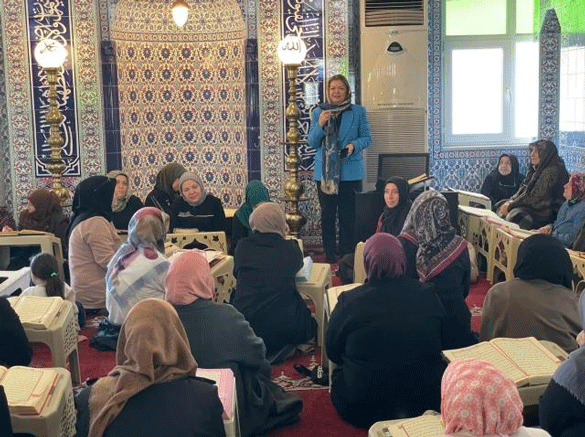
The accounts regarding Eid are even more telling. Umm ʿAtiyya reported that the Prophet instructed women – including those who were unmarried or typically remained secluded – to attend the Eid gatherings. Even menstruating women were encouraged to join the wider community celebrations, even if they did not participate in the formal prayer. This shows that women could be present at major public religious events while still adhering to Islamic norms of worship and modesty.
To be clear, these examples aren’t meant to suggest that early Islamic society practised the same brand of gender equality found in modern liberal societies. They did not. Classical Muslim societies held specific expectations regarding modesty, family, and gender relations. However, the historical record clearly shows that modesty and public participation were not mutually exclusive.
Modesty Is Not the Same as Confinement
The distinction between being modest and being confined is the heart of this debate. In Qur’an 24:30, believing men are first instructed to lower their gaze and guard their chastity. The very next verse provides the same instructions for believing women. Ultimately, the moral responsibility for conduct begins with both sexes.
This point is crucial when addressing the argument that women’s presence in public spaces increases the risk of sexual misconduct. If the underlying concern is indeed sexual morality, the Qur’anic approach distributes responsibility between men and women alike. Men are not depicted as being morally incapable of managing their own gaze or their own conduct.
A social system that attempts to solve male misconduct by removing women from public life essentially shifts the entire burden of male self-control onto women. The Qur’anic structure suggests a different path: moral responsibility is shared. While women are encouraged to observe modesty, men are equally tasked with controlling their gaze, their behaviour, and their desires. Therefore, one can make an Islamic case for modesty without necessarily arguing for the removal of women from the public sphere.
Can Religious Scholars Decide the Boundaries of Women’s Lives?
The role of the ulamāʾ is undeniably significant in Islam. These scholars spend many years immersed in the study of the Qur’an, hadith, jurisprudence, theology, and the long history of Islamic thought. This deep knowledge grants them a vital role in teaching and guiding Muslim communities.
However, a scholar is not the source of revelation itself. An ālim interprets religious texts; they do not embody them. Islamic intellectual history is defined by healthy disagreement between various scholars, schools of thought, and generations. Because of this, a ruling issued by a single scholar must be distinguished from an absolute, unquestionable divine command.
This distinction is vital when a scholar moves from saying, “This is my personal interpretation of purdah,” to claiming, “Therefore, Muslim women should stay at home.” The latter statement is far more consequential because it attempts to establish a social rule that impacts everything from education and employment to politics, medicine, and journalism. Such a sweeping restriction requires more than just citing a single verse; it demands a comprehensive look at the entire Qur’anic framework, the Sunnah, classical jurisprudence, the breadth of legal opinions, and how Muslim societies have actually functioned throughout history.
The discussion about women’s role in public life also touches on a deeper question: who has the right to produce and interpret religious knowledge?
Islamic history offers numerous examples of women exercising genuine religious authority. ʿĀʾisha, the Prophet’s wife, was a premier authority on hadith, law, and Qur’anic interpretation. Male Companions frequently sought her guidance on complex religious matters. Her role in the early community proves that religious knowledge was not merely a one-way street from men to passive female followers.
The tradition of women transmitting hadith lasted for centuries. Women taught male students, managed scholarly works, and were active participants in Islamic learning networks. This history challenges the notion that women are naturally destined to be mere subjects of religion while men serve as its authorities.
Qur’an 9:71 is particularly relevant here. If believing men and women are both responsible for promoting good and resisting evil, then both have a vested interest in understanding the principles that govern their lives. Women cannot be treated as mere objects of Islamic law while being shut out of the conversations that shape that law.
The Problem with the Gold Analogy
The comparison of women to precious gold ornaments is often intended to express their value and the need to protect them. However, this analogy creates a conceptual flaw: an ornament is an object, whereas a woman is a moral agent.
We protect objects by controlling access to them. Human beings, however, possess judgement, agency, and responsibility. The language of “protection” becomes problematic when it is used to justify restricting a person’s freedom without acknowledging their own moral capacity.
The Qur’an addresses women directly as believers who pray, fast, give charity, and are personally accountable for their actions. In Islamic theology, a woman’s value isn’t just that of a precious item to be kept safely tucked away; her fundamental status is that of a human being responsible before God. While protecting women from harassment and violence is a vital social duty, protection should not be synonymous with confinement. A woman can be protected from harm while still enjoying the freedom to study, work, and participate fully in society.
What Can Religion Offer Women?
Rather than focusing on where women should be placed, a more constructive question is what religion can actually offer them.
Islam provides women with an independent relationship with God. A Muslim woman prays, fasts, and gives charity on her own terms, and she stands individually accountable before her Creator. Her religious identity is not contingent upon her relationship with a father, a husband, or a male authority figure.
The Qur’an also recognises women as distinct legal and economic entities. They have rights to inheritance and the ability to own property and are addressed directly as responsible believers. The Qur’anic record even shows women making religious commitments and bringing legal matters directly to the Prophet. This creates a foundation for seeing women not through the narrow lens of “protection”, but through the lens of dignity, responsibility, knowledge, and agency.
Religion can also provide an ethical framework for public life. It can advocate for modesty without demanding invisibility and emphasise family responsibility without denying professional life. It can uphold sexual ethics without placing the entire burden of male behaviour on the shoulders of women.
Religion and Public Life
Ultimately, the question shouldn’t be reduced to a simple choice between the home and the street. A better question is: what kind of public life is truly compatible with Islamic ethics?
A Muslim woman can pursue careers in education, medicine, teaching, business, charity, scholarship, journalism, or public administration while remaining true to the religious principles she follows. Participating in public life doesn’t mean one has to abandon their religious identity.
In the same vein, recognising a woman’s role in society doesn’t require her to reject modesty. A woman can dress modestly and maintain appropriate boundaries in her interactions while still being an active participant in the world around her. These two concepts can and do coexist.
The crucial distinction to make is between the ethical regulation of public life and the outright exclusion of women from it. The former is a common feature of religious morality, whereas the latter is a much heavier social claim that requires far more substantial evidence to justify.
The Historical Diversity of Islamic Interpretation
Islamic jurisprudence has never been a monolith or a single, uniform set of opinions regarding women. Throughout history, Muslim jurists have debated a wide range of issues, including education, employment, travel, mosque attendance, political involvement, legal testimony, marriage, divorce, and family responsibilities.
While some historical interpretations placed a heavier emphasis on gender separation and domesticity, others allowed for broader participation depending on the circumstances. These varying views are a natural part of the history of Islamic legal thought.
Acknowledging this diversity isn’t about saying every interpretation is equally correct. Rather, it means recognising that a contemporary scholar must learn to distinguish between divine revelation, human juristic interpretation, historical custom, and simple personal or institutional preference.
This distinction is vital, especially when a ruling impacts an entire community. The greater the social impact of a religious ruling, the more carefully its textual and legal foundations must be scrutinised.
The Role of the Ulama Today
The ulamāʾ still play a significant role in Muslim society. In an era where people are bombarded with endless religious opinions via social media, trained scholars can provide much-needed historical context, textual interpretation, and intellectual rigour.
However, religious authority is most effective when it relies on knowledge and persuasion rather than just institutional power. Scholars can explain classical views on purdah, family, and gender while also acknowledging the breadth of legal opinions and the reality of changing social landscapes.
Crucially, women should be part of this dialogue. Religious discussions about women shouldn’t happen without women being present. Muslim women are themselves readers of the Qur’an, students of hadith, and members of religious communities, and, historically, they have been producers and transmitters of Islamic knowledge.
A healthy religious authority has no reason to fear women’s participation. Instead, it can offer guidance while empowering women to exercise their own moral and intellectual agency.
We also need to avoid the trap of oversimplification – the idea that there are only two choices: total confinement for women or the complete abandonment of religious boundaries. Islamic tradition actually offers a much wider spectrum of possibilities.
A Muslim society can uphold modesty while supporting women’s education. It can value family life while allowing women to work. It can stand against sexual harassment without making women’s freedom the “price” for men’s self-control. It can preserve religious values while welcoming women into public institutions.
The real challenge isn’t choosing between religion and public life. The challenge is figuring out how Islamic ethics can guide public life without reducing women to passive subjects.
Toward a More Inclusive Religious Space
The controversy surrounding Sheikh Abubakr Ahmad’s statement touches on something much larger than a single speech or organisation. It is about the future relationship between religious authority and women’s agency in Muslim society.
The Qur’an presents men and women as individuals who are personally accountable to God. It recognises women as believers, moral agents, and active members of the religious community. The Prophetic tradition also shows evidence of women attending religious gatherings and engaging directly with legal and religious questions. Furthermore, Islamic history is full of women who taught and produced religious knowledge.
These sources don’t erase questions about modesty or gender roles, but they do make it difficult to argue that a woman’s complete withdrawal from public life is a universal requirement of Islam.
Religion can play a constructive role here. It can provide an ethical framework centred on dignity, responsibility, modesty, justice, and mutual respect. Scholars can help by interpreting these principles, highlighting the diversity of Islamic thought, and helping communities navigate modern complexities.
Ultimately, the question shouldn’t be whether women belong in public spaces. Muslim women are already there, and they have been part of the intellectual and social fabric of Muslim life for centuries. The more important question is what kind of public space a Muslim community wants to build – one where women are merely “protected” and spoken for, or one where they are educated, heard, respected, and recognised as full participants in the life of the community.
Source : newageislam.com