
By Grace Mubashir
Fazlur Rahman’s double movement theory represents one of the most significant attempts in modern Islamic thought to reconcile Qur’anic revelation with historical change. Its central insight is that interpretation cannot stop at the literal wording of a verse. The interpreter must travel backwards into the historical world of revelation, understand the social problem being addressed, identify the moral principle behind the particular response and then return to the present to determine how that principle should operate today.
Major Points:
· This approach is especially powerful when dealing with controversial passages concerning polygamy, gender relations and warfare.
· Regarding jihad, the method does not require denying the Qur’an’s references to armed conflict.
Instead, it distinguishes between the historical circumstances in which fighting was permitted and the broader ethical principles governing that permission.
· Qur’anic warfare passages can therefore be read in conjunction with principles of justice, non-aggression, treaty observance, protection and peace.
· For contemporary Islamic scholarship, this opens an important possibility. Muslims need not choose between abandoning the Qur’an and reproducing seventh-century social arrangements unchanged. A third possibility exists: historically informed, morally serious and intellectually disciplined reinterpretation. That is the central promise, and also the central challenge, of Fazlur Rahman’s double movement.
…
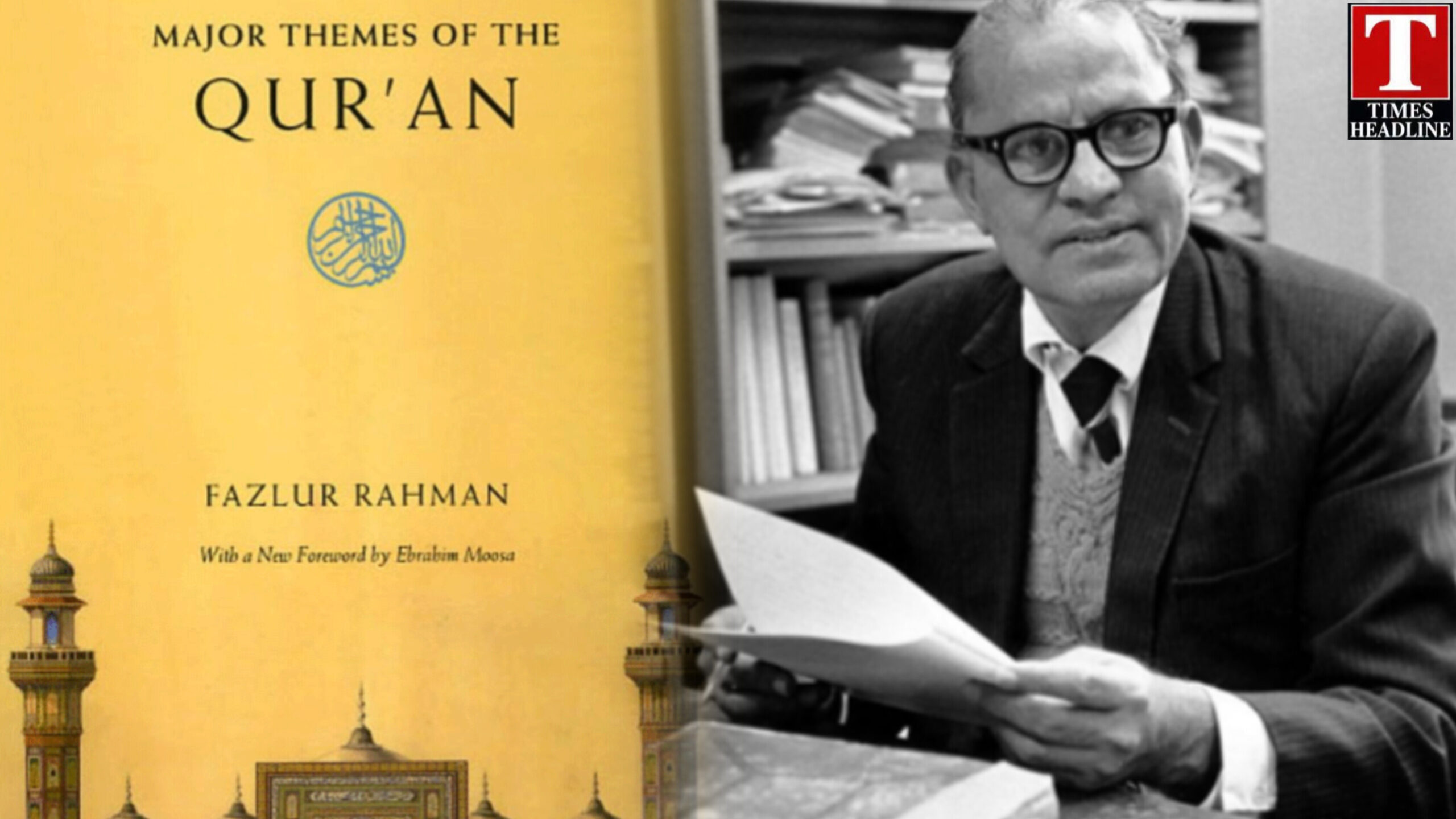
Few modern Muslim thinkers have attempted to address the tension between the Qur’an’s historical context and the demands of modern life as systematically as Fazlur Rahman. Born in British India in 1919 and educated in the traditional Islamic sciences before pursuing advanced studies in the West, Rahman developed a distinctive method for reading the Qur’an that sought to preserve its authority while avoiding a purely literalist approach to interpretation. His most influential methodological contribution is commonly described as the double movement theory.
Rahman’s basic concern was straightforward. The Qur’an was revealed in a particular historical society, to particular people, confronting particular moral, social, economic and political problems. At the same time, Muslims regard the Qur’an as a source of guidance for all generations. How, then, can a revelation given in seventh-century Arabia provide meaningful guidance for societies whose circumstances are radically different?
Rahman’s answer was that interpreters must move in two directions. First, they must move from the present back to the Qur’anic historical context in order to understand what a particular revelation meant and what problem it addressed. Second, they must move from that historical understanding back to the present, identifying the general moral principle behind the original response and applying that principle to contemporary circumstances. Contemporary scholarship generally summarises Rahman’s method in precisely these two stages.
This approach is important because it does not simply ask, “What does this verse literally say?” It asks a broader question: What was the Qur’an trying to achieve through this particular statement in that particular historical situation?
That distinction becomes especially important when dealing with controversial Qur’anic passages concerning warfare, gender, punishment, relations with non-Muslims and social hierarchy. The method does not make difficult verses disappear. Rather, it attempts to distinguish between the historically specific form of a Qur’anic response and the universal moral objective underlying it.
What Is the Double Movement?
Rahman’s theory can be understood as a movement between text, history, moral principle and contemporary application.
The first movement begins with a contemporary problem. Suppose, for example, we are asking whether a Qur’anic verse commanding fighting should be understood as a permanent command to Muslims. Instead of immediately applying the verse to the present, the interpreter moves backwards.
The interpreter asks: When was this verse revealed? What was happening to the early Muslim community? Who was involved? Was the community under attack? What political relationships existed? What did warfare mean in seventh-century Arabia? What other Qur’anic passages address the same subject? What moral limits does the Qur’an place upon warfare?
The objective is to reconstruct the macro-historical and social situation surrounding revelation. Rahman’s first movement, therefore, does not mean merely finding a traditional asbab al-nuzul report. It requires broader historical reconstruction. His method treats the Qur’an as responding to concrete social problems and seeks to understand the relationship between revelation and those problems.
The second movement then begins.
Once the interpreter understands the historical situation and identifies the Qur’an’s underlying moral objective, that principle must be brought into the contemporary world. The question becomes: How can the same moral objective be realised under present circumstances?
This is crucial. Rahman is not simply saying that Muslims should ignore the original verse and invent a modern rule. Rather, the modern rule should be derived from the Qur’an’s deeper ethical orientation.
This is why Rahman’s method is called a “double movement”. The first movement travels backwards into history; the second returns from history to the present.
From Particular Rule to General Moral Principle
The most important methodological distinction in Rahman’s approach is between the specific legal response and the general moral ideal.
A Qur’anic verse may provide a particular solution to a historical problem. But the particular solution should not automatically be treated as the only possible expression of the Qur’an’s moral objective in every historical situation.
For Rahman, the interpreter must therefore ask what general principle can be derived from a collection of Qur’anic passages.
For example, if the Qur’an regulates warfare under particular circumstances, the interpreter should examine the complete Qur’anic treatment of war. Individual verses should not be isolated from passages commanding justice, prohibiting transgression, protecting non-combatants or permitting peace.
This is why Rahman’s approach is holistic. The Qur’an must be read as an interconnected moral worldview rather than as a collection of isolated legal statements. Contemporary scholarship describing his method emphasises precisely this movement from specific Qur’anic statements toward general principles and then back toward contemporary application.
The First Controversial Example: Polygamy
One of the most frequently discussed examples is Qur’an 4:3:
فَانكِحُوا مَا طَابَ لَكُم مِّنَ النِّسَاءِ مَثْنَىٰ وَثُلَاثَ وَرُبَاعَ ۖ فَإِنْ خِفْتُمْ أَلَّا تَعْدِلُوا فَوَاحِدَةً
“Marry women of your choice; two, three or four; but if you fear that you cannot deal justly with them, then marry only one.”
A literal reading can focus upon the numerical permission: two, three or four wives. But Rahman’s methodology would place the verse within its historical and ethical context.
The verse appears in a passage dealing with vulnerable orphans and the equitable management of their property. The interpreter therefore asks what social problem the verse was addressing. The verse does not simply discuss male sexual choice. It is situated within a broader concern with justice, responsibility and the protection of vulnerable persons.
The second movement then asks what moral principle emerges.
The answer may be expressed as justice, responsibility and protection from exploitation. Qur’an 4:129 adds another important dimension:
وَلَن تَسْتَطِيعُوا أَن تَعْدِلُوا بَيْنَ النِّسَاءِ وَلَوْ حَرَصْتُمْ
“You will never be able to maintain equal justice between wives, even if you strive to do so.”
A Rahmanian interpretation, therefore, asks whether the Qur’anic trajectory is simply to preserve polygamy indefinitely or whether the Qur’an was moving society towards a higher ethical ideal of marital justice.
This does not necessarily produce an automatic legal prohibition of polygamy. Rather, it opens the possibility that contemporary legislation may restrict or regulate polygamy where doing so better realises the Qur’anic principle of justice.
The important point is methodological: the Qur’an’s moral objective becomes more important than mechanically reproducing the social arrangement of seventh-century Arabia.
The Second Example: Qur’an 4:34 and Gender Relations
Qur’an 4:34 is among the most controversial verses in modern discussions of Islam:
الرِّجَالُ قَوَّامُونَ عَلَى النِّسَاءِ
“Men are qawwāmūn over women…”
The verse subsequently contains the famous expression:
وَاضْرِبُوهُنَّ
which has traditionally been translated in many contexts as “strike them” or “beat them”.
A Rahmanian reading would not begin with an isolated translation of wa-iḍribūhunna. It would reconstruct the social world in which the verse emerged. Seventh-century Arabia was a patriarchal society in which men generally possessed greater economic and physical power. The Qur’an intervened within that society through a series of reforms concerning marriage, inheritance, women’s property and family responsibility.
The interpreter then asks what moral trajectory these reforms represent.
The broader Qur’anic emphasis includes mutual affection:
وَجَعَلَ بَيْنَكُم مَّوَدَّةً وَرَحْمَةً
“And He placed between you affection and mercy.” (30:21)
It also establishes reciprocal rights:
وَلَهُنَّ مِثْلُ الَّذِي عَلَيْهِنَّ بِالْمَعْرُوفِ
“And women have rights similar to the obligations upon them, according to what is fair.” (2:228)
A double-movement approach could therefore argue that the moral trajectory is toward reciprocity, dignity, justice and the reduction of patriarchal domination.
The historical instruction concerning family discipline would then have to be interpreted in light of contemporary knowledge concerning domestic violence, human dignity and gender equality. The question becomes not “How can we reproduce the seventh-century disciplinary mechanism?” but “How can the Qur’anic objective of responsible and just family relations be realised today?”
This illustrates the central power of Rahman’s method: the historical form of a response and its moral objective are not necessarily identical.
The Third Example: The “Sword Verse”: Qur’an 9:5
Few Qur’anic passages have generated more controversy than Qur’an 9:5:
فَاقْتُلُوا الْمُشْرِكِينَ حَيْثُ وَجَدتُّمُوهُمْ
“…then kill the polytheists wherever you find them…”
Read in isolation, the verse can appear to command Muslims to kill polytheists generally.
A double-movement interpretation begins by refusing to isolate the verse from its surrounding passage. Qur’an 9 concerns a specific political and military conflict involving treaties, their violation and relations between the emerging Muslim community and particular Arabian groups.
The immediately surrounding verses are crucial. Qur’an 9:4 says:
فَأَتِمُّوا إِلَيْهِمْ عَهْدَهُمْ إِلَىٰ مُدَّتِهِمْ
“Complete their treaty with them until their term.”
Then Qur’an 9:6 states:
وَإِنْ أَحَدٌ مِّنَ الْمُشْرِكِينَ اسْتَجَارَكَ فَأَجِرْهُ حَتَّىٰ يَسْمَعَ كَلَامَ اللَّهِ ثُمَّ أَبْلِغْهُ مَأْمَنَهُ
“If any of the polytheists seeks your protection, then grant him protection so that he may hear the word of God, and then escort him to his place of safety.”
This context makes a universal command to kill all non-Muslims difficult to sustain.
A double-movement interpretation would therefore identify a moral principle concerning self-defence, treaty obligations, proportionality and protection of human beings, rather than treating the verse as a timeless instruction to kill people because of their religious identity.
Contemporary scholarship applying Rahman’s method to Qur’an 9:5 similarly emphasises historical context and the ethical objectives underlying the verse rather than treating the passage as an unrestricted command.
The Fourth Example: Qur’an 2:256 and Religious Freedom
The Qur’an states:
لَا إِكْرَاهَ فِي الدِّينِ
“There is no compulsion in religion.” (2:256)
This verse is particularly important when interpreting passages concerning warfare and non-Muslims.
A literalist approach may treat 2:256 as a general statement while treating military verses separately. A contextual approach instead asks how these passages fit within the Qur’an’s larger ethical worldview.
The Qur’an repeatedly distinguishes belief from coercion:
أَفَأَنتَ تُكْرِهُ النَّاسَ حَتَّىٰ يَكُونُوا مُؤْمِنِينَ
“Would you then compel people to become believers?” (10:99)
A Rahmanian interpretation would see these passages as contributing to a general moral principle: faith cannot legitimately be produced through coercion.
This becomes particularly relevant when interpreting verses involving warfare. Military conflict and religious conversion are analytically distinct. The Qur’an’s permission to fight under particular circumstances should not automatically be transformed into a command to impose belief upon others.
Jihad: The Most Important Application
The question of jihad provides perhaps the clearest demonstration of the value and difficulty of Rahman’s method.
The word ‘jihad’ derives from the Arabic root j-h-d, conveying exertion or striving. The Qur’an uses related terminology in different contexts. Not every occurrence refers to armed warfare. The Qur’an also uses the concept in broader contexts of striving in God’s path.
At the same time, the Qur’an unquestionably contains verses concerning armed fighting (qital). A serious interpretation should not erase this historical fact. The methodological challenge is to determine how those verses should function in a contemporary ethical and legal framework.
A useful distinction is therefore between jihad as striving and qitāl as armed fighting. Conflating the two can produce serious interpretive problems.
Qur’an 2:190 states:
وَقَاتِلُوا فِي سَبِيلِ اللَّهِ الَّذِينَ يُقَاتِلُونَكُمْ وَلَا تَعْتَدُوا
“Fight in the way of God those who fight you, but do not transgress.”
The verse contains two elements: permission to fight and a restriction against transgression.
The historical question is therefore essential. Who were the Muslims fighting? What circumstances produced the conflict? What did warfare mean in the Arabian political environment? What obligations existed concerning treaties and retaliation?
The second movement then asks what general principle can be derived.
A plausible moral principle is that armed force may be used under conditions of serious conflict or defence, but aggression and transgression are prohibited.
That principle can then be brought into the contemporary world.
In a modern state system, questions of warfare are governed by constitutional authority, international law and institutions regulating armed conflict. An individual or private group cannot simply declare jihad and assume that a Qur’anic warfare verse authorises violence. The moral objective of the Qur’anic material must be translated into a contemporary framework of lawful defence, protection of civilians, justice and restraint.
This is not equivalent to saying that jihad has been “abolished”. Rather, the historical form of armed conflict has to be distinguished from the Qur’an’s broader moral objective.
Recent scholarship explicitly applying Rahman’s double movement to jihad has similarly argued that the historical circumstances of warfare must be reconstructed before extracting contemporary principles. One such study identifies the moral ideal as fighting in circumstances of necessity or defence while maintaining ethical restrictions on warfare.
Qur’an 22:39 and the Question of Religious Defence
Another important verse is Qur’an 22:39:
أُذِنَ لِلَّذِينَ يُقَاتَلُونَ بِأَنَّهُمْ ظُلِمُوا
“Permission [to fight] has been given to those who are being fought because they have been wronged.”
The language is significant. Permission is connected with being attacked and being wronged.
A double-movement reading therefore begins with the historical circumstances of persecution and conflict experienced by the early Muslim community. The verse does not present violence as an independent religious objective. It provides permission in response to oppression.
The second movement extracts the principle of resistance to serious oppression and protection of legitimate human freedom, while simultaneously recognising the Qur’an’s wider restrictions on violence.
This produces a very different contemporary understanding of jihad from the idea of indiscriminate religious warfare.
Qur’an 8:61 and the Possibility of Peace
The Qur’an also states:
وَإِن جَنَحُوا لِلسَّلْمِ فَاجْنَحْ لَهَا
“If they incline towards peace, then incline towards it.”
This verse becomes particularly significant when read together with warfare passages.
The interpreter can therefore construct a broader Qur’anic ethical framework:
War may occur under particular historical conditions; aggression is prohibited; treaties must be honoured; protection may be granted to those seeking safety; and peace should be accepted when the opposing side genuinely seeks it.
The general moral principle is therefore not perpetual warfare but justice, protection, restraint and peace where peace is possible.
What Would “Reinterpreting Jihad” Actually Mean?
It is important to avoid a misunderstanding of Rahman’s method. Reinterpretation does not mean changing the Qur’an according to contemporary political preferences.
Instead, it requires a disciplined process.
First, identify the complete Qur’anic treatment of the subject.
Second, reconstruct the historical situation surrounding the relevant verses.
Third, distinguish between the particular social response and the general moral objective.
Fourth, examine how that moral objective can be realised under contemporary conditions.
Fifth, test the proposed interpretation against the Qur’an as a whole.
Under this method, a contemporary understanding of jihad could emphasise striving for justice, protection against oppression, defence against aggression, ethical restraint and peaceful resolution of conflict whenever possible.
Armed struggle cannot simply be declared nonexistent because modern interpreters dislike warfare. The Qur’an contains genuine warfare passages. The more intellectually defensible argument is that these passages must be interpreted through their historical circumstances and ethical limitations rather than transformed into unrestricted commands for perpetual violence.
The Difference Between Jihad and Terrorism
Rahman’s methodology also provides a basis for distinguishing jihad from terrorism.
Terrorism typically involves deliberate violence against civilians or the use of violence to generate fear for political purposes. A contextual Qur’anic reading cannot simply take a verse concerning a historical military conflict and apply it to random civilians, political opponents or religious minorities.
The Qur’anic principles of justice, prohibition of transgression, treaty obligations and protection of those seeking safety create strong ethical barriers against such an interpretation.
Consequently, a Rahmanian reading would reject the assumption that any individual or organisation can invoke jihad as a private licence for violence. Contemporary armed conflict must be evaluated through both Islamic ethical principles and legitimate political and legal institutions.
Relevance for Contemporary India
Rahman’s methodology has particular relevance to India because Indian Muslims live within a plural constitutional democracy. The central questions facing Muslims are no longer identical to those faced by the first Muslim community in seventh-century Arabia.
Questions concerning citizenship, religious pluralism, democracy, gender equality, constitutional rights, interfaith relations and minority protection require engagement between Islamic tradition and contemporary institutions.
A Rahmanian approach allows Muslims to ask what the Qur’an’s fundamental moral objectives imply for these new circumstances.
For example, the Qur’anic commitment to justice can be related to constitutional equality. The prohibition of coercion can inform religious freedom. The Qur’anic concern for vulnerable people can inform social welfare. The principles governing warfare can be interpreted within modern international law and constitutional authority.
This does not mean replacing Islamic law with secular law. Rather, it means asking how the ethical objectives of Islamic revelation can be realised through institutions that did not exist in the seventh century.
Conclusion
Fazlur Rahman’s double movement theory represents one of the most significant attempts in modern Islamic thought to reconcile Qur’anic revelation with historical change. Its central insight is that interpretation cannot stop at the literal wording of a verse. The interpreter must travel backwards into the historical world of revelation, understand the social problem being addressed, identify the moral principle behind the particular response and then return to the present to determine how that principle should operate today.
This approach is especially powerful when dealing with controversial passages concerning polygamy, gender relations and warfare.
Regarding jihad, the method does not require denying the Qur’an’s references to armed conflict. Instead, it distinguishes between the historical circumstances in which fighting was permitted and the broader ethical principles governing that permission. Qur’anic warfare passages can therefore be read in conjunction with principles of justice, non-aggression, treaty observance, protection and peace. Recent academic applications of Rahman’s method similarly treat the historical circumstances of qital as essential to deriving contemporary ethical conclusions.
The greatest contribution of Rahman’s method is therefore not that it produces predetermined “liberal” answers. Its contribution is methodological: it provides a disciplined way of asking what the Qur’an was trying to accomplish in history and how that moral purpose can be realised in a different historical world.
For contemporary Islamic scholarship, this opens an important possibility. Muslims need not choose between abandoning the Qur’an and reproducing seventh-century social arrangements unchanged. A third possibility exists: historically informed, morally serious and intellectually disciplined reinterpretation. That is the central promise, and also the central challenge, of Fazlur Rahman’s double movement.
(CREDIT: NEW AGE ISLAM)