
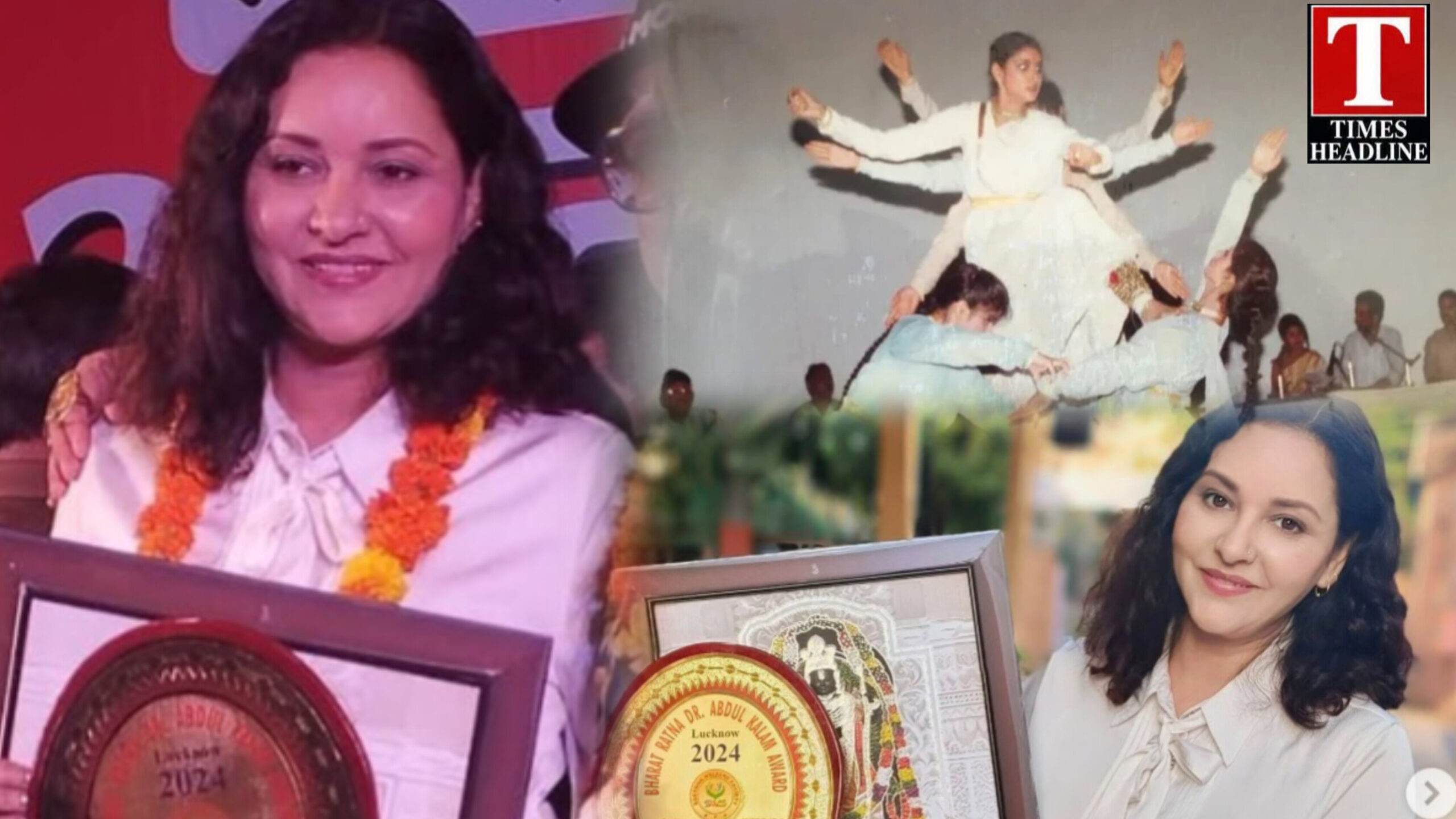
Farhan Fatima’s journey from Lucknow’s cultural landscape to the worlds of Indian cinema and television is a story of perseverance, artistic excellence and the courage to challenge social stereotypes. Recognised as one of Uttar Pradesh’s pioneering Muslim women in Kathak and acting, she has built a career that bridges India’s classical artistic heritage and contemporary entertainment. Her story is not merely about professional success. It is also about a young woman who pursued her ambitions despite social resistance, relied on her father’s support and sought to balance artistic freedom with personal values. Her journey offers an inspiring example for aspiring women who wish to enter fields that may not always receive social acceptance.
Born and raised in Lucknow, Farhan began her formal training in Kathak at the age of 12. The city, celebrated for its Nawabi heritage, classical music, poetry and the Lucknow gharana of Kathak, provided a meaningful cultural setting for her artistic development. She trained under renowned Kathak dancer Veena Singh at the prestigious Bhatkhande Sanskrit University in Lucknow, earning the Kathak Visharad qualification. This formal grounding helped her develop the discipline, technique and artistic sensibility required for classical dance. At just 13, she gave her first stage performance at the Birbal Sahni Institute under the mentorship of Guru Surendra Saikia, director of Kathak Kala Kendra. Alongside Kathak, she participated in several semi-classical music programmes, broadening her experience as a performing artist. These early opportunities established the foundation for a career that would eventually extend beyond the classical stage into theatre, television and films.
For Farhan, choosing Kathak and acting was not an easy decision. Coming from a traditional Muslim family, she faced objections from members of her extended family, particularly over the prospect of travelling alone to Delhi and Mumbai for professional assignments. Her father, Azhar Ahmed, a former Deputy Superintendent of Police in the Uttar Pradesh Police, became her strongest supporter. Rather than allowing social pressure to determine her future, he encouraged her to follow her aspirations while remaining guided by her values. Farhan has credited her father’s encouragement as a decisive influence on her journey. His confidence helped her navigate an environment in which women pursuing careers in performance arts could face additional scrutiny.
Farhan’s acting career began in Lucknow’s theatre circles, where established performers recognised her talent and encouraged her to explore acting professionally. Her first telefilm, Kasaaiwada, broadcast on Lucknow Doordarshan, received a positive response from viewers and marked an important step in her transition from dance to acting.
In 2013, she moved to Mumbai to pursue broader opportunities in the entertainment industry. The move brought years of uncertainty and professional struggle. After nearly three years, she secured an opportunity to work in director Anand L. Rai’s film Nakhrewali during 2016–17. Since then, she has reportedly worked in around a dozen films. Her filmography includes Hamare Baarah, directed by Kamal Chandra. She has also appeared in the web series Thukra Ke Mera Pyaar, where her performance attracted appreciation. Her television credits include popular shows such as Yeh Rishta Kya Kehlata Hai on Star Plus, Baalveer and R. K. Laxman Ki Duniya on Sony SAB, Bhaiya Kya Chal Raha Hai on Zee TV, and Aakhir Bahu Bhi Toh Beti Hai on Sahara One. These assignments have enabled her to work across different genres and reach audiences beyond the classical dance community.
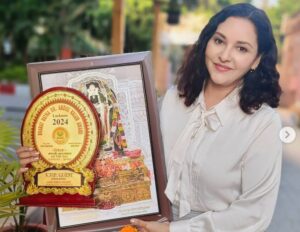
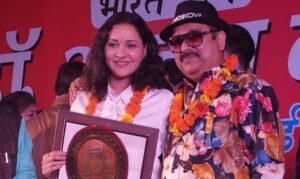
Farhan’s achievements extend beyond her film and television appearances. A profile published by Inspiring Indian Muslim Women under its Rising Beyond the Ceiling initiative identifies her as a classical Kathak dancer and actor associated with the Lucknow gharana. The profile records several significant milestones in her career, She has been recognised as a recipient of the Awadh Samman in 2018, She was featured among the Uttar Pradesh honourees of this initiative recognising accomplished women in 2025, She has been described as a graded artist of Doordarshan, in 2024, reflecting her association with India’s public broadcasting system. She has served as a brand ambassador for the Pink City International Short Film Festival.
Farhan’s career brings together two important dimensions of India’s cultural landscape: the preservation of classical traditions and participation in modern entertainment. Kathak, with its rich history of storytelling, rhythmic expression and cultural exchange, remains central to her artistic identity even as she works in films, television and digital productions. She has also participated in seminars, workshops and discussions related to dance and acting, helping encourage interest in the performing arts. Her journey challenges the assumption that professional success requires abandoning one’s cultural background or personal convictions. For young women, particularly those navigating restrictive social expectations, her experience offers a practical lesson: talent must be accompanied by training, discipline, resilience and the willingness to persevere through setbacks.
Farhan Fatima’s journey from a young Kathak student in Lucknow to an established performer across dance, television and cinema demonstrates the value of persistence and supportive mentorship. Her professional milestones, cultural contributions and reported recognitions make her a noteworthy figure in India’s contemporary performing arts landscape. Her story is a reminder that India’s cultural richness grows when artists from diverse backgrounds receive opportunities to develop their abilities. By combining classical training with a career in modern entertainment, Farhan continues to demonstrate how tradition and contemporary aspirations can coexist.