
By Dr Arun Mitra
Despite pressures from the United States government, many countries in the Global South have begun asserting themselves and refusing to accept US dictates. After the collapse of the Soviet bloc in the 1990s, the world entered a period of geopolitical uncertainty. The United States emerged as the dominant power and began dictating the terms of global politics.
This period witnessed the US-led invasion of Iraq, which resulted in the fall of Saddam Hussein. The invasion was justified on the pretext that Iraq possessed weapons of mass destruction. However, Hans Blix, who served as the Executive Chairman of the UN Monitoring, Verification and Inspection Commission (UNMOVIC) from 2000 to 2003 and led the search for weapons of mass destruction in Iraq, reported that there was no evidence that Iraq was pursuing an active WMD programme.
During the same period, the regime of Colonel Muammar Gaddafi in Libya was overthrown. The United States also invaded Afghanistan, claiming that terrorists operating from Afghanistan had masterminded the 9/11 attacks. Through these actions, the United States attempted to demonstrate that it had become the sole power capable of controlling global affairs. In the process, it undermined the role of the United Nations and imposed sanctions on countries such as Iran.
After the Second World War, the global community had taken serious note of devastating impact of war on human populations. In response, the United Nations Organization (UNO) was established on 24 October 1945. Over the years it played a significant role in defusing international tensions, promoting health and welfare, and encouraging economic development.
However, the world soon became divided into two military blocs. The North Atlantic Treaty Organization (NATO) was formed in 1949, and in response the Warsaw Pact emerged in 1955 to counter the military threat posed by NATO.
During this period, visionary leaders from newly independent countries of the Global South conceptualized a movement that would remain independent of these military alliances. The Non-Aligned Movement (NAM) came into existence on 1 September 1961. The initiative was led by Prime Minister Jawaharlal Nehru of India, President Gamal Abdel Nasser of Egypt, Marshal Josip Broz Tito of Yugoslavia, and Kwame Nkrumah of Ghana. NAM played an important role in advocating disarmament, economic cooperation, and addressing issues particularly relevant to developing countries. However, these movements gradually weakened with the changing global narrative that followed the assertion of US led unipolarity.
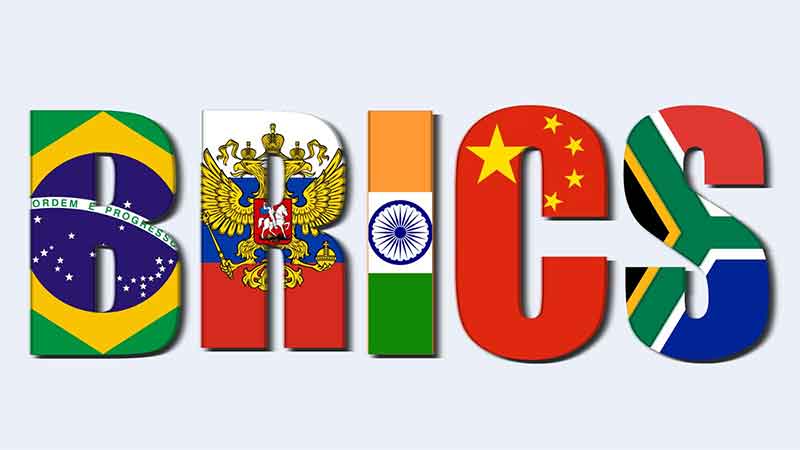
In the evolving global order, BRICS was formed in 2009 as BRIC (Brazil, Russia, India, and China), with its first summit held in Yekaterinburg, Russia. South Africa joined the grouping in 2010 and attended its first summit in 2011, transforming BRIC into BRICS. More recently, Egypt, Ethiopia, Iran, Saudi Arabia, and the United Arab Emirates have also joined the grouping.
BRICS was established on the core principles of mutual respect, sovereign equality, inclusiveness, consensus, and non-interference in internal affairs. Its fundamental goal has been to build a more just, representative, and democratic global governance system, while amplifying the voice of the Global South. This objective is pursued through cooperation in political and security matters, economic and financial issues, and cultural and people-to-people exchanges.
The grouping has played an important role in challenging the unipolar dominance of the United States and its allies. Proposals such as the creation of a BRICS currency have also been discussed. Although BRICS cannot be compared with the Non-Aligned Movement in many respects, under present circumstances it has the potential to play a constructive role. For this to happen, however, there must be a clear global vision and a genuine commitment to cooperation among developing countries, including protection from imperialist and neo-colonial pressures.
The BRICS presidency this year is with India under the leadership of India’s Prime Minister Narendra Modi. Unfortunately, the present dispensation in India promotes policies that favour corporate interests and both domestic and international monopoly capital. This orientation runs counter to the foundational principles upon which BRICS was established. The current regime, carrying forward the ideology of the Rashtriya Swayamsevak Sangh (RSS), has often been seen as sympathetic to US-led global capital. They have always sided with the persecutors. When Hitler was persecuting Jews, the RSS stood with Hitler. Now when the Zionist regime of Israel is committing genocide the RSS is siding with the Zionists.
The Indian government’s position on several international issues over the past few years has revealed its approach. India has not consistently supported the two-state solution to the Middle East crisis and has refrained from voting in favour of Palestine on certain occasions in the United Nations.
During his recent second visit to Israel, Prime Minister Modi did not speak about the large number of civilian casualties in Gaza, including tens of thousands of children. In his address to the Israeli parliament, the Knesset, he stated “India stands with Israel firmly, with full conviction, in this moment and beyond,” Within 36 hours of his return, the United States and Israel launched a major attack on Iran.
Such developments raise serious questions about India’s diplomatic posture. If the Indian leadership was aware of the impending attack, it suggests a troubling alignment. If it was not aware, it raises questions about the depth and transparency of its diplomatic engagements.
Prime Minister Modi is a product of the politics shaped by the RSS. His critics argue that this ideological background influences his worldview and approach to international relations. At times, he has projected himself in highly personal terms, even describing himself as a “non-biological” or divinely guided leader. Critics contend that such narratives do not reflect the inclusive civilizational traditions of India.
On the economic front as well, the government has been criticized for not adequately countering policies such as US tariff measures or for pushing trade agreements that may favour stronger economies.
In the present circumstances, with the US Fifth Fleet active in the Indian Ocean and tensions rising in West Asia, India’s claim of being a “net security provider” in the region takes on significant strategic implications. Under the Logistics Exchange Memorandum of Agreement (LEMOA), signed between India and the United States in August 2016, the two countries allow reciprocal access to designated military facilities for refuelling, supplies, and repairs. This agreement enables greater operational interoperability during joint exercises and other operations.
Entrusting the leadership of BRICS — an organization built on the ideals of global cooperation, peace, equitable development, and economic justice — to leadership that is perceived as closely aligned with US strategic interests could pose serious challenges to the organization’s founding vision.
Source : Counter Currents .org