
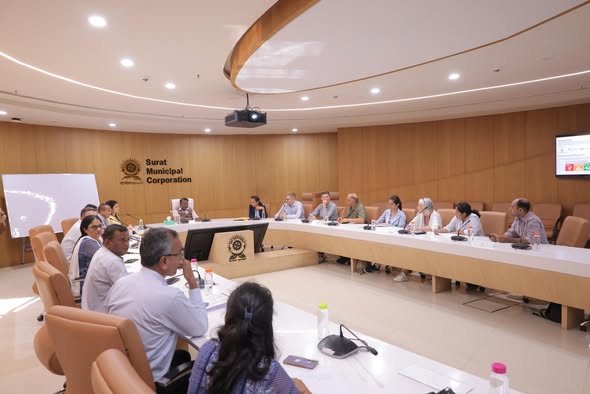
New Delhi, As global fuel and energy concerns intensify amid the ongoing West Asia conflict, Prime Minister Narendra Modi on Sunday underlined the critical role of strong public transport systems and sustainable mobility in shaping the future of cities.
Under Germany’s Green and Sustainable Development Partnership (GSDP), Indian and German stakeholders are deepening cooperation to support cleaner and climate-resilient urban transport systems across India.
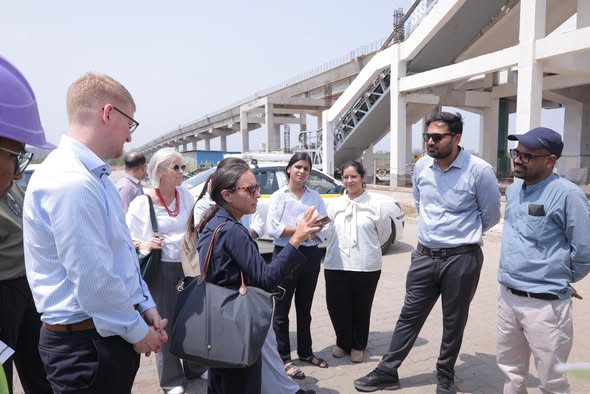
Last week, representatives from the Economic Cooperation & Development and Transport Digital divisions visited Surat and Gandhinagar in Gujarat to assess how Indian cities are translating ambitious mobility goals into practical, citizen-focused solutions.
In Surat, the delegation reviewed the city’s Bus Rapid Transit (BRT) system, which already operates with a fully electric fleet. Authorities are now aiming to transition the entire city bus network to electric mobility by 2027.
During the visit, officials stressed the need for safe and accessible public transport, while also emphasizing stronger first and last mile connectivity to improve commuter convenience.
At the Althan Bus Depot in Surat, the delegation observed several clean-energy initiatives, including a 100 kWh solar photovoltaic installation and a 224 kWh second-life battery storage system. The facility has generated 146 MWh of clean energy, sufficient to charge approximately 2.5 electric buses daily.
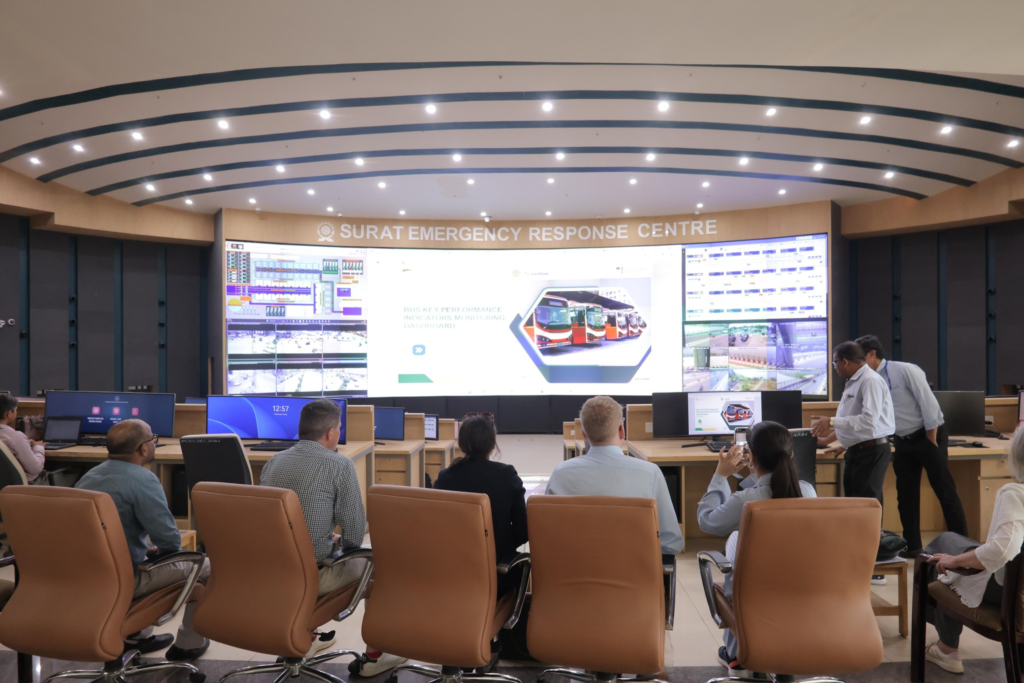
The team also visited Surat Smart City’s Integrated Command and Control Centre, where digital dashboards and climate-risk monitoring tools showcased India’s growing focus on data-driven urban planning and climate resilience.
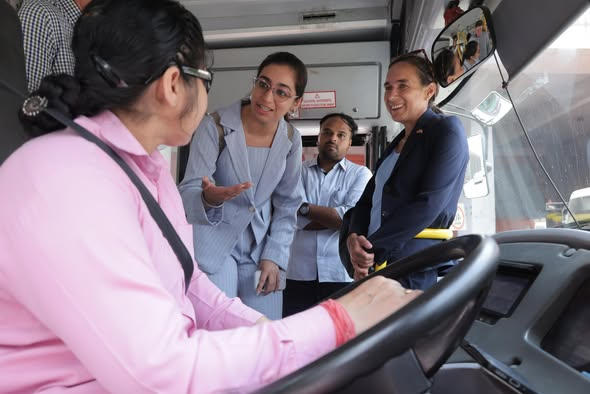
One of the key highlights of the visit was the “Pink Bus” initiative under the Gender Lab project. The initiative gained attention through the story of a woman driver who, inspired by her personal struggle to find transport for her paralysed mother, chose to become a driver herself. The Pink Bus has since emerged as a symbol of inclusive and people-centric mobility.
In Ahmedabad, the delegation travelled on the Ahmedabad Metro from Sector-1 to Mahatma Mandir, observing efforts to integrate metro systems, railway infrastructure, and public spaces to create a seamless commuter experience and encourage greater use of public transport.
The delegation also met Shri S. S. Rathore, Advisor to the Chief Minister of Gujarat and Chairperson of GIFT City, to discuss future opportunities for Indo-German cooperation in sustainable urban development.
Representatives from leading German and Indian organisations, including Siemens, Deutsche Bahn, and Bosch Rexroth, participated in the visit, highlighting growing collaboration in urban transport, infrastructure, and mobility technology.
Across all engagements, the central message remained clear: sustainable public transport is not only essential for reducing emissions, but also for improving quality of life, enhancing energy resilience, and building inclusive, future-ready cities.