

Most Muslims today assume that the Arabian Peninsula has always been called Saudi Arabia, but the name is less than a century old and is an eponym taken directly from the Al-Saud dynasty. Before 1932 the region was known as the Hijaz, Najd and its dependencies, and pilgrims travelling for Hajj would simply say they were going to the Hijaz. The land had been governed for centuries by the Hashemites, the Sharifian family who claimed descent from Prophet Muhammad (peace be upon Him and His Progeny) through His Grandson Imam Al-Hassan (peace be upon Him).
Their role was not that of kings in the modern sense but of sharifs or guardians of the Holy Cities, a position recognised by the Mamluks, the Ottomans and later the British. The title Sharif of Mecca carried both religious prestige and political authority over the western coastal strip, and the Hashemites balanced the interests of the Ottoman Sultan, local tribes and European powers for much of the nineteenth and early twentieth century.
That order was upended during the Arab Revolt and its aftermath. In 1916 Sharif Hussain Ibn Ali declared the revolt against Ottoman rule with British encouragement, expecting to secure an Arab kingdom covering most of the peninsula and the Levant. The Sykes-Picot Agreement and the Balfour Declaration undercut those expectations, and after the First World War the Hashemites found themselves confined to smaller spheres.
In Najd, the Al-Saud had been consolidating power since the eighteenth century through an alliance with the Wahhabi movement founded by Muhammad ibn Abd al-Wahhab. By 1924 Abd al-Aziz ibn Saud had driven the Hashemites out of the Hijaz, and in December 1925 he completed the capture of Mecca and Medina. The British, who had backed the Hashemites, acquiesced to the new reality and in 1927 recognised Abd al-Aziz as King of the Hijaz and Sultan of Najd. In 1932 he unified the territories and named the state al-Mamlaka al-Arabiyya as-Saudiyya, the Kingdom of Saudi Arabia, thereby linking the country permanently to his family name.
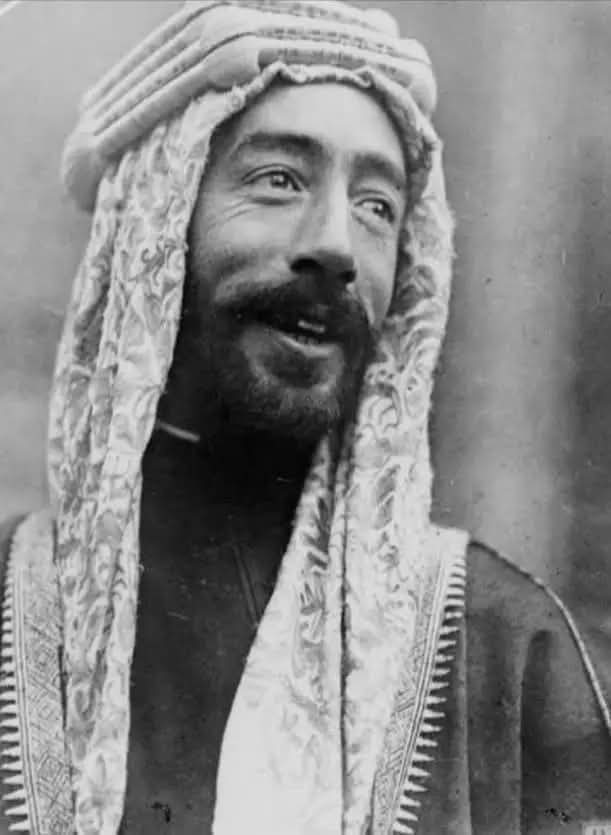
Whether that amounted to usurpation depends on perspective. From a Hashemite and Sharifian view, it did: the Hashemites had governed Mecca and Medina intermittently since the tenth century and continuously from around 1200 CE, nearly seven hundred years by 1925, and saw themselves as the legitimate guardians of the Holy Cities by lineage and tradition. When Abd al-Aziz conquered the Hijaz in 1924‑1925 and deposed Sharif Hussain and his son Ali, the Hashemites described it as a forcible takeover, a view echoed by British officials at the time who recorded the Saudis displacing the Hashemite rulers.
From the Saudi and Najdi perspective, it was not usurpation but unification. The Al Saud viewed Hashemite rule as weakened and dependent on the British, and framed their campaigns as restoring order under one imam and one interpretation of Islam, as a re‑establishment of the Third Saudi State they had ruled intermittently since the eighteenth century.
The displaced Hashemites were not left without thrones. Faisal ibn Hussain was installed as King of Iraq in 1921, and his brother Abdullah became Emir, later King, of Transjordan, now Jordan. Both appointments were part of the British settlement for the Middle East after the war, and they explain why the Hashemite line continues to rule in Jordan while Iraq became a republic in 1958.
For centuries before this upheaval, the Hijaz was not a unified state in the modern sense but a collection of tribal territories held together by the Sharif’s authority and the sanctity of the two Holy cities. Pilgrims from West Africa, South Asia and the Ottoman heartlands would disembark at Jeddah and speak of travelling to the Hijaz, not to a country named after a ruling house. The renaming in 1932 marked a shift from a geography defined by sacred space to a modern nation-state defined by dynastic identity.