
Divya Pandey
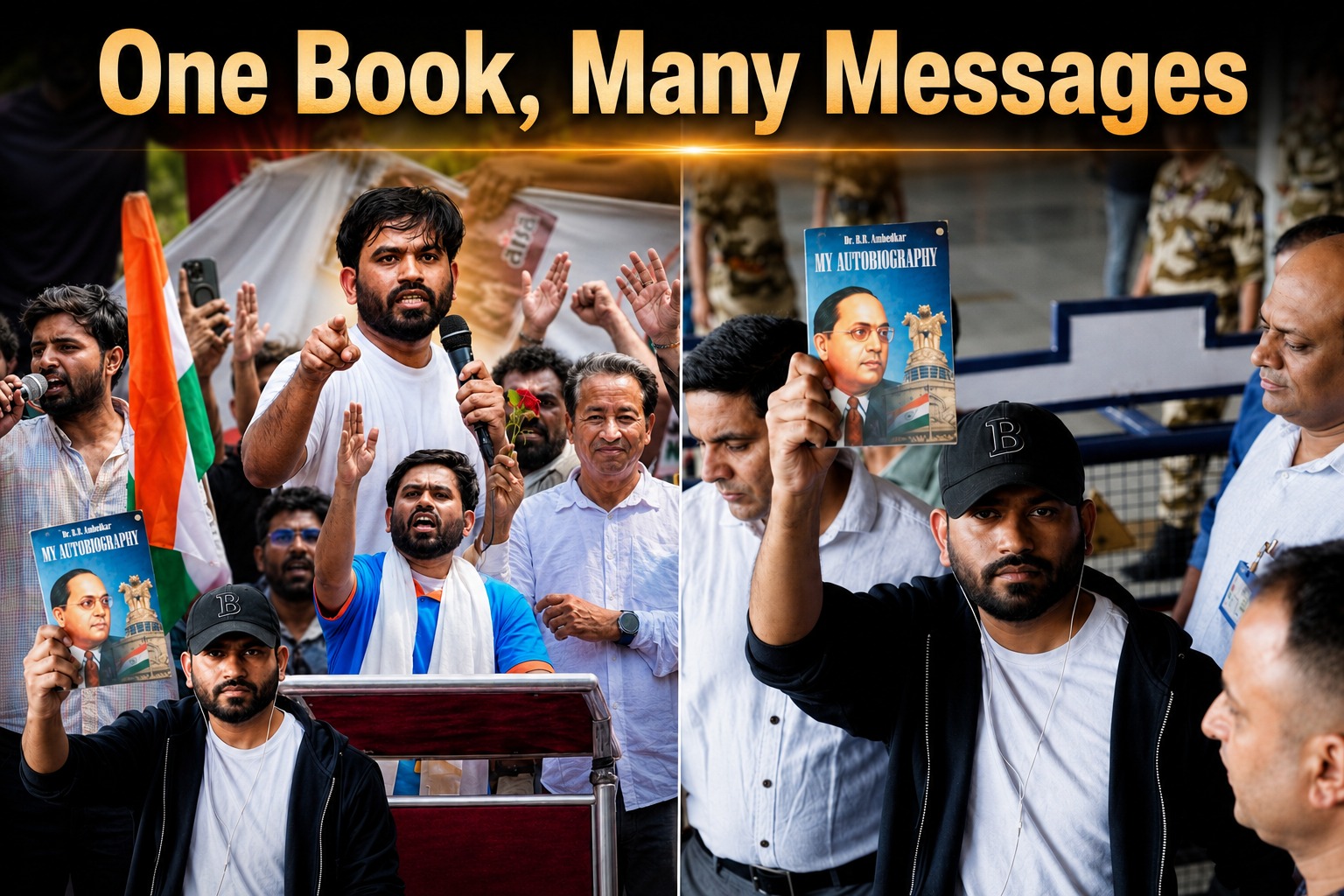
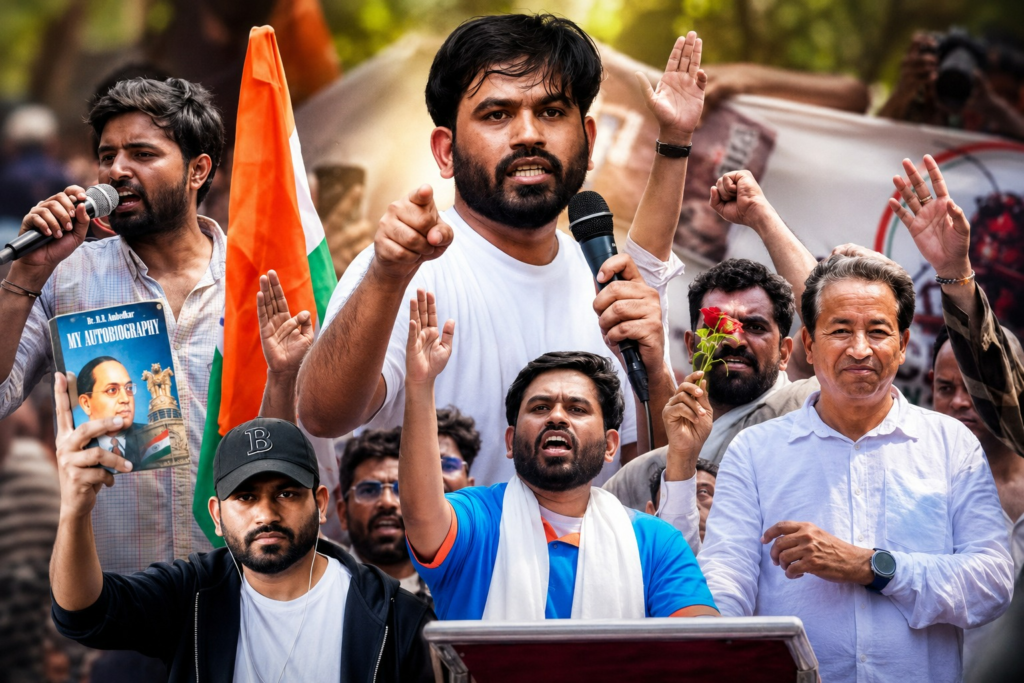
In India, images, slogans, and symbols have always played a significant role in social and political movements. It has long been a tradition to use the images of figures such as Mahatma Gandhi, Dr. B. R. Ambedkar, Jawaharlal Nehru, Sardar Patel, Bhagat Singh, and Subhas Chandra Bose as symbols of various movements. When Cockroach Janata Party founder Abhijeet Dipek arrived at New Delhi Airport, he was seen carrying a book by Dr. B. R. Ambedkar, the chief architect of the Indian Constitution. Why did Dipek choose to be seen with Ambedkar’s book? Was he trying to send a specific message, or could there be another reason behind it?
Is There an Ambedkarite Influence Behind It?
Ambedkarite thought is based on the principles of equality, liberty, fraternity, and social justice. Inspired by the ideas and struggles of Dr. B. R. Ambedkar, its primary objective is to eliminate caste discrimination, untouchability, exploitation, and social inequality.
Ambedkarite ideology considers education to be the most powerful tool for social transformation. Dr. Ambedkar believed that only an educated individual can understand their rights and bring meaningful change to society. This belief is reflected in his famous call: “Educate, Organize, Agitate.”
The ideology also emphasizes scientific temper, rational thinking, and humanity. It argues that a person’s worth should be determined not by caste, religion, or birth, but by their abilities and actions. It supports the rights of women, Dalits, backward communities, and all marginalized groups.
Ambedkarite thought views democracy not merely as a system of government but as a way of life. It stresses the importance of dignity, equal opportunities, and justice for every individual. Ultimately, it envisions a society where everyone is treated equally, discrimination is eliminated, and every person can live with dignity and respect.
Where Did This Ideology Come From?
Ambedkarite thought emerged from the intellectual, social, and political work of Dr. B. R. Ambedkar, who challenged deeply rooted systems of inequality and exclusion in Indian society. His personal experiences with caste discrimination, combined with his extensive education in economics, law, and political science, shaped his worldview.
Ambedkar developed an ideology centered on human dignity and social justice. He argued that political freedom alone was insufficient unless accompanied by social and economic equality. Influenced by democratic values, constitutionalism, and modern concepts of human rights, he envisioned a society where individuals would be judged by their merit and character rather than their caste, religion, or social background.
Who Follows Ambedkarite Thought?
Ambedkarite ideology is primarily embraced by those who agree with Dr. Ambedkar’s principles of social justice, equality, constitutional rights, and human dignity. However, being an Ambedkarite is not limited to any particular caste, religion, or community.
Anyone who opposes caste discrimination and supports equal opportunities and constitutional values may identify with Ambedkarite thought. Therefore, it is not merely a social identity but also a broader ideological commitment to justice and equality.
Why Might Abhijeet Dipek Be Associating Himself with This Ideology?
If Abhijeet Dipek identifies with Ambedkarite thought, one possible reason could be his belief in the principles of social justice, equality, and constitutional rights advocated by Dr. B. R. Ambedkar.
Is There a Political Dimension to It?
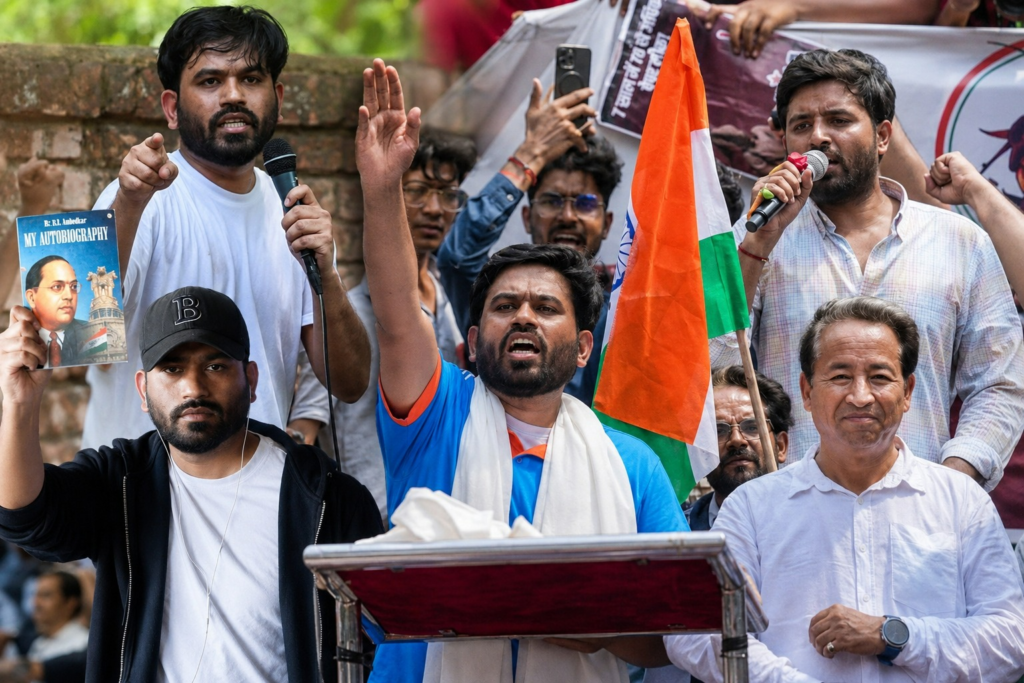
Since the image of Dipek holding Dr. Ambedkar’s book surfaced, it has sparked widespread discussion among the public. Some observers view it through the lens of his personal background, while others believe it may carry a broader social, ideological, or political message.
Publicly displaying a book by Dr. B. R. Ambedkar may be interpreted as more than a personal reading choice. It can also be seen as a political statement, a way of signaling alignment with certain values, or an effort to connect with individuals and communities who identify with Ambedkar’s ideas.
The image has generated debate on social media and in political circles. In contemporary Indian politics, Ambedkar is not viewed solely as a historical figure; his legacy is often invoked as a powerful symbol of social justice, constitutional values, and democratic rights. Political leaders and public personalities frequently reference his ideas to demonstrate their commitment to these principles.
For this reason, some political analysts believe that Dipek’s decision to be seen with Ambedkar’s book could be part of a broader strategy to build a particular public image or strengthen outreach among communities that identify with Ambedkar’s legacy.
At the same time, all such interpretations remain speculative. It is equally possible that the book reflects Dipek’s personal interest in Ambedkar’s writings and ideas, without any political motive. Nevertheless, the image has become a subject of public discussion and debate.