
A Shifting Landscape That Raises New Questions
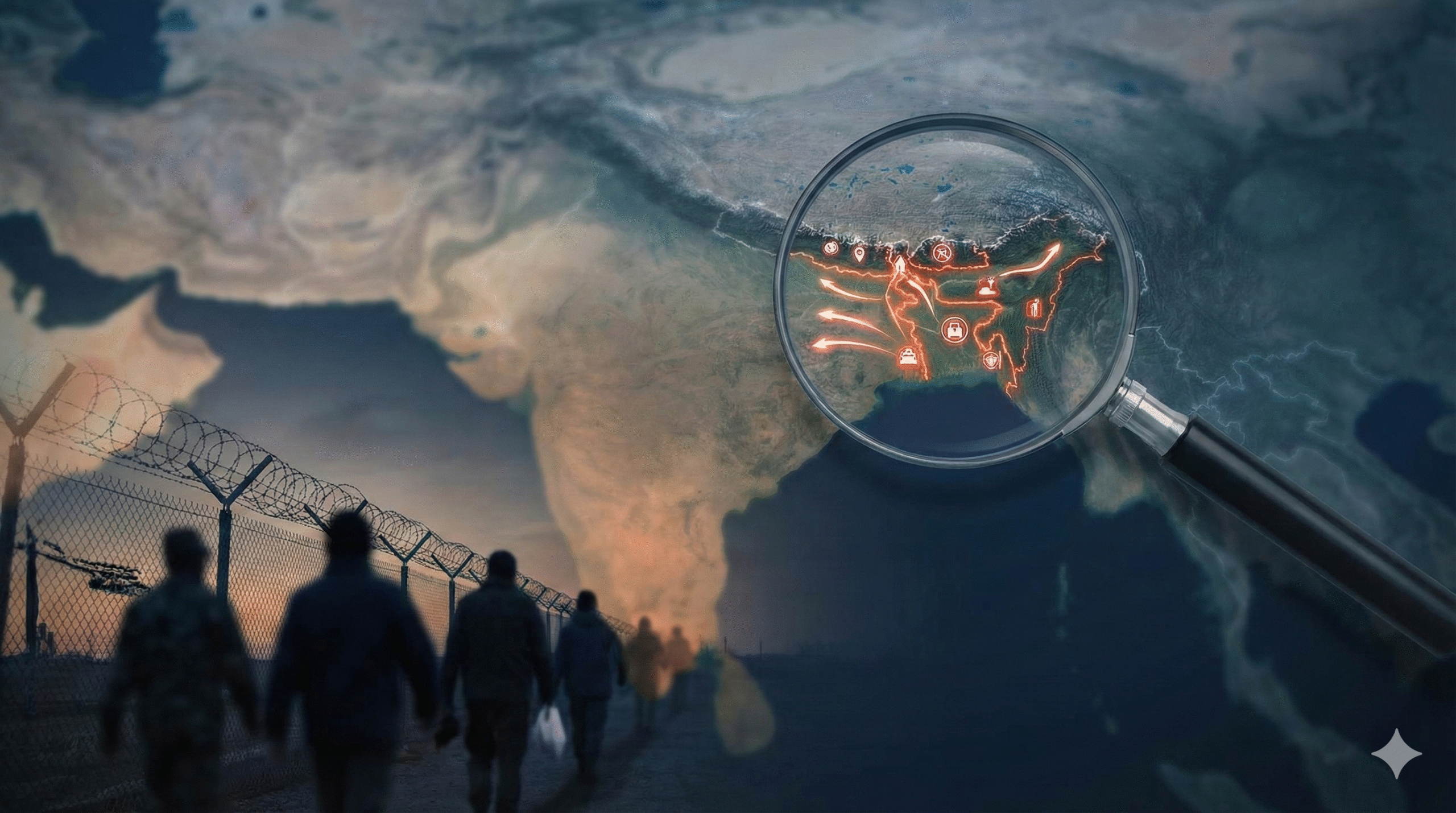
South Asia is entering a new phase of security uncertainty, and many of its warning signs are coming from places long considered stable. In recent months, intelligence reports from multiple regional sources have described unusual movements of Pakistani extremist figures into Bangladesh, policy shifts in Dhaka that have loosened earlier security controls, and a renewed push by Pakistan’s Inter-Services Intelligence to reorganize its eastern networks. These developments have raised one difficult question for investigators across South Asia: is Bangladesh becoming a new platform for Pakistan’s wider extremist strategy?
The issue has come into focus because of a combination of political changes in Dhaka and new cross-border activities by groups linked to Lashkar-e-Taiba. The concern is not only about isolated incidents, but about an emerging pattern where ideology, logistics, and political opportunity are aligning in ways that could reshape the security situation across the region. To understand this, it is necessary to examine the actions of these groups, the policy decisions that now allow easier entry from Pakistan, and the wider regional implications. What appears today as scattered signals may, upon investigation, reveal an organized shift in Pakistan’s transnational approach.
Section 1: Why Intelligence Agencies Are Concerned About New Cross-Border Threats
Across India, Nepal, and Bangladesh, intelligence agencies have been tracking conversations inside Pakistan’s militant networks that refer to a new phase of operations in the east. Reports suggest that Pakistan’s ISI, long known for using proxy groups to advance its foreign policy goals, has been planning attacks that may target India from multiple directions. Recent briefings have pointed to West Bengal as a possible focus area, and the timing of these activities has drawn attention because of India’s major national events early in the year.
What makes this moment more serious is the apparent change in the type of individuals being recruited. Instead of relying only on ideologically motivated young men, Lashkar-e-Taiba has reportedly been expanding its recruitment to include trained professionals. Investigations after recent explosions in Delhi showed that medical workers and individuals with knowledge of chemicals were in possession of materials like potassium nitrate. Intelligence officers say this fits a new model in which technically trained people are placed within sleeper cells under the cover of regular jobs. This mix of expertise and ideology makes detection harder and increases the operational capability of the network.
At the same time, Pakistan-linked clerics with a history of harsh and exclusionary rhetoric have reappeared in Bangladesh. Among them is Ibtisam Elahi Zaheer, a figure with strong links to Pakistan’s Salafi-jihadist circles. His arrival in Bangladesh in October 2025 is viewed as part of a broader process where religious conferences and madrassa gatherings are used as soft entry points for ideological mobilization.
Investigators say this combination of operational planning, recruitment shifts, and cross-border movement raises major concerns. It suggests that Pakistan’s networks may be trying to build an alternative route to India’s eastern frontier, reducing dependence on the traditional western corridor. If this pattern continues, it could reshape how India and its neighbours understand and respond to terror threats.
Section 2: How Bangladesh’s Policy Shifts Opened a New Strategic Space
To understand why Pakistan-linked groups are re-engaging in Bangladesh, it is important to look at the administrative decisions made in Dhaka since 2024. After the rise of the Muhammad Yunus government, several long-standing security safeguards were relaxed or removed. These changes included exempting Pakistani shipments from mandatory inspection and removing post-arrival checks on goods entering Bangladesh from Pakistan. Even more significant were the decisions to eliminate visa-related security clearances for Pakistani nationals and to instruct diplomatic missions to stop intelligence vetting of applicants from Pakistan.
These steps represent a major departure from policies adopted earlier to reduce extremist entry and limit illicit activities such as smuggling of weapons, drugs, and dual-use chemicals. By removing these checks, the border effectively became more accessible for groups seeking to use commercial routes and personal travel as operational cover.
This policy shift has taken on new meaning because Pakistan-linked clerics and activists have started moving through Bangladesh’s sensitive border districts. The case of Ibtisam Elahi Zaheer, whose travel pattern followed routes previously used for underground activities, is one example. Reports show he visited Rajshahi and Chapainawabganj—areas known for smuggling and extremist influence. For intelligence agencies, this is not simply a religious visit; it appears to be a deliberate attempt to reconnect dormant networks with active ideological channels from Pakistan.
In addition, clerics like Maulana Fazlur Rehman, a senior leader known for strong anti-Western rhetoric, have been attending religious gatherings in Dhaka and areas close to the India border. His presence and speeches, especially those calling for exclusion of minority Muslim communities and urging “defence of Islam,” add another layer of concern. Events such as these often attract individuals from small madrassas and local groups who may be exposed to more extreme interpretations of faith.
Taken together, these developments show why Bangladesh’s policy reversals have attracted regional scrutiny. They have not only altered the security posture of the country but also created conditions in which Pakistan’s extremist networks can operate with fewer constraints. This marks a notable shift in regional security, especially since Bangladesh had previously worked closely with neighbours to limit such risks.
Section 3: Investigating the Reappearance of Salafi Networks and Their Eastward Push
As more details surface, it is becoming clear that the current phase of activity is not limited to one group or one cleric. It appears to be part of a wider attempt to revive Salafi-jihadist networks across Bangladesh. These networks, which were weakened after strong counterterrorism efforts earlier in the decade, seem to be regaining momentum under the new political environment.
The presence of Pakistani clerics in Bangladesh has been accompanied by intensified ideological programs. Conferences focusing on narrow interpretations of faith have become more frequent. Some of these events are public and framed as religious gatherings, while others appear to involve closed-door sessions targeting specific groups of madrassa students. Intelligence reports suggest that discussions in such gatherings often include themes linked with global jihadist narratives, presented in ways that appeal to young audiences.
Zaheer’s case remains central to this pattern. His earlier sermons in Pakistan and the United Kingdom drew criticism for promoting hostility toward minorities and endorsing violence against individuals he labelled as apostates. That such a figure is now moving freely across Bangladesh is seen as a warning sign. When paired with the reduced security checks, his presence may allow ideological networks to rebuild faster and with broader reach.
Another sign of reactivation is the increase in extremist literature and the appearance of small religious schools teaching rigid interpretations of Islam. Some of these materials encourage followers to see global events through a lens of confrontation and to reject pluralistic ideas. Local intelligence sources say small clusters of radicalized students have been identified in districts near the Indian border, often influenced by outside clerics.
The reactivation also appears to include logistical planning. Investigators say there has been a rise in financial transfers through informal channels, increased attempts to smuggle chemicals used in explosives, and signs of coordination between groups in Bangladesh and Pakistan. The two countries share no land border, but their networks have long used third-country travel routes and undercover communication to maintain contact.
This broad pattern, combining ideology, recruitment, and logistics, suggests that Pakistan’s eastward expansion strategy is not a temporary development but a structured attempt to build a second arc of influence alongside its traditional operations in the west.
Section 4: What This Means for India and the Region’s Future Security
The possibility that Bangladesh is becoming a secondary platform for Pakistani extremist networks represents a major shift for India’s security agencies. For decades, India’s counterterrorism efforts have focused primarily on its western frontier. The idea that attacks could be planned or supported from the east introduces a new layer of complexity to threat assessments.
One of the most concerning signs came in late October 2025. During a gathering in Pakistan, a Lashkar-e-Taiba commander declared that Hafiz Saeed’s aide was operating from what he called “East Pakistan,” a term used by hardline groups to imply that Bangladesh is still within their ideological territory. Within hours of that statement, explosions occurred in New Delhi. Although no official connection has been confirmed, the close timing has pushed investigators to examine whether this reflected a coordinated strategy.
For India, this shift means expanding surveillance and strengthening border defences along the long and porous Bangladesh frontier. It also requires closer intelligence cooperation among India, Bangladesh, and Nepal. Without shared information, mobile clerics, extremist recruiters, and financial couriers can easily move through rural border areas.
For Bangladesh, the long-term implications are equally important. Permitting extremist clerics to operate freely could weaken internal stability and increase vulnerability to foreign influence. Over time, such networks may gain social footholds that are difficult to remove. For Nepal, which already faces challenges from cross-border trafficking, the entry of new extremist routes could complicate its security environment as well.
The region now stands at a turning point. If the current trends continue, South Asia may see the formation of a new cross-border extremist corridor stretching from Pakistan to Bangladesh. This would undermine years of counterterrorism progress and increase risks for all neighbouring countries. The only way to prevent this shift is through coordinated policies, tighter border management, stronger scrutiny of transnational clerics, and renewed efforts to address the ideological roots of extremism.
Conclusion: A Region at a Crossroads
The developments unfolding in Bangladesh and Pakistan’s eastward outreach present a rare moment of clarity about a growing regional risk. What may appear as isolated clerical visits, administrative changes, or increased religious gatherings is, when viewed together, a sign of a deeper transformation. South Asia is witnessing the re-emergence of a transnational network that uses ideology, logistics, and political opportunity to move across borders. Whether the region can respond in time will shape not only its security landscape today but also its stability in the years ahead.