
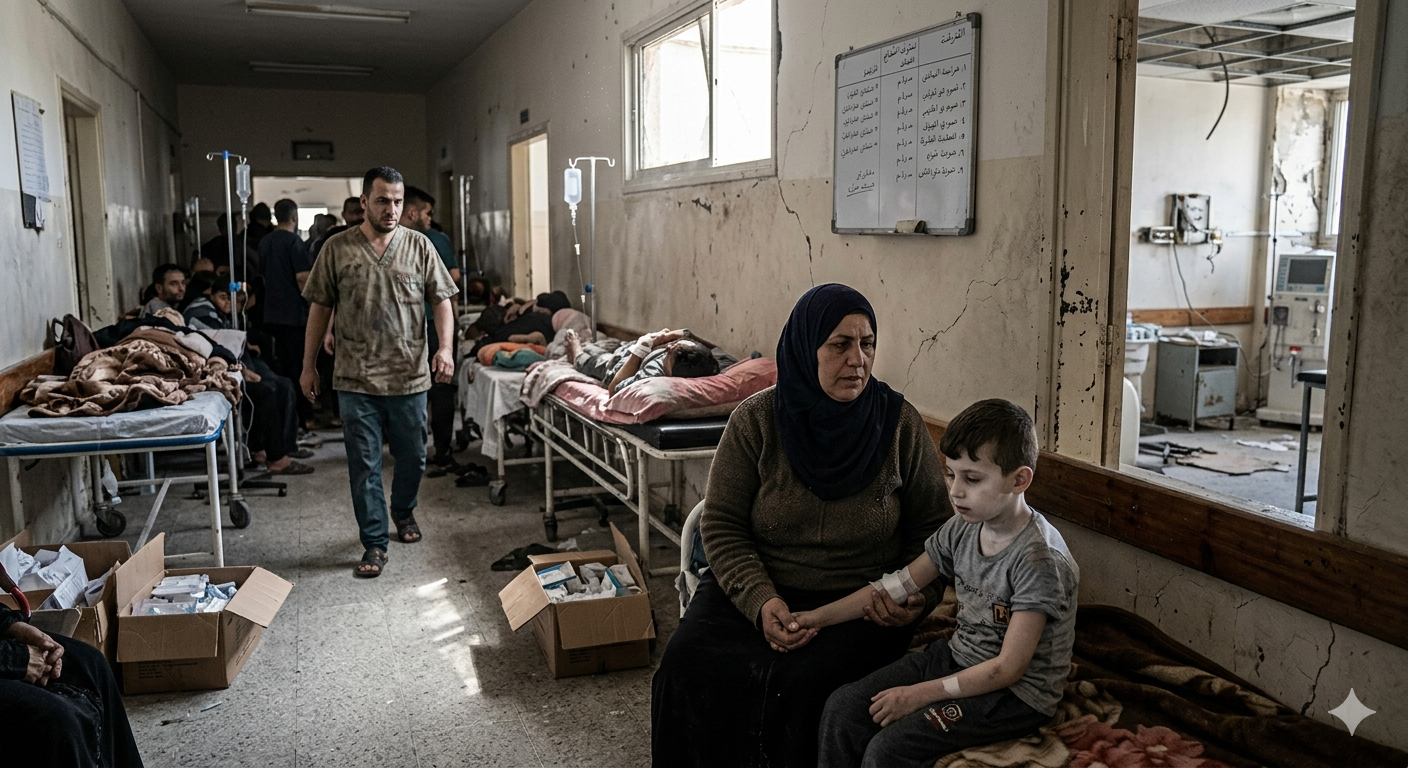
The Gaza Strip is no longer just a battlefield, but has become the face of a deepening humanitarian crisis. A statement released by Gaza’s Health Ministry on World Health Day has brought the grim reality to light. The healthcare system here is now on the verge of collapse.
Half of the medicine stock has already been depleted. Essential medical supplies used in hospitals have dropped by more than half, and resources for conducting lab tests are nearly on the verge of running out. The meaning is clear: even those who are surviving are finding it increasingly difficult to receive treatment.
The most painful impact is on patients who require continuous treatment—such as cancer patients. Around 4,100 people are waiting every day for essential medicines, but 61% of those medicines are unavailable. Imagine this: people already battling illness are now also fighting the failures of the system.
The situation has deteriorated so badly that critical procedures like major heart surgeries have come to a complete halt. There are almost no resources left even for eye operations. Hospitals themselves have become “patients”—bed capacity has been reduced by 55%, and 22 hospitals along with 90 health centers have shut down. Life-saving treatments like dialysis are also in crisis—only 108 machines remain for 676 patients. Every day is a new challenge for them.
And this is not just a story of lack of treatment—it is also a story of incomplete lives. Around 5,000 people have lost their limbs, including 980 children. They need not only medical care but also long-term rehabilitation, which currently seems like a distant dream.
For those who want to leave Gaza for treatment, the situation is even more heartbreaking. More than 21,000 people are waiting, and 1,517 have died simply because they could not get out in time.
Meanwhile, the World Health Organization has also suspended the evacuation of patients due to security concerns. According to its chief, Tedros Adhanom Ghebreyesus, the decision was taken after the death of a staff member. This means that whatever little hope remained has now, for the time being, come to a halt.
This picture of Gaza is not just about numbers—it is the story of every person who is slowly losing the fight due to a lack of medical care. If help does not arrive soon, the crisis will deepen further, and it may soon be too late.