
SR Darapuri I.P.S.(Retd)
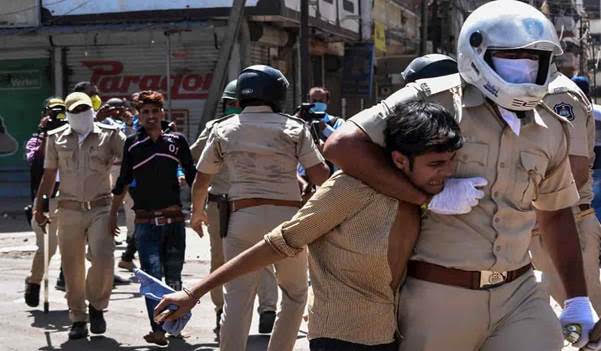
“The Indian police remains structurally a colonial “force of the state” designed for control rather than a democratic “police of the people,” and its brutality is sustained by that legacy plus post-independence political choices, institutional culture, and near-total impunity.” Transforming it requires implementing long-ignored structural reforms, new accountability mechanisms, and cultural change.
Colonial Origins: Designed for Coercion, Not Service
The modern Indian police system was shaped after the 1857 Rebellion. The Police Act of 1861 (still the foundational law in most states) created a hierarchical, paramilitary-style force modelled on the Royal Irish Constabulary. Its purpose was to maintain order, suppress dissent, protect colonial interests, and control a “hostile native population,” not to serve citizens or uphold rights.
Key features included:
- – Strong executive control (political superintendence) with little independent oversight.
- – Emphasis on armed capacity and intelligence over community-oriented or investigative policing.
- – Broad discretionary powers for arrest, detention, and use of force.
- – Targeting of marginalised groups (nomadic communities via the Criminal Tribes Act 1871 and similar measures, lower castes, and others seen as threats).
Torture and violence were common tools for extracting information or enforcing control. This architecture and ethos were largely retained after 1947. Multiple post-Independence commissions noted the mismatch with democratic constitutional values but produced limited change.
Post-Independence Continuities: Who Sustained the Brutality?
No single actor “made” the police brutal; the colonial design was preserved and adapted by successive governments and institutional practices:
Political control and interference: Police remain accountable upward to the political executive rather than outward to the law and public. Arbitrary transfers, postings, and pressure on investigations involving the powerful are routine. This politicisation turns the force into an instrument of whoever holds power.
Institutional culture and attitudes: Surveys (e.g., Status of Policing in India Report 2025) show significant shares of personnel justify “tough methods,” third-degree interrogation, creating fear among the public, and even extrajudicial killing of “dangerous criminals.” Many believe police should use force without fear of punishment. Support varies by state (higher in some, lower in Kerala). Victims of custodial violence and torture are disproportionately from poor, Dalit, Adivasi, Muslim, and other marginalised communities.
Impunity: National Crime Records Bureau and NHRC data show thousands of custodial deaths over years, yet convictions of police officers are extremely rare (near-zero in large datasets for police-custody deaths between 2011–2022). Safeguards from ‘D.K. Basu’ (1996) and other rulings are frequently ignored. India has not enacted comprehensive domestic anti-torture legislation aligning fully with the UN Convention Against Torture.
Resource and structural deficits: Understaffing relative to UN norms, overwork of the constabulary (the bulk of the force), poor training/infrastructure in many places, and a militarised orientation (large armed/paramilitary components) reinforce coercive habits over professional investigation or community policing.
Social and political acceptance: “Encounters,” rough handling of suspects, and use of force against protesters often enjoy public or political support in the name of “tough on crime,” further normalising excess.
National Police Commission reports (1977–81, after Emergency excesses), Ribeiro, Padmanabhaiah, Malimath, and Soli Sorabjee committees all diagnosed these problems and recommended reforms. Political will to implement structural change has been consistently weak across parties because control over police is a valued instrument of power.
Path to Democratisation: From Force to Service
Democratisation means shifting the police from an upward-accountable coercive instrument of the executive to a rights-respecting, professionally autonomous service primarily accountable to the law and the public. Core elements are already mapped:
1. Implement the Supreme Court’s Prakash Singh directives (2006) in letter and spirit
These binding directions (still incompletely and often formalistically followed) require:
State Security Commissions to set policy and buffer against political interference (with independent members and binding recommendations).
Fixed minimum tenures and merit-based selection for DGP and key field officers.
Police Establishment Boards for postings/transfers.
Separation of investigation from law-and-order functions.
Independent Police Complaints Authorities (state and district levels) with real powers, staff, and resources to investigate serious misconduct (custodial death, rape, grievous hurt, etc.).
National Security Commission for central forces.
Most states have created bodies on paper while diluting independence, composition, or powers. Full, genuine compliance is foundational.
2. Replace the 1861 Act
Enact modern state Police Acts (or a national model) based on the Model Police Act 2006 (Soli Sorabjee Committee). These should emphasise democratic policing, affirmative duties to facilitate rights (including peaceful protest under Article 19), clear limits on force, and public accountability rather than pure executive control.
3. Accountability and anti-impunity measures
Empower and resource independent complaints authorities and strengthen
NHRC/SHRC investigative capacity (they currently depend heavily on police).
Narrow requirements for prior sanction to prosecute police for serious offences involving death, grievous injury, or sexual violence.
Statutory state liability with prompt compensation mechanisms.
Strict enforcement of arrest/detention safeguards (‘D.K. Basu’ guidelines, CCTV in lock-ups, medical examination, lawyer access).
Ratify and domestically implement the UN Convention Against Torture with a standalone anti-torture law (as recommended by the Law Commission).
4. Professionalisation, training, and culture change
Invest heavily in training the constabulary (≈90% of the force) on human rights, scientific investigation, non-coercive interrogation, crowd management, and soft skills.
Improve working conditions, housing, pay, and staffing ratios.
Shift recruitment, promotion, and performance metrics toward professionalism and public trust rather than “results” measured by fear or encounters.
Greater diversity and representation, especially of women and marginalised groups.
Technology for transparency (body cameras, better CCTV, case-management systems) while guarding against new surveillance abuses.
5. Broader democratic and social measures
Reduce political misuse through transparent processes and legislative oversight.
Public education and civil society monitoring to shift social acceptance of brutality.
Address underlying drivers of crime and conflict (poverty, discrimination, weak investigation capacity) so that coercion is not treated as a substitute for effective policing.
Independent performance audits and regular public reporting.
Realism and Obstacles
Reform faces entrenched political incentives, bureaucratic resistance, and uneven public demand. “Tough” policing rhetoric often plays well electorally. Partial or cosmetic compliance (bodies without real power) is common. Success requires sustained pressure from courts, civil society, media, and citizens, plus political leadership willing to trade short-term control for long-term legitimacy and effectiveness. States that have made relatively more progress (e.g., aspects of Kerala’s lower tolerance for certain excesses in surveys) show variation is possible.
In short: the brutality is not an aberration but a predictable product of a colonial design that independent India largely retained and that successive regimes found convenient. Democratisation is achievable through the reforms already extensively studied and judicially mandated—if the political will and institutional follow-through finally materialise. Without them, the police will continue to function more as an instrument of state power than as a service of the people.