
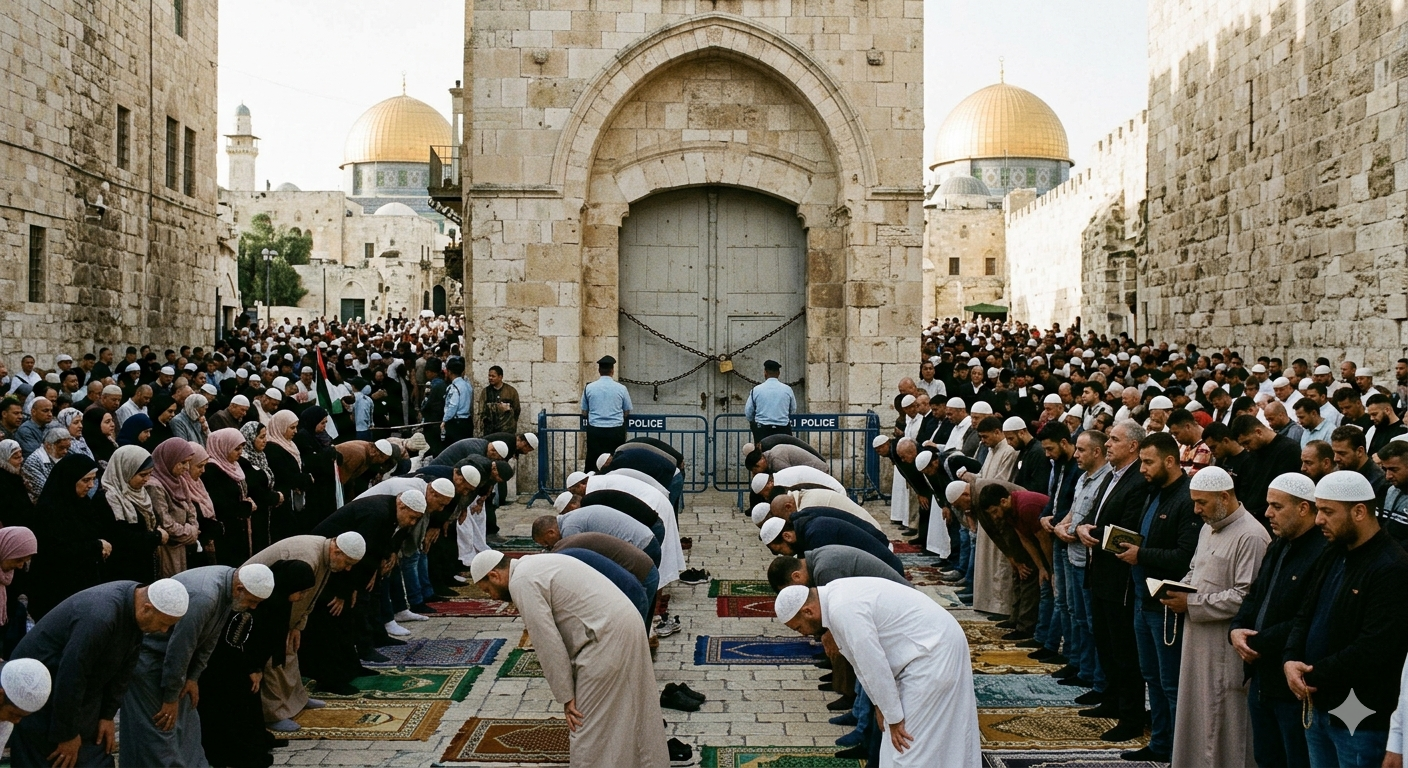
Amid the closure of Al-Aqsa Mosque in occupied Jerusalem, Palestinian and Islamic organizations have called on people to offer collective prayers in large numbers at the mosque’s gates on the last Friday of Ramadan. The organizations said that if worshippers are prevented from entering the mosque, they should perform prayers at the gates and on the surrounding streets instead.
Local activists in Jerusalem have urged Palestinians to head toward the Old City and gather near the entrances of the mosque. They say that if Israeli police prevent people from entering, worshippers should offer prayers at the closest possible places to the mosque to mark their presence.
This appeal comes at a time when Muslims have entered the last ten days of Ramadan. During these days, thousands of people usually gather at Al-Aqsa Mosque for night prayers and I‘tikaf (a spiritual retreat observed in the mosque).
According to observers, offering prayers at the mosque’s gates or on the surrounding streets carries symbolic significance. It is seen as a sign of determination to uphold religious rights and maintain the status of the mosque despite the prevailing circumstances.
Meanwhile, the Al-Quds International Foundation has called on Jordan to officially announce the reopening of the mosque and invite worshippers to come there. The organization warned that keeping the mosque closed could be an attempt to weaken the authority of the Jordanian Islamic Waqf, which administers this holy complex.
An official of the Al-Quds International Foundation, Ayman Zaidan, said in a conversation with Mohammad al-Khalayleh, Jordan’s Minister of Waqf, that keeping the mosque closed could be part of an attempt to change the current status of Al-Aqsa Mosque and pave the way for new arrangements there.
Israel closed Al-Aqsa Mosque on February 28, citing “public safety” after the attacks on Iran carried out by United States and Israel. The closure has now continued for nearly two weeks.
The government of Jordan has described the move as illegal and demanded the immediate reopening of Al-Aqsa Mosque. Waqf Minister Mohammad al-Khalayleh said that closing the mosque is an attack on Al-Aqsa and an attempt to weaken the role of the Jordanian Islamic Waqf, as well as Jordan’s historic custodianship over the 144,000-square-meter holy compound.