
Dr. Shujaat Ali Quadri
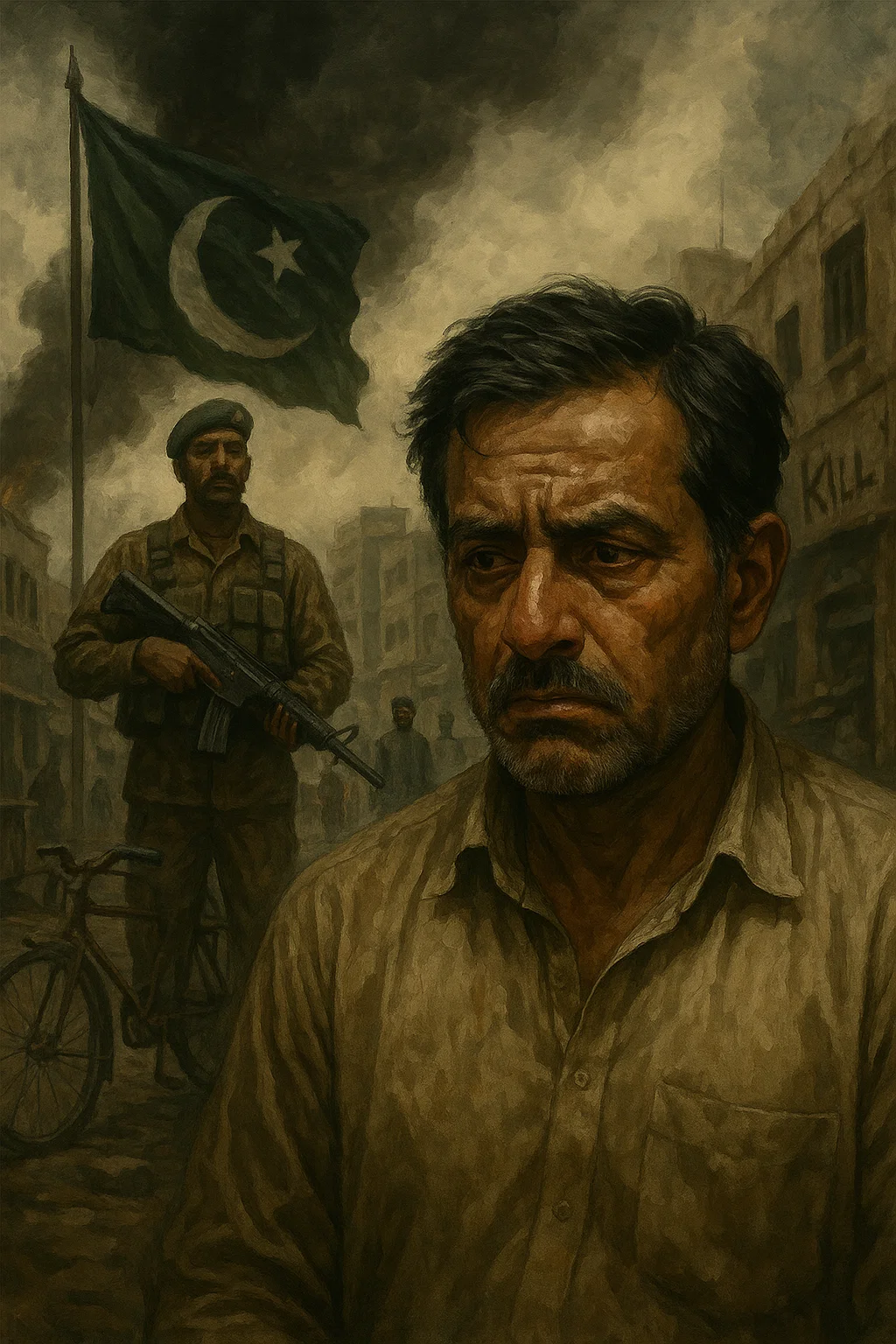
Pakistan, born in the name of faith and freedom, stands today as a nation in perpetual crisis politically unstable, economically fragile, and ideologically fractured. From the corridors of Rawalpindi to the streets of Karachi, power is concentrated in the hands of a few, while ordinary citizens remain trapped between propaganda and poverty Behind the façade of nationalism lies a darker truth: a state built on contradictions where democracy is controlled by generals, extremism is manufactured for strategy, and truth is silenced in the name of patriotism.
In this article, “The Crisis Within Pakistan,” explores five core dimensions of Pakistan’s internal decay: military dominance, terrorism hypocrisy, ideological poisoning, economic collapse, and the death of press freedom.
The Illusion of Democracy: Military Dominance in Pakistan
Since its creation, Pakistan’s politics has been defined not by ballots, but by barracks. The army, rather than the people, dictates the country’s direction. Military coups, political manipulation, and “hybrid regimes” have become the norm. Civilian governments operate under the constant threat of dismissal, while the generals of Rawalpindi enjoy unchecked power. Prime Ministers rise and fall not through elections, but through engineered legitimacy. Nawaz Sharif, Imran Khan, and others have all faced this revolving door of approval and exile. The judiciary and bureaucracy remain submissive, serving the shadow of the establishment.
This illusion of democracy has crippled Pakistan’s institutions. Political instability, economic stagnation, and international distrust are not coincidences they are the consequences of a state that confuses military control with national strength. Until the military returns to the barracks and civilians are truly empowered, Pakistan’s democracy will remain a carefully staged performance, not a functioning reality.
Double Standards in Counterterrorism: Pakistan’s ‘Good vs Bad’ Taliban Doctrine
Pakistan’s war on terror is a story of duplicity. While it presents itself as a victim of terrorism, it has also been the architect of extremism in South Asia. For decades, Pakistan’s security apparatus distinguished between “Good Taliban” those useful for influence in Afghanistan or attacks on India and “Bad Taliban” those threatening Pakistan itself. This double game not only cost over 80,000 lives but also destroyed Pakistan’s international credibility.
The nation’s global isolation under FATF and its loss of moral authority are direct results of nurturing militant proxies. These “strategic assets” have now turned into strategic liabilities. No state can prosper while sponsoring its own enemies. Pakistan’s establishment must dismantle all terror networks, without distinction, if it hopes to rebuild peace at home and respect abroad.
Seeds of Hate: Toxic Nationalism in Pakistan’s Curriculum
In Pakistan, textbooks have become weapons of ideology. Instead of fostering tolerance, the education system breeds prejudice. History is rewritten to glorify wars, vilify India, and erase the contributions of non-Muslims and ethnic minorities. Generations of children grow up believing in myths that Pakistan was created solely to fight Non Muslim, that religion defines citizenship, and that martyrdom is the highest virtue. This mindset has produced a society intolerant of diversity and allergic to reason.
The consequences are grave, sectarian violence, social division, and intellectual stagnation. When education becomes indoctrination, ignorance becomes patriotism. Pakistan must reclaim its classrooms, teaching truth instead of paranoia, science instead of dogma, and humanity instead of hate.
Drowning in Debt: The Military’s Role in Pakistan’s Economic Ruin
Pakistan’s economic collapse is often blamed on corruption and political incompetence but the elephant in the room is the military’s economic empire. From real estate to fertilizer, from banking to retail, the Pakistan Army controls a vast corporate network through institutions like the Fauji Foundation and Army Welfare Trust. Billions are generated under the guise of “welfare,” yet transparency is nonexistent.
While defense budgets grow, education, healthcare, and job creation shrink. Pakistan survives on IMF bailouts, but the burden falls on the poor not on generals or elites. Inflation, unemployment, and debt are the symptoms of a deeper disease: a militarized economy that drains national wealth while claiming to defend it. True reform demands that Pakistan dismantle its khaki capitalism and prioritize the welfare of its people over the profits of its generals.
Silencing Truth: Why Speaking Honestly is a Crime in Pakistan
In today’s Pakistan, truth is treason. Journalists who expose corruption or criticize the establishment face censorship, harassment, or exile. The murders of Arshad Sharif and the abductions of critical voices like Matiullah Jan illustrate the risks of honesty in a controlled state. The media, once a watchdog, has been reduced to a megaphone for propaganda.
Censorship by PEMRA (Pakistan Electronic Media Regulatory Authority), manipulated narratives, and social media intimidation ensure that only the state approved version of reality reaches the masses. Without a free press, democracy dies silently. Pakistan’s decline into authoritarianism is not sudden it is the product of decades of silencing dissent. Reclaiming truth is the first step toward reclaiming the nation itself.
Pakistan’s tragedy is not just its crises but its refusal to confront them. A country that blames others for its failures cannot heal from within. The military’s dominance, the nurturing of extremism, the poisoning of education, the economic rot, and the silencing of truth these are not isolated flaws. They are the architecture of a state built on denial. To rise again, Pakistan must dismantle its own illusions. It must choose democracy over domination, truth over propaganda, and reform over rhetoric. Only then can it become the nation that Muhammad Ali Jinnah once envisioned not a fortress of fear, but a homeland of hope.
(The Author is the National Chairman of Muslim Students Organisation of India MSO, he writes on a wide range of issues, including, Sufism, Public Policy, Geopolitics and Information Warfare.)