
(Zakir)
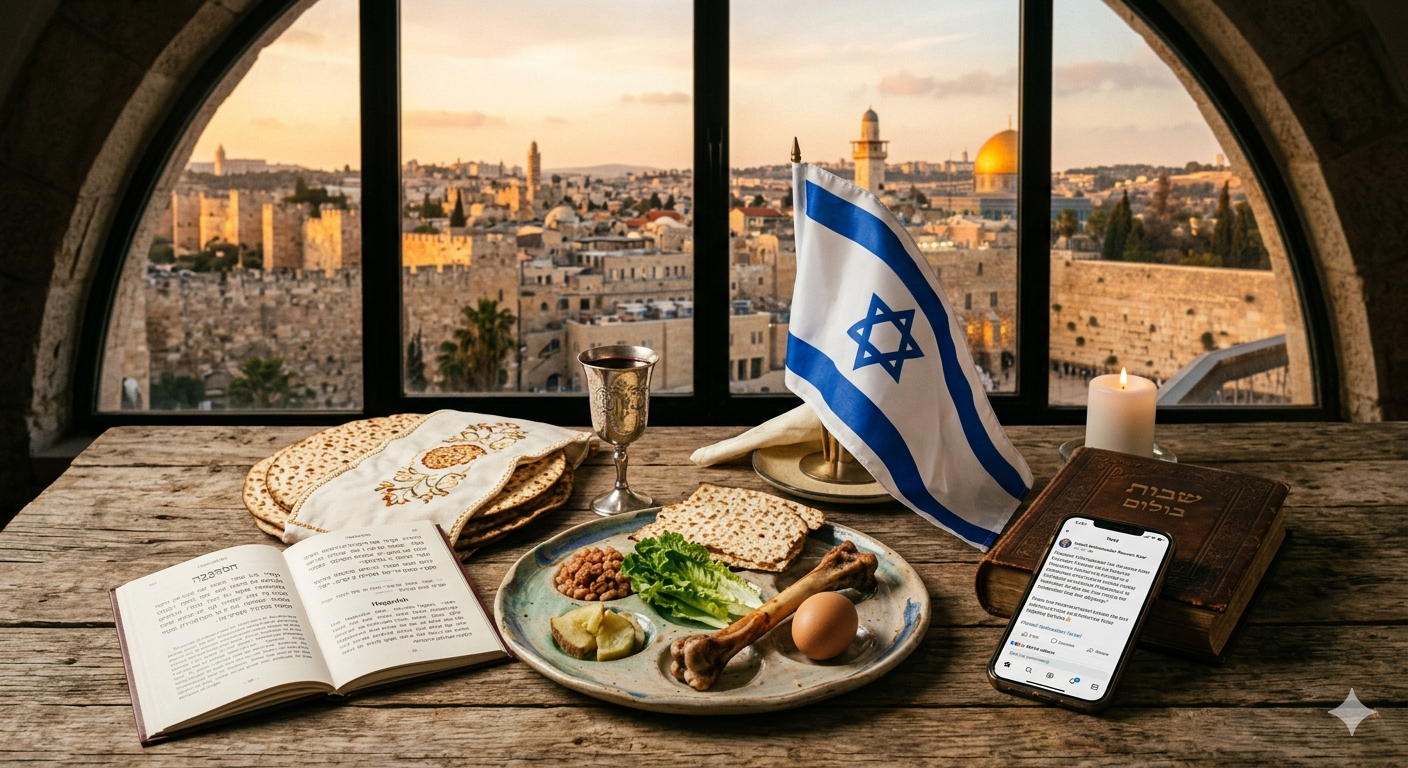
Each year, as Jewish communities across the world observe Passover, they do more than commemorate a historical event they reaffirm a civilisational memory rooted in freedom, resilience, and identity. The festival, also known as the Festival of Freedom, traces its origins back over three millennia to the biblical account of the Israelites’ liberation from slavery in ancient Egypt. It is a story that has transcended religion, becoming a universal metaphor for the human quest for dignity and self-determination.
Passover is anchored in the narrative of Exodus, where, according to Jewish tradition, the People of Israel were freed from the bondage of Pharaoh and began their journey toward the Promised Land the land associated with their forefathers Abraham, Isaac, and Jacob. This journey was neither swift nor easy. It was marked by hardship, uncertainty, and transformation. Yet, it laid the foundation for a collective identity centred on faith, perseverance, and ultimately, sovereignty. What makes Passover particularly compelling is its enduring relevance. It is not merely a recollection of past suffering but a reaffirmation of freedom’s value in the present. The rituals of the festival the Seder meal, the retelling of the Exodus story, the symbolic foods are all designed to ensure that each generation internalises this message: that freedom is precious, fragile, and often hard won.
In contemporary times, this ancient narrative continues to find echoes in modern political and diplomatic discourse. Israeli Ambassador Reuven Azar, in his message marking Passover, drew a direct connection between the historical experience of the Jewish people and present-day geopolitical realities. Reflecting on the festival, he noted:
“3470 years ago the People of Israel got free from slavery in Egypt… Since then, every year, we celebrate the Passover festival which is also called the Festival of Freedom.”
The Ambassador’s message goes further, framing recent events in the Middle East as part of a continuing struggle for sovereignty and security. He remarked:
“During the last 30 months Israel has endured another odyssey… Freedom comes with a price, but we are thankful we have it and will continue to fight to maintain it.”
This articulation reveals how historical memory is often interwoven with contemporary political narratives. For Israel, the idea of freedom is not confined to ancient texts; it is an active principle that shapes national identity and policy. The Exodus story thus becomes more than a religious account it evolves into a lens through which modern challenges are interpreted.
However, this blending of sacred history with present-day geopolitics invites both reflection and caution. While the symbolism of liberation is powerful and universally resonant, its application in modern conflicts can be complex. The invocation of ancient narratives in contemporary political contexts risks simplifying deeply layered realities. It can inspire unity and resolve, but it can also sharpen divisions if not engaged with thoughtfully. From a broader perspective, Passover offers lessons that extend far beyond any single nation or conflict. At its core, the festival speaks to a universal truth: that the struggle for freedom is a recurring theme in human history. Whether in the context of colonial liberation movements, civil rights struggles, or resistance against oppression, the essence of the Passover story finds parallels across cultures and geographies.
For a country like India, with its own long history of struggle against colonial rule, the themes of Passover carry a familiar resonance. The idea that freedom must be cherished, protected, and continually renewed is deeply embedded in India’s own national consciousness. At the same time, India’s pluralistic ethos also underscores the importance of balancing the pursuit of security with the principles of justice, inclusivity, and coexistence.
In today’s fragmented global order, where conflicts are often framed in absolutist terms, Passover serves as a reminder of the moral complexity of freedom. It calls attention not only to the joy of liberation but also to the responsibilities that accompany it. Freedom, as the festival teaches, is not merely the absence of oppression it is the presence of ethical commitment, empathy, and restraint.
Ambassador Azar’s message, while rooted in Israel’s national experience, ultimately circles back to this enduring idea: that freedom is both a right and a responsibility. His closing sentiment “We will continue to cherish freedom as we did more than 3 millennia ago” captures the timeless aspiration that lies at the heart of Passover. As the world grapples with new uncertainties and old conflicts, the festival’s message remains relevant. It challenges us to think beyond immediate political alignments and to engage with a deeper question: How can the pursuit of freedom be aligned with the principles of justice and shared humanity? In answering that question, Passover offers not a definitive solution, but a guiding framework one rooted in memory, reflection, and the enduring hope for a more just and peaceful world.